Workplace Safety Training in Dubai: Welding, Fire Safety and NEBOSH
By Buford Smith
2 Views
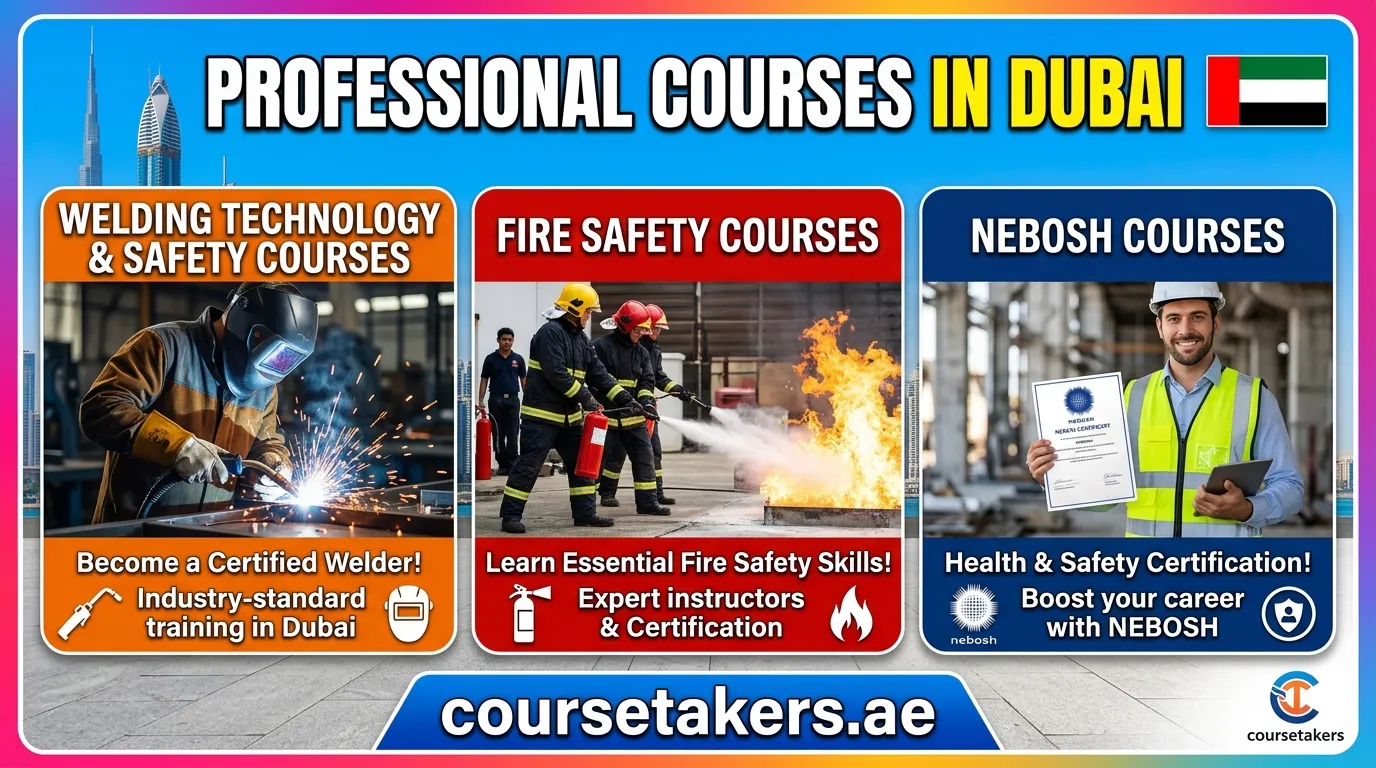
Workplace Safety Skills in Dubai: Welding Hazards, Fire Prevention, and Professional Safety Training
Workplace safety is an essential part of working in construction, engineering, manufacturing, maintenance, and industrial operations. In Dubai, professionals working in these environments may encounter hazards involving heat, electrical equipment, flammable materials, machinery, and potentially dangerous working conditions. Understanding how to identify these risks and follow appropriate safety procedures helps workers protect themselves, their colleagues, and the workplace.
For individuals looking to develop their technical knowledge or move into a safety-related role, training can provide a structured way to understand workplace hazards and the precautions required to manage them. Three relevant areas are welding technology and safety, fire prevention, and occupational health and safety qualifications.
Although these subjects address different aspects of workplace risk, they share a common objective: helping people recognise hazards, follow established procedures, and contribute to safer working environments.
Why Workplace Safety Training Matters
Workplace safety involves more than wearing protective equipment or following instructions. It requires an understanding of how accidents can happen, which conditions increase risk, and what preventive measures should be taken before work begins.
In industrial and construction settings, employees may need to work with hot surfaces, welding equipment, electrical systems, combustible materials, or equipment that requires specific operating procedures. Supervisors and safety personnel also need to recognise unsafe conditions and communicate preventive measures effectively.
Relevant training can help learners develop knowledge in areas such as:
-
Identifying workplace hazards before starting a task.
-
Understanding risk assessments and safe systems of work.
-
Selecting and using appropriate personal protective equipment.
-
Recognising fire hazards and understanding emergency procedures.
-
Communicating safety instructions to colleagues and contractors.
-
Following applicable workplace rules, procedures, and safety requirements.
The most suitable course depends on a person's occupation, existing experience, and intended responsibilities. A welding technician may need specialised technical safety training, while a fire warden or occupational safety professional may require a different combination of knowledge and skills.
1. Welding Technology and Safety: Working Safely Around Hot Work
Welding is used in many engineering, fabrication, maintenance, and construction activities. It involves joining materials through processes that can generate intense heat, sparks, fumes, and other hazards. The specific risks depend on the welding method, materials, equipment, and working environment.
People entering this field need to understand both the technical aspects of welding and the precautions required to perform work safely.
Common Welding Hazards
Welding activities can expose workers to several types of risk:
Heat and sparks: Hot metal, sparks, and molten material can cause burns or ignite combustible items nearby.
Welding fumes: The fumes produced during welding may contain hazardous substances. Appropriate ventilation, exposure controls, and respiratory protection may be necessary depending on the process and materials.
Electrical hazards: Welding equipment can present electric shock risks if it is damaged, improperly connected, or used in unsuitable conditions.
Eye and skin injuries: Welding arcs emit intense light and ultraviolet radiation. Suitable welding helmets, filters, gloves, and protective clothing help reduce exposure.
Fire and explosion risks: Sparks and heat can ignite flammable substances, especially when hot work takes place near combustible materials or in areas where hazardous vapours may be present.
Recognising these hazards is an important step towards selecting suitable controls before work begins.
What Can Welding Safety Training Cover?
Depending on the course, welding technology and safety training may introduce learners to welding processes, equipment handling, protective equipment, ventilation, hazard identification, and safe working practices.
Some programmes focus primarily on technical welding skills, while others place greater emphasis on workplace safety or specific industrial applications. Learners should check the syllabus rather than assuming every course covers the same topics.
Those interested in developing these skills can explore Welding Technology and Safety Courses in Dubai through Coursetakers.ae to compare available training options.
Before enrolling, consider whether the course includes practical instruction, which welding processes it addresses, the level of experience required, and whether its learning outcomes match your job responsibilities.
Who May Benefit?
Welding-related training may be relevant to aspiring welders, fabrication workers, engineering technicians, maintenance personnel, and professionals who supervise hot-work activities.
The right programme depends on whether the learner wants to develop hands-on welding ability, improve safety awareness, or build knowledge relevant to a particular industrial role.
2. Fire Safety: Preventing Workplace Emergencies
Fire prevention is closely connected to welding safety, but it also applies to offices, warehouses, workshops, commercial buildings, construction sites, and other workplaces.
A fire can develop when an ignition source comes into contact with combustible materials under suitable conditions. Welding sparks are one possible ignition source, but electrical faults, improperly stored flammable substances, and other workplace hazards can also contribute to fire risks.
Effective fire safety therefore requires a combination of prevention, preparation, clear procedures, and appropriate emergency arrangements.
Understanding Fire Hazards
Fire safety begins with recognising conditions that could lead to an incident. Depending on the workplace, these may include:
-
Combustible materials stored near heat-producing equipment.
-
Blocked exits or inaccessible emergency equipment.
-
Damaged electrical wiring or overloaded electrical systems.
-
Improper storage or handling of flammable liquids and gases.
-
Hot-work activities performed without suitable precautions.
-
Inadequate housekeeping that allows combustible waste to accumulate.
Identifying these conditions allows responsible personnel to consider appropriate preventive measures and report problems before they develop into emergencies.
Essential Elements of Fire Safety Training
Fire safety courses may cover hazard identification, fire prevention, evacuation procedures, emergency communication, and the appropriate use of firefighting equipment. The depth of instruction varies according to the programme and its intended audience.
Some courses are designed to improve general employee awareness. Others focus on the responsibilities of fire wardens, emergency response teams, supervisors, or personnel responsible for workplace safety arrangements.
Practical knowledge is particularly important. Employees should understand how to raise an alarm, follow the site's evacuation plan, recognise emergency exits, and report unsafe conditions. Firefighting equipment should only be used by people who are appropriately trained and when it is safe to do so; evacuation and personal safety take priority.
Anyone looking to build this knowledge can review Fire Safety Courses in Dubai on Coursetakers.ae and compare courses according to their learning objectives.
The Connection Between Welding and Fire Prevention
Welding and fire safety are particularly relevant to workplaces where hot work takes place. Before welding begins, responsible personnel may need to assess the surrounding area, remove or protect combustible materials, establish suitable fire precautions, and follow the site's hot-work permit procedures where applicable.
Depending on the environment, precautions may also include checking adjacent spaces, ensuring suitable firefighting equipment is available, and arranging appropriate monitoring after hot work has finished.
These measures demonstrate why welding competence and fire awareness should not be treated as completely separate concerns. Understanding both areas can help workers recognise risks that may otherwise be overlooked.
3. NEBOSH Courses: Developing Occupational Health and Safety Knowledge
Professionals who want to move beyond task-specific safety awareness may consider formal occupational health and safety education. NEBOSH qualifications are recognised within the health and safety training field and may be relevant to people pursuing safety-related responsibilities.
However, the appropriate qualification depends on the learner's experience, career objectives, and the requirements of employers or particular roles. A qualification should not be assumed to guarantee employment or satisfy every regulatory requirement.
What Does NEBOSH Training Generally Address?
The content depends on the specific NEBOSH qualification. Programmes may address workplace health and safety principles, hazard identification, risk assessment, preventive controls, incident investigation, and the responsibilities involved in managing occupational risks.
Some qualifications provide an introduction to workplace health and safety, while others are intended for learners seeking more advanced professional knowledge. Course names, assessment methods, entry requirements, and syllabuses should be checked carefully before making a decision.
For example, someone working in construction may be interested in understanding site hazards and risk controls. A supervisor may want to strengthen their approach to safety management, while an aspiring safety professional may seek a qualification relevant to a longer-term career plan.
Learners can compare NEBOSH Courses in Dubai through Coursetakers.ae to investigate available programmes, providers, and course details.
Is NEBOSH Suitable for Every Worker?
Not necessarily. NEBOSH training can be valuable for people pursuing occupational health and safety knowledge, but it may not be the most direct starting point for everyone.
A person who primarily needs to learn a specific welding process may benefit more from practical welding instruction. Someone responsible for basic fire awareness may need a course focused on workplace fire prevention and emergency procedures.
On the other hand, workers who intend to take on broader safety responsibilities may find it useful to explore formal occupational health and safety qualifications alongside relevant practical experience.
The important step is to select training that fits the role rather than choosing a course solely because its name is familiar.
How to Choose the Right Safety Course in Dubai
With different training options available, comparing courses carefully can help learners make a more informed decision.
Start With Your Career Objective
Identify the skill or knowledge you need to develop. Are you learning to weld, improving your ability to prevent workplace fires, or preparing for a broader health and safety role?
A clear objective makes it easier to distinguish between technical training, awareness courses, and professional qualifications.
Review the Course Syllabus
Check the subjects covered, practical components, assessment methods, and expected learning outcomes. For professional qualifications, confirm the exact qualification name and whether the provider is authorised to deliver the programme or qualification concerned.
Avoid assuming that similarly named courses offer identical content or recognition.
Compare Training Formats
Depending on the provider, training may be delivered in a classroom, through practical sessions, online, or in a blended format. The available format will depend on the course and its learning requirements.
Practical welding skills, for example, may require supervised equipment-based instruction. Other subjects may include theoretical learning, although the appropriate format depends on the syllabus and course objectives.
Check the Provider and Certification Details
Before enrolling, confirm who delivers the training, what certificate or qualification is awarded, how assessments work, and whether the course meets your professional requirements.
If you need training for a particular employer or project, check those requirements before paying any fees. This can help avoid enrolling in a programme that does not match your intended purpose.
Compare Fees, Duration, and Scheduling
Course costs and durations can vary according to the qualification, training format, practical requirements, and provider. Review the full course details, including any additional assessment or examination fees, before making a commitment.
Coursetakers.ae can be used to explore relevant course listings and compare available options. Check the individual listing or contact the training provider to confirm current fees, schedules, prerequisites, and certification details.
Can These Three Areas Support Career Development?
Welding safety, fire prevention, and occupational health and safety education address different needs, but they can complement one another in suitable roles.
A welding professional may need technical expertise alongside an understanding of hot-work hazards. A workplace fire warden may need to understand evacuation and emergency procedures. A person pursuing a safety management role may require broader knowledge of risk assessment and occupational health and safety principles.
The value of combining these subjects depends on the job. Not every welder needs a NEBOSH qualification, and not every employee responsible for fire safety needs welding training. However, people working in environments where these hazards overlap may benefit from understanding how the different safety measures relate to one another.
Training should also be supported by workplace procedures, appropriate supervision, suitable equipment, and compliance with applicable requirements. A course can develop knowledge, but safe performance depends on applying that knowledge correctly in the workplace.
Final Thoughts
Developing workplace safety skills is a practical step for people working in engineering, construction, manufacturing, maintenance, and other industries where hazards need to be managed carefully.
Welding technology and safety training can help learners understand the risks associated with hot work. Fire safety training focuses on prevention, emergency preparedness, and appropriate responses. NEBOSH programmes offer another route for people seeking structured occupational health and safety knowledge.
The best option depends on your current experience, professional responsibilities, and future goals. Rather than selecting a course based on keywords alone, review its syllabus, delivery format, provider details, and qualification outcomes.
To explore relevant training opportunities in Dubai, visit Coursetakers.ae and compare welding safety, fire safety, and NEBOSH course listings. Taking the time to choose suitable training can help you build knowledge that is relevant to your work and contribute to a stronger workplace safety culture.
Related Reading
Top 10 Hidden Secrets About Business & Finance You Need to Know
Welcome to our in-depth exploration of Business & Finance. In an era defined...
Why Business & Finance is Transforming the Global Industry Landscape
Welcome to our in-depth exploration of Business & Finance. In an era defined...