How to Find the Perfect Fit: Women's Leather Biker Vest Sizing Guide
By Adam Milo
139 Views
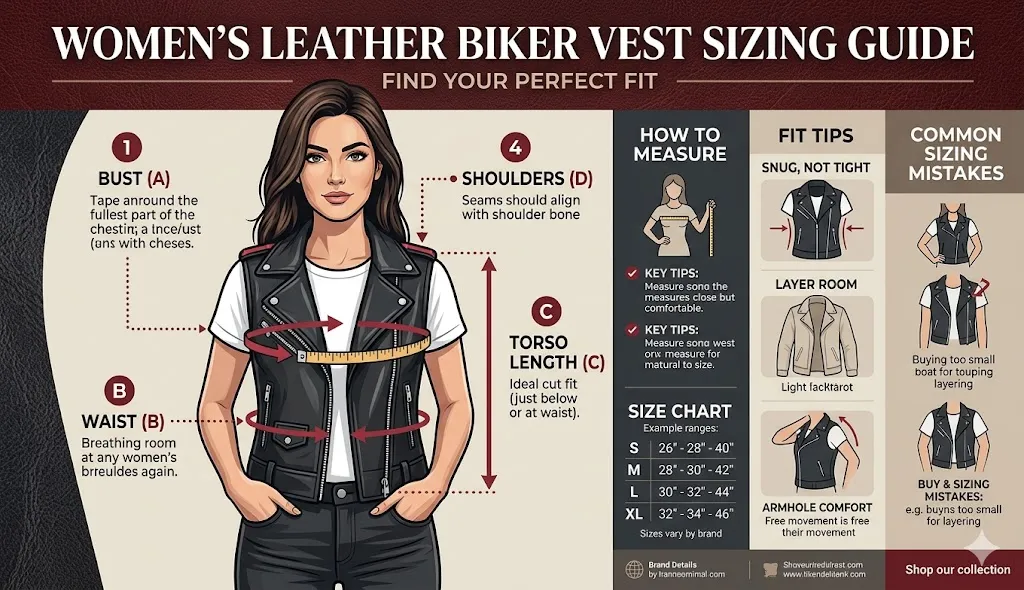
Buy a vest that doesn't fit right, and you've wasted your money. Too tight and it's uncomfortable, restrictive, and looks strained across the chest and shoulders. Too loose and it flaps in the wind, looks sloppy, and defeats the purpose of a fitted vest.
Finding the perfect women's leather biker vest comes down to understanding how sizing actually works, not just grabbing your usual size and hoping for the best.
Here's how to get the fit right the first time.
Why Women's Vest Sizing Is Different
This seems obvious, but it's worth stating clearly: women's vests are not just smaller versions of men's vests. The proportions are completely different.
Women's bodies have different measurements through the bust, waist, shoulders, and torso length. A properly classic designed women's leather biker vest accounts for these differences with darts, tapered waists, and contoured panels that follow natural body curves.
Leather biker vest for men options are cut straighter through the torso with wider shoulders and no accommodation for the bust. Even if you find a men's vest in a smaller size, the proportions won't fit a woman's body correctly, the shoulders will be too wide, the armholes positioned wrong, and there's no shaping through the waist or chest.
Always buy vests designed specifically for women. The fit and comfort difference is significant.
Understanding Vest Sizing Systems
Women's vest sizing isn't standardized across brands, which creates confusion. Some use numeric sizing (2, 4, 6, 8), others use letter sizing (XS, S, M, L, XL), and some use both.
Worse, sizing varies between manufacturers. One brand's medium might fit like another brand's large. This is why you can't just order your "usual size" without checking measurements.
The only reliable method: Compare your actual body measurements to the brand's specific size chart. Every time. Even if you've bought from that brand before, check the chart for the specific vest style you're ordering.
How to Measure Yourself Correctly
Accurate measurements are the foundation of good fit. Here's how to measure properly:
Bust Measurement
Wrap a soft measuring tape around the fullest part of your bust, typically at nipple level. Keep the tape parallel to the floor and snug but not tight. Don't hold your breath or pull the tape so tight it compresses tissue. This is your bust measurement.
Wear the bra you'll typically wear under the vest when measuring. Different bra styles change your measurements.
Waist Measurement
Find your natural waist, the narrowest part of your torso, usually an inch or two above your belly button. Wrap the tape around this point, again keeping it level and comfortably snug.
Don't suck in or measure where your jeans sit. You need your actual waist measurement, not your pant size.
Shoulder Width
Measure from the edge of one shoulder (where the shoulder meets the arm) straight across your back to the edge of the other shoulder. This measurement determines whether the vest's shoulder seams will sit at the correct point.
Torso Length
Measure from the base of your neck (where your neck meets your shoulders) straight down to where you want the vest hem to fall. For cropped vests, this might be at your natural waist. For longer vests, measure to your hip or wherever you prefer the hem.
Pro tip: Have someone help you with measurements. Measuring yourself leads to errors, especially for back and shoulder measurements.
Reading Size Charts Like a Pro
Once you have your measurements, compare them to the manufacturer's size chart. Don't just look at one measurement, check all of them.
What if your measurements fall between sizes?
If your bust measures medium but your waist measures small, go with the larger size (medium in this case). It's easier to take in a waist with side laces or adjustments than to add room through the bust.
What if different measurements suggest different sizes?
This is common. Look at which measurement matters most for that vest style:
- For fitted vests: prioritize bust and shoulder measurements
- For relaxed vests: waist measurement becomes less critical
- For vests with side laces: you have adjustment room, so focus on shoulder and bust fit
Red flag: If your measurements are wildly different sizes (like a small bust with an extra-large waist), the vest might not fit properly without alterations. Consider brands that offer custom sizing or be prepared to have it tailored.
Key Fit Points to Check
Numbers on a size chart only tell part of the story. Here's what to check when you try on a real leather biker vest for women:
Shoulders Sit at Natural Points
The shoulder seam should sit right at the edge of your shoulder, where your shoulder meets your arm. Not sliding down your arm. Not pulling toward your neck.
This is non-negotiable. If the shoulders don't fit, nothing else will line up correctly. The armholes will be positioned wrong, and the vest will feel awkward no matter what.
Bust Fits Without Gaping or Straining
The vest should close comfortably across your chest without pulling, gaping, or creating X-shaped stress lines at the snaps or zipper. You should be able to fasten it completely without straining.
At the same time, it shouldn't gape open between snaps or zipper. If there's space between the vest and your body at the bust, the vest is too large.
Armholes Allow Movement
Raise your arms like you're gripping handlebars. The armholes shouldn't cut into your arms or restrict movement. You should be able to reach forward, turn, and move naturally without the vest riding up or pinching.
Waist Fits Your Body Type
The vest should follow your natural waist without being boxy or baggy. Many vests include side laces or adjustable straps, use these to customize the fit through the torso.
If you prefer a looser fit, that's fine, but the vest still shouldn't look like you're swimming in it.
Length Falls Where You Want It
Check the hem length while standing and while in riding position (leaning forward slightly). Cropped vests should hit at or just above your natural waist. Longer vests should cover your belt line without being so long they bunch up when you sit.
Back Fits Smoothly
Have someone check the back while you're wearing the vest. It should lie smooth without pulling, bunching, or creating horizontal wrinkles across the shoulder blades. These indicate the vest is too small.
Common Fit Problems and Solutions
- Problem: Shoulders fit but bust is too tight
- Solution: Size up and use side laces to adjust the waist. You can always take in fabric, but you can't add room through the bust.
- Problem: Bust fits but shoulders are too wide
- Solution: The vest isn't the right cut for your body type. Look for vests with more tailored shoulder construction or consider a different brand.
- Problem: Vest fits when standing but rides up when leaning forward
- Solution: The torso length is too short, or the vest needs a longer back panel. Look for vests designed specifically for riding with action backs or extended rear hems.
- Problem: Gaps between snaps at the bust
- Solution: The vest is too large. Size down or look for vests with more snaps spaced closer together.
- Problem: Can't fasten the vest completely
- Solution: It's too small. Size up. Don't try to "make it work" hoping leather will stretch, it won't stretch enough to fix a size that's genuinely too small.
Leather Break-In: What to Expect
Unlike biker vests for men, which often use heavier, stiffer leather, many women's vests use slightly lighter leather that breaks in faster. But there's still an adjustment period.
New leather feels stiff. A vest that feels slightly snug when new will relax and conform to your body after several wears. This is normal and expected.
However, "slightly snug" doesn't mean uncomfortably tight. You should still be able to fasten the vest and move comfortably when it's new. If you can barely get it closed, counting on break-in won't save you, the vest is too small.
Quality leather will soften and mold to your shape over time. Give it a few rides before deciding the fit is wrong, but trust your instinct if something feels genuinely off.
Adjustability Features to Look For
The best women's leather biker vests include adjustability features that let you customize fit:
- Side laces or buckles: Adjust the waist and torso fit without permanently altering the vest
- Adjustable shoulder straps: Fine-tune how the vest sits on your frame (less common but valuable)
- Snap placement options: Multiple snap positions let you adjust how tight or loose the front closes
- Stretch panels: Some vests include small stretch gussets at the sides or back for extra flexibility
These features compensate for the fact that no two bodies are identical, even if measurements are similar.
When to Consider Custom Sizing
If standard sizing consistently doesn't work for your body type, custom sizing might be worth it. This is especially true if:
- Your measurements span three or more standard sizes
- You're significantly taller or shorter than average
- You have a large difference between bust and waist measurements
- Standard vests never fit your shoulders correctly
Custom options cost more upfront but eliminate the frustration of returns, alterations, and vests that never quite fit right.
Final Fit Check Before You Buy
Before committing to a vest, run through this checklist:
- Shoulders sit at natural shoulder points
- Bust closes comfortably without gaping or straining
- Armholes allow full range of motion
- Waist follows your body shape
- Length falls where you want it
- Back lies smooth without pulling
- You can breathe, move, and sit comfortably
- Nothing pinches, cuts in, or restricts movement
If you can check every box, you've found the right fit.
Bottom Line
Getting the right fit in a women's leather biker vest isn't about guessing or hoping. It's about measuring accurately, reading size charts correctly, and knowing what to look for when you try it on. Take the time to measure yourself properly. Compare your measurements to the specific brand's size chart. Pay attention to shoulder fit above everything else. And remember that leather breaks in slightly but won't magically fix a vest that's the wrong size.
Fit matters more than brand, price, or style. Get the size right, and everything else falls into place.