Why Wool Matters When Choosing a Handmade Persian Rug
69 Views
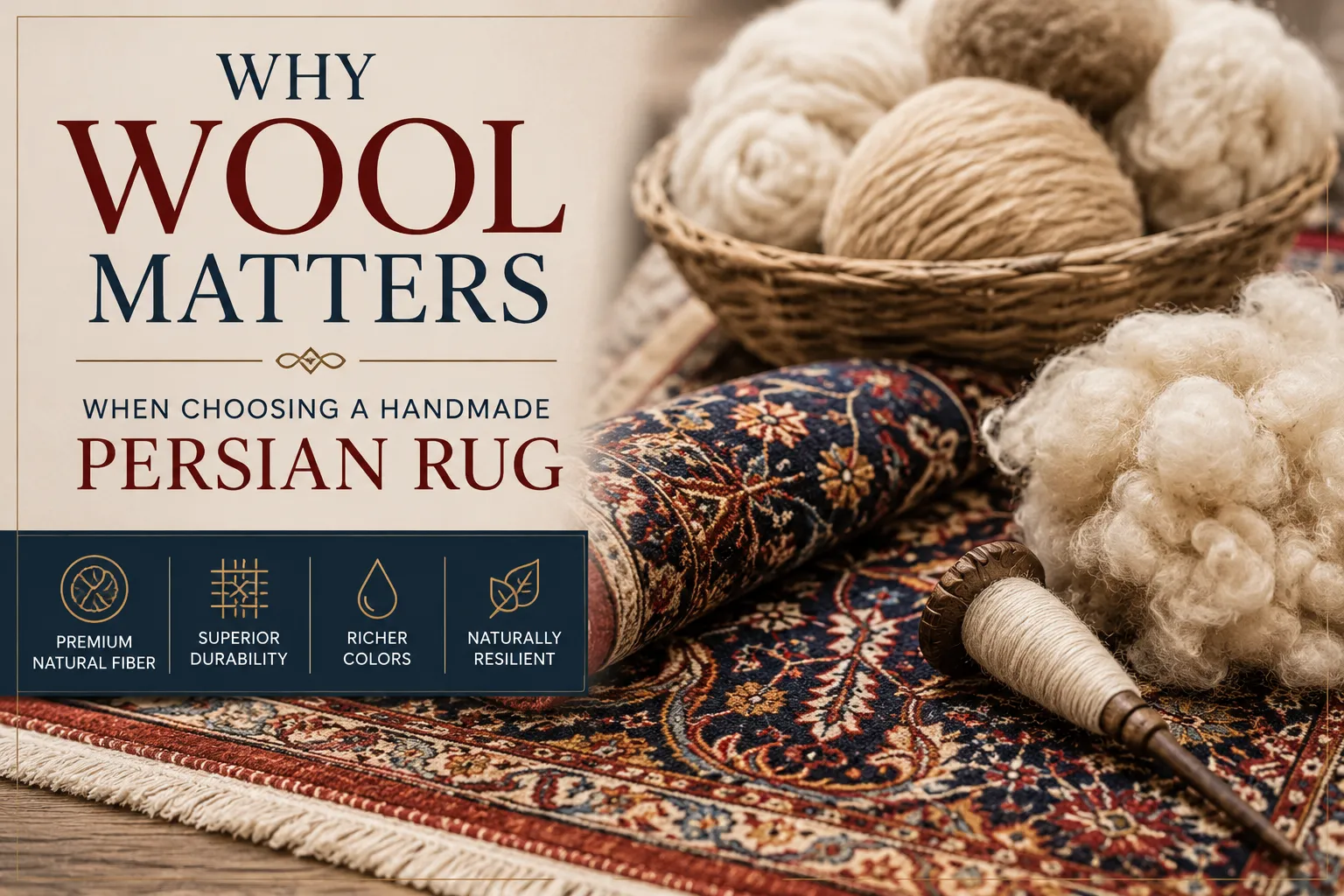
Two rugs can look nearly identical in a photograph and feel completely different underfoot. That gap almost always comes down to wool — its quality, how it was spun, and how it was finished before it ever reached a loom. Shoppers tend to focus on pattern and color first, which makes sense, but the material behind Persian rugs is what actually determines how the rug will look, feel, and hold up over years of daily use.
Not All Wool Is the Same
Wool quality varies significantly based on the breed of sheep, the region where it's raised, and which part of the fleece is used. Wool from the shoulder area of a sheep, for instance, tends to be finer and more resilient than wool from other parts of the fleece. Weavers and workshops that prioritize higher-grade wool are working with a fundamentally different raw material than those using coarser, lower-grade fiber, even before a single knot is tied.
Hand-Spun Versus Machine-Spun Yarn
Traditional Persian rug production has historically relied on hand-spun wool yarn, which tends to have slight irregularities in thickness that give the finished pile a more organic, textured appearance. Machine-spun yarn is more uniform and can be produced more efficiently, and it's used in many rugs today, including some handmade pieces. Neither approach is inherently superior in every respect, but they do produce a noticeably different look and feel, and buyers who prize a more textured, irregular surface should ask specifically about spinning method rather than assuming all handmade rugs share the same yarn characteristics.
Wool Affects How Dye Is Absorbed
The way wool takes dye has a direct effect on the depth and richness of a rug's color. Higher-quality wool with intact lanolin content tends to absorb dye more evenly and develop richer, more luminous tone over time. Lower-quality or over-processed wool can result in flatter, less vibrant color that doesn't age as gracefully. This is part of why two rugs with the same dye formula can still look meaningfully different once finished.
Durability Comes From the Fiber Itself
Wool is naturally durable, resilient, and somewhat resistant to soiling, which is part of why it has remained the dominant material in hand-knotted rug production for centuries. But not all wool performs equally well under heavy use. Coarser, lower-grade wool can mat and flatten faster underfoot, while finer, well-processed wool tends to spring back after being compressed, maintaining its pile height and texture longer. This matters most in high-traffic rooms, where a rug is expected to hold up for years without visibly thinning.
Wool Blends and Silk Accents
Some Persian rugs incorporate silk, either as accent detailing that adds sheen and highlights to specific pattern elements, or occasionally as a more significant part of the pile in finer city pieces. Silk isn't a marker of automatic superiority — it changes the feel and appearance of a rug, adding luster and a smoother hand, but it's also generally less durable underfoot than wool and better suited to lower-traffic spaces or wall display. Understanding this trade-off helps buyers choose based on actual use rather than assuming silk content always signals better quality.
Reading Wool Quality When You Shop
Since wool quality isn't always visible in a photograph, it helps to physically handle a rug when possible, checking for a slight natural sheen, a pile that springs back when pressed, and yarn that feels resilient rather than brittle or overly soft. When shopping in person isn't an option, working with a seller who can speak knowledgeably about the wool source and processing behind their authentic rugs makes a real difference in confidence at the point of purchase.
Letting Material Guide the Decision
Pattern and color will always be the first thing that draws a buyer to a rug, but wool quality is what determines whether that rug still looks and feels good a decade later. It's worth asking about before falling for a design, not after.
Related Reading
Expert Insights: Navigating the Complex World of Home Improvement
Welcome to our in-depth exploration of Home Improvement. In an era defined by ra...
Why Home Improvement is Transforming the Global Industry Landscape
Welcome to our in-depth exploration of Home Improvement. In an era defined by ra...