Why the Right Tag Reader Is Critical for Eliminating Missed Tag Detections
By Shivani
66 Views
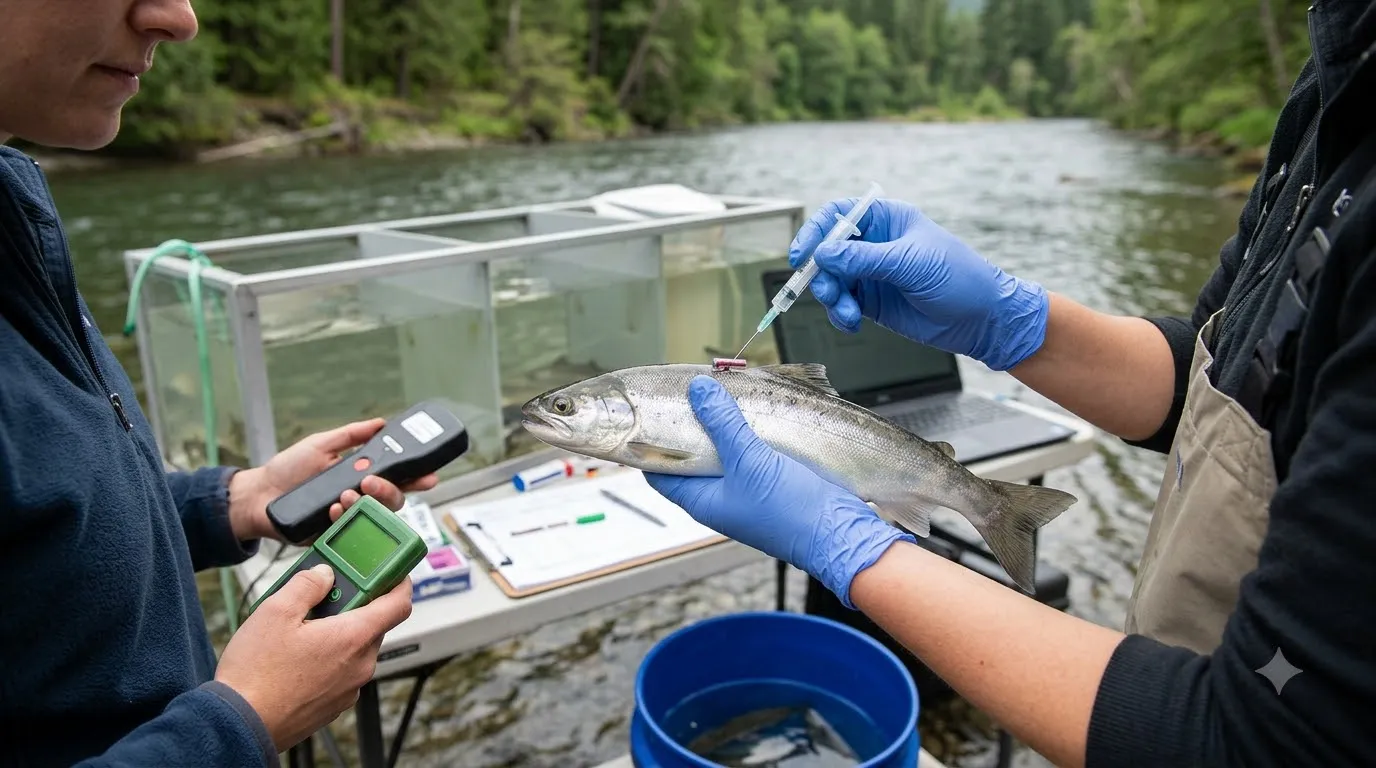
Introduction: The Hidden Cost of Missed Detections
In wildlife and fisheries monitoring, missing a detection can be just as damaging as losing a tag. Every undetected animal introduces uncertainty into survival estimates, migration timing data, and population models. Over time, those gaps accumulate — weakening datasets and distorting management decisions.
While researchers often focus heavily on tag quality and implantation technique, detection reliability depends equally on the performance of the tag reader. Even the most advanced tagging technology cannot compensate for poorly configured or underpowered detection systems.
For teams building or upgrading monitoring infrastructure, selecting a research-grade tag reader for wildlife and fisheries monitoring is one of the most important decisions they will make.
What Causes Missed Tag Detections?
Missed detections rarely occur randomly. They usually stem from predictable technical limitations or environmental mismatches between tags, antennas, and reader systems.
Common causes include:
- Insufficient read range due to low power output
- Poor antenna tuning relative to environmental conductivity
- Signal interference from metal structures, water turbulence, or electrical noise
- Inconsistent tag orientation within the electromagnetic field
- Low sensitivity thresholds that fail to capture weak return signals
Each of these factors reduces detection probability — the likelihood that a tagged animal passing through a detection zone is actually recorded. When detection probability drops below 100%, researchers must apply statistical correction models that widen confidence intervals and reduce certainty in results.
A high-performance tag reader directly addresses these limitations.
Why Detection Probability Matters in Population Models
Mark-recapture models assume that tagged individuals have a measurable probability of being detected when present. If detection systems systematically miss animals, survival and abundance estimates become biased.
For example:
- If 10% of fish passing through a monitoring station are not detected, survival rates may be underestimated.
- If detection gaps vary seasonally due to environmental interference, migration timing analysis becomes unreliable.
- If equipment inconsistently reads smaller tags, size-based bias enters the dataset.
Research published in Ecological Applications has demonstrated that detection probability below 95% can significantly inflate uncertainty in survival models for migratory fish species. In high-stakes conservation contexts — such as Endangered Species Act recovery planning — that uncertainty can influence regulatory decisions.
Choosing the right tag reader is therefore not simply a hardware decision; it is a statistical safeguard.
Key Features of a High-Performance Tag Reader
1. Stable Power Output and Field Strength
A reliable tag reader maintains consistent electromagnetic field strength across varying environmental conditions. In aquatic systems especially, water conductivity and temperature influence signal propagation. Readers designed for fisheries research compensate automatically for these fluctuations.
Stable field strength ensures that detection zones remain predictable — preventing seasonal drops in detection rates.
2. Advanced Signal Filtering
Environmental noise — from pumps, motors, nearby electronics, or metal infrastructure — can interfere with RFID signal clarity. High-quality reader systems incorporate digital signal filtering that isolates tag responses from background interference.
Without proper filtering, weaker signals may go unrecognized, leading to silent missed detections that researchers cannot easily diagnose.
3. Multi-Antenna Compatibility
Large-scale monitoring networks often require multiple antennas configured in arrays to create complete detection gates across rivers, fish ladders, or culverts. A robust tag reader must support synchronized multi-antenna operation without signal collision or cross-talk.
In major river systems like the Columbia Basin, detection infrastructure depends on synchronized antenna arrays spanning wide river channels. Poor reader coordination would result in overlapping fields and inconsistent detection zones.
4. High Data Integrity and Logging Precision
Timestamp precision is critical in migration studies. Advanced tag reader systems log detections with millisecond accuracy, ensuring that passage timing, directionality, and movement speed estimates remain reliable.
Equally important is secure onboard data storage with redundancy features that prevent data loss during power interruptions — a common issue in remote monitoring stations.
Reader Configuration: As Important as Reader Quality
Even the best tag reader will underperform if improperly configured. Key setup factors include:
- Antenna tuning matched to the specific frequency and tag type
- Power calibration adjusted to detection zone requirements
- Environmental shielding to reduce electromagnetic interference
- Routine maintenance and validation testing
Periodic performance testing using test tags moved through detection zones helps confirm that detection probability remains within expected thresholds. Agencies such as NOAA Fisheries and the U.S. Geological Survey routinely perform validation checks to maintain high data confidence in long-term studies.
Real-World Consequences of Detection Failure
Consider a long-term salmon migration study tracking 20,000 tagged juveniles moving downstream. If the detection system misses even 5% of fish at a major passage point, that represents 1,000 individuals incorrectly categorized as mortalities or missing.
Over multiple years, these discrepancies alter trend analyses, potentially suggesting population decline where none exists — or masking genuine declines that require intervention.
High-performance tag reader systems reduce that risk dramatically by maximizing read accuracy and maintaining consistent detection coverage throughout the study lifecycle.
Integrating Detection Systems into Broader Monitoring Programs
Reliable detection hardware must integrate seamlessly with tagging infrastructure, data management systems, and long-term monitoring goals.
VodaIQ provides advanced RFID and PIT-based reader systems designed specifically for wildlife and fisheries applications. Their solutions support multi-antenna deployments, remote monitoring, and compatibility with standardized tag formats — helping researchers build detection networks that minimize missed reads and maximize scientific reliability.
When Should You Upgrade Your Tag Reader?
Organizations should evaluate upgrading their tag reader systems when:
- Detection gaps are suspected but not easily explained
- Monitoring sites expand in size or environmental complexity
- New tag sizes or frequencies are introduced
- Data audits reveal inconsistencies in recapture probabilities
- Infrastructure aging increases downtime or maintenance costs
Modern reader systems are more energy-efficient, more interference-resistant, and more data-secure than earlier generations — making upgrades a long-term investment in data quality.
Conclusion: Detection Reliability Is Data Reliability
In fisheries and wildlife monitoring, the absence of evidence is not evidence of absence. If a tagged animal passes undetected, the resulting data gap may ripple through years of analysis and policy decisions.
The right tag reader eliminates avoidable missed detections by combining stable power output, advanced signal processing, multi-antenna coordination, and secure data logging. For researchers committed to producing defensible, high-confidence datasets, detection hardware is not a secondary consideration — it is central to scientific integrity.
When every individual detection matters, the performance of your reader system determines whether your dataset reflects biological reality or technical limitation.
Related Reading
Top 10 Hidden Secrets About Business & Finance You Need to Know
Welcome to our in-depth exploration of Business & Finance. In an era defined...
Why Business & Finance is Transforming the Global Industry Landscape
Welcome to our in-depth exploration of Business & Finance. In an era defined...