Why the Export Promotion of Capital Goods Scheme Matters for Export Businesses
50 Views
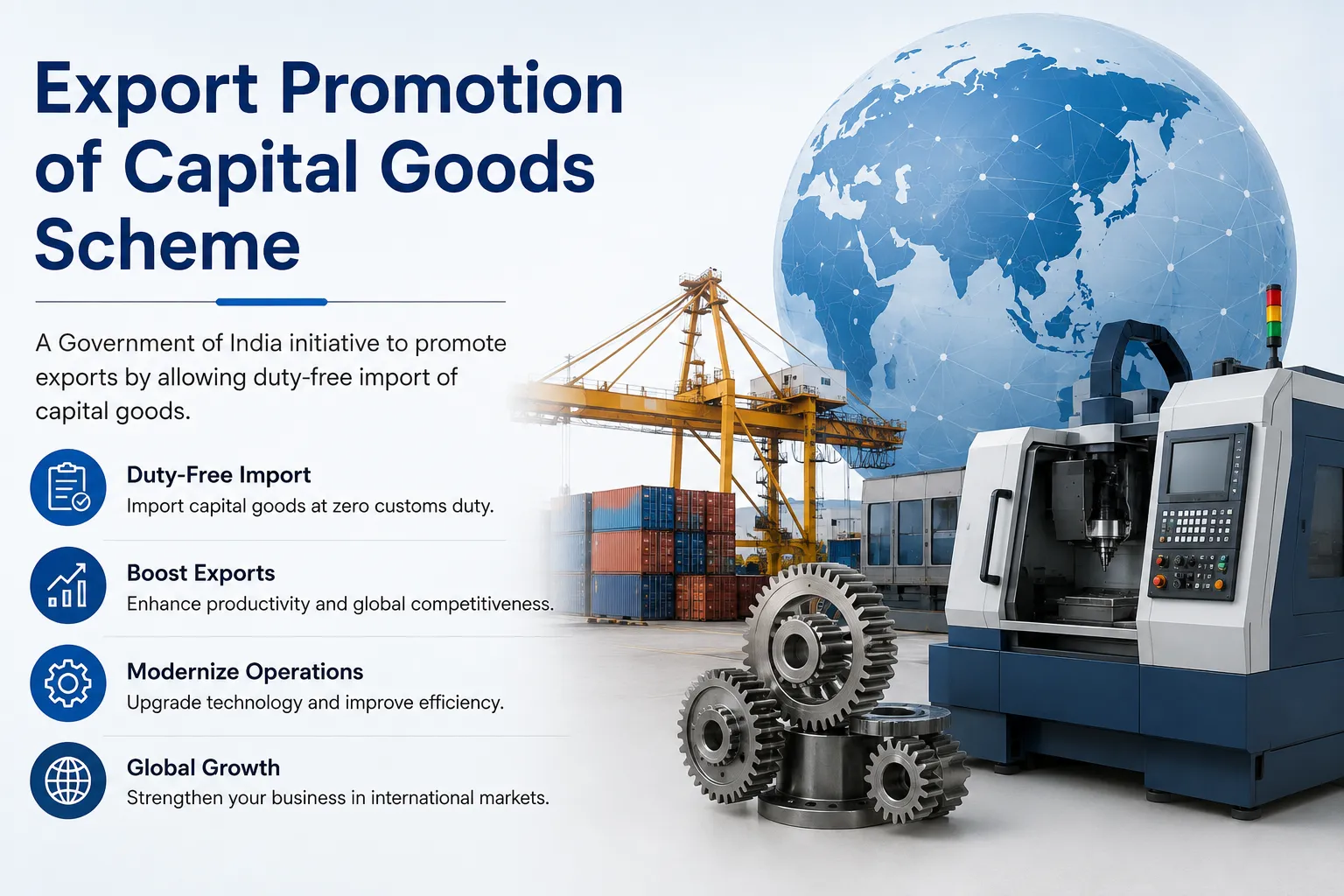
Expanding into international trade requires businesses to understand not only export opportunities but also the regulations that govern imports and exports. Two important compliance mechanisms that often benefit manufacturers, importers, and exporters are the Export Promotion of Capital Goods Scheme and LMPC Registration. While they serve different purposes, both contribute to smoother business operations and regulatory compliance.
The Export Promotion of Capital Goods Scheme helps eligible businesses reduce the cost of importing capital goods by offering customs duty concessions, whereas LMPC Registration ensures compliance with India's Legal Metrology regulations for imported pre-packaged commodities. Together, they help businesses operate more efficiently, avoid regulatory hurdles, and strengthen their position in domestic and international markets.
This guide explains how these two systems work, their benefits, and why businesses involved in imports and exports should understand both.
What Is the Export Promotion of Capital Goods Scheme?
The Export Promotion of Capital Goods Scheme (EPCG Scheme) is a key initiative under India's Foreign Trade Policy. It enables eligible businesses to import capital goods such as machinery, equipment, and production technology at reduced or zero customs duty, provided they fulfill specified export obligations within a prescribed period.
The scheme is designed to encourage businesses to modernize their manufacturing capabilities, improve productivity, and increase exports by reducing the financial burden associated with importing advanced machinery.
Capital goods covered under the Export Promotion of Capital Goods Scheme may include manufacturing equipment, industrial machinery, testing instruments, production tools, and technology required for export-oriented operations.
What Is LMPC Registration?
LMPC Registration refers to registration under the Legal Metrology (Packaged Commodities) Rules. It is generally required for importers dealing with pre-packaged commodities intended for sale, distribution, or commercial use in India.
The objective of LMPC Registration is to ensure transparency in product packaging by requiring mandatory declarations such as:
- Product name, quantity, dimensions, weight, or volume so consumers clearly understand what they are purchasing. Standardized labeling promotes fair trade practices and informed buying decisions.
- Manufacturer, importer, or packer details that allow authorities and consumers to identify the responsible business. This improves accountability and strengthens consumer confidence in imported products.
- Maximum Retail Price (MRP), manufacturing date, and other statutory declarations required under Legal Metrology regulations. Proper labeling helps businesses remain compliant while protecting consumer rights.
Businesses importing packaged products should determine whether LMPC Registration applies before commercial distribution.
Benefits of the Export Promotion of Capital Goods Scheme
The Export Promotion of Capital Goods Scheme offers several financial and operational advantages for export-oriented businesses.
Reduced Customs Duty
One of the biggest benefits is the opportunity to import capital goods at concessional or zero customs duty. This significantly lowers project costs and allows businesses to invest in advanced production technology without excessive financial burden.
Improved Manufacturing Capabilities
Modern machinery often increases production speed, consistency, and product quality. Businesses using advanced equipment are generally better equipped to meet international quality standards and customer expectations.
Encourages Export Expansion
Since businesses must fulfill export obligations under the scheme, companies naturally focus on increasing export performance. This contributes to long-term business growth and greater participation in global markets.
Supports Industrial Modernization
The Export Promotion of Capital Goods Scheme encourages businesses to upgrade outdated equipment with modern technology. Improved manufacturing efficiency often results in higher productivity, lower operational costs, and enhanced competitiveness.
Why LMPC Registration Is Important
Businesses importing packaged goods should not overlook the importance of LMPC Registration because compliance plays a critical role in smooth import operations.
Some key benefits include:
- Regulatory Compliance
- Proper LMPC Registration demonstrates compliance with Legal Metrology requirements, reducing the likelihood of customs objections, product seizures, or regulatory penalties during import and distribution.
- Consumer Transparency
- Accurate packaging declarations provide consumers with essential information regarding product quantity, pricing, and importer details. Transparent labeling builds trust and promotes ethical business practices.
- Smooth Customs Clearance
- Properly labeled imported goods supported by valid LMPC Registration often experience fewer compliance-related issues during customs inspections, reducing delays in product availability.
- Improved Business Credibility
- Compliance with statutory labeling requirements reflects a company's commitment to quality and regulatory standards, strengthening relationships with customers, distributors, and regulatory authorities.
How Both Compliance Requirements Work Together
Although the Export Promotion of Capital Goods Scheme and LMPC Registration serve different regulatory purposes, businesses involved in international trade may benefit from both simultaneously.
For example, a manufacturing company may import advanced machinery under the Export Promotion of Capital Goods Scheme while also importing packaged components or finished products that require LMPC Registration before sale in India.
Using both compliance mechanisms effectively can help businesses:
- Reduce import costs on production machinery while ensuring packaged imported goods fully comply with Legal Metrology regulations before entering the domestic market.
- Improve operational efficiency by minimizing customs-related delays associated with documentation, labeling, and regulatory verification throughout the import process.
- Strengthen long-term compliance systems that support sustainable business growth while reducing legal risks associated with import and export activities.
Common Challenges Businesses Face
Despite the advantages, businesses often encounter compliance challenges related to both the Export Promotion of Capital Goods Scheme and LMPC Registration.
Some common issues include:
- Maintaining accurate documentation for imported machinery, export obligations, and packaged commodity compliance. Missing or inconsistent records may delay approvals and increase compliance risks.
- Understanding changing government regulations, policy amendments, and procedural updates issued by DGFT, Customs, and Legal Metrology authorities. Staying informed is essential for ongoing compliance.
- Coordinating multiple regulatory requirements across different departments, especially when importing both manufacturing equipment and packaged products under separate legal frameworks.
Establishing structured compliance processes can significantly reduce these operational challenges.
Best Practices for Smooth Compliance
Businesses can improve compliance by adopting organized documentation and proactive planning.
Some practical recommendations include:
- Maintain digital records of import invoices, Bills of Entry, machinery installation reports, export documents, packaging declarations, and statutory registrations. Organized documentation simplifies audits and regulatory verification.
- Review export obligations and Legal Metrology compliance periodically to ensure all requirements are completed before official deadlines. Early monitoring minimizes the risk of delays and penalties.
- Train internal compliance teams on DGFT procedures, customs documentation, and packaging regulations so employees understand their responsibilities and contribute to accurate record management.
- Consult experienced professionals whenever clarification is needed regarding the Export Promotion of Capital Goods Scheme, LMPC Registration, or other import-export compliance requirements.
Who Can Benefit from These Regulations?
The Export Promotion of Capital Goods Scheme and LMPC Registration are particularly useful for:
- Manufacturers importing advanced machinery to expand production capacity while fulfilling export commitments under government incentive schemes.
- Importers dealing with packaged consumer goods, industrial products, or commercial commodities that require statutory labeling before distribution in India.
- Businesses seeking long-term compliance, operational efficiency, and improved competitiveness in both domestic and international markets.
Organizations that proactively manage these regulatory requirements are often better positioned for sustainable business growth.
Conclusion
The Export Promotion of Capital Goods Scheme and LMPC Registration play different yet complementary roles in India's import-export ecosystem. While the Export Promotion of Capital Goods Scheme supports industrial growth through concessional imports of capital goods, LMPC Registration ensures that imported packaged products comply with Legal Metrology regulations before reaching consumers.
Understanding both compliance frameworks enables businesses to reduce costs, improve operational efficiency, maintain regulatory compliance, and strengthen their reputation in competitive markets.
If your business imports machinery, packaged goods, or plans to expand export operations, understanding the Export Promotion of Capital Goods Scheme and LMPC Registration is essential. Staying compliant with applicable regulations can help streamline operations, reduce compliance risks, and create a strong foundation for long-term business success in domestic and international trade.
Related Reading
Top 10 Hidden Secrets About Business & Finance You Need to Know
Welcome to our in-depth exploration of Business & Finance. In an era defined...
Why Business & Finance is Transforming the Global Industry Landscape
Welcome to our in-depth exploration of Business & Finance. In an era defined...