Why Switch to Accounting Software with Payroll Today?
39 Views
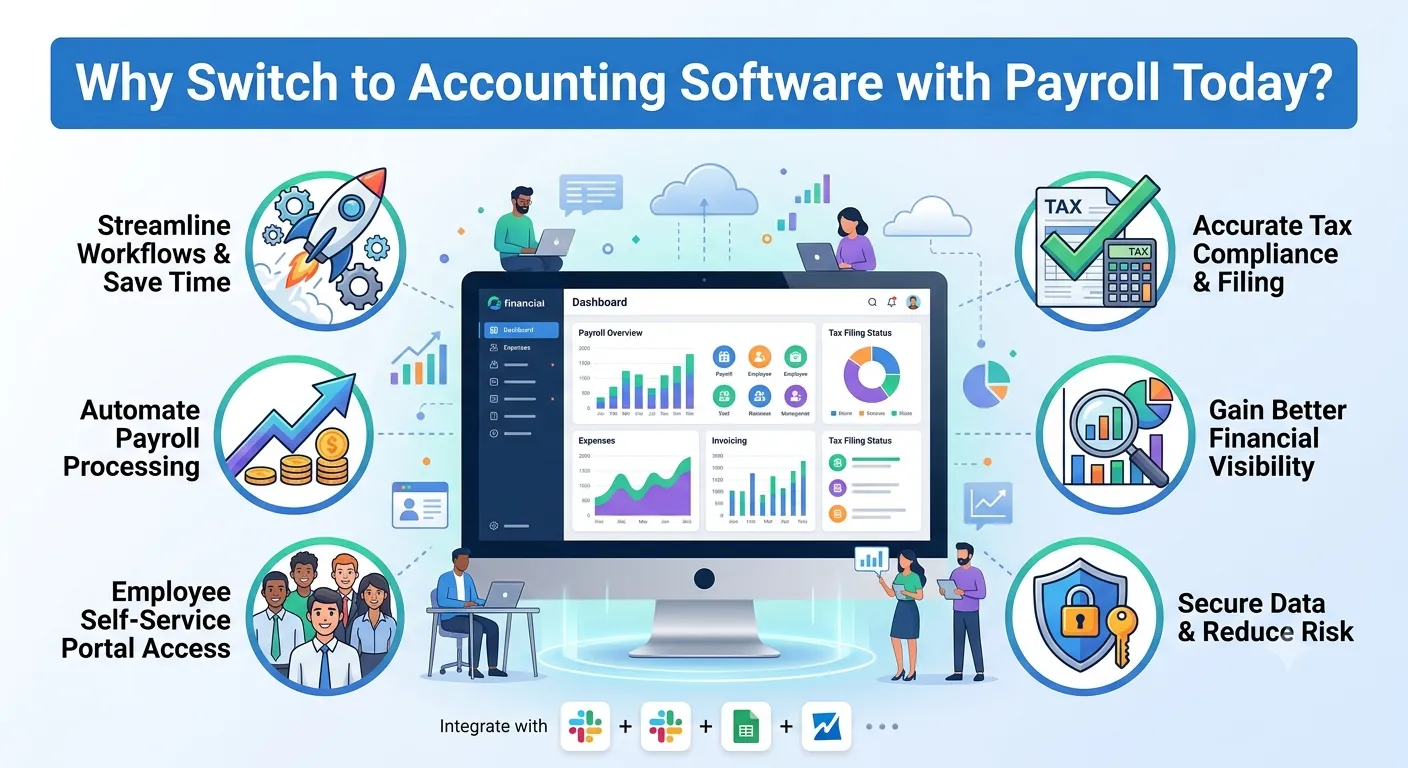
Running payroll through one system and bookkeeping through another often means the same numbers get entered twice, once for paychecks and again for the books, and that duplication creates room for small mismatches to creep in over time without anyone noticing right away.
Catching those discrepancies later usually takes more effort than it would have taken to avoid them in the first place. Looking at what changes when both functions live in one place is a reasonable starting point before considering accounting software with payroll as an option.
At a Glance
● How can combining payroll and accounting reduce duplicate data entry?
● What other practical benefits tend to come with an integrated system?
● What factors are worth considering before making the switch?
Why Move to Accounting Software with Payroll Today?
Having separate systems for payroll and bookkeeping isn’t a problem in itself but requires someone to manually keep both sets of records in sync. Accounting software with payroll built in addresses that specific gap by keeping both functions under one roof.
Reduce Duplicates and Reconciliation Errors
If payroll and accounting are on separate platforms, wages, deductions, and tax withholdings typically have to be entered or imported into the accounting system after-the-fact, creating another step in the process where errors can be made.
A typo in one system that doesn't get caught before reconciliation can throw off reports and take real time to track down later, sometimes well after the pay period has closed.
Combining both functions through accounting software with payroll generally means wage and deduction data flows directly into the books without a separate manual entry step, which removes one of the more common sources of mismatched numbers between departments.
Other Practical Benefits Worth Considering
Beyond reducing duplicate entry, a few other benefits tend to come up when payroll and accounting share a single system. A few examples:
● A single source for financial reports, since payroll expenses show up automatically without needing a separate import step
● Easier tracking of tax remittance deadlines, since payroll tax obligations sit alongside other business tax records
● Less time spent reconciling two sets of books at month-end or year-end close
These benefits tend to matter more for businesses handling payroll in-house rather than outsourcing it entirely to a third party.
Things to Think About Before You Switch
Not all businesses will automatically benefit from moving to a combined system, and there are a few practical factors worth weighing before making any decision. There may be a time lag in the migration of data from an existing system and in double-checking historical records for accuracy after the transfer is complete.
Anyone used to a separate payroll platform will also face a learning curve, as workflows and terminology can differ between systems in ways that may take a few pay cycles to get used to.
Businesses considering accounting software with payroll are generally better served by evaluating their current pain points first, rather than assuming a combined system automatically solves every bookkeeping challenge they're currently facing.
Conclusion
The real question of whether combining payroll and accounting is a good idea depends on how much manual reconciliation a business is currently doing and how much value the business places on having everything in one place day to day.
There is no one way that is better for all cases, and the correct choice often depends on the particular operational requirements rather than a blanket statement. Businesses weighing their options can find a range of accounting programs for small or medium-sized businesses in Canada that offer this kind of integration to a number of degrees.