Why Software House Compliance Matters for Growing Tech Businesses
By Pakistan's First Online Consultants
25 Views
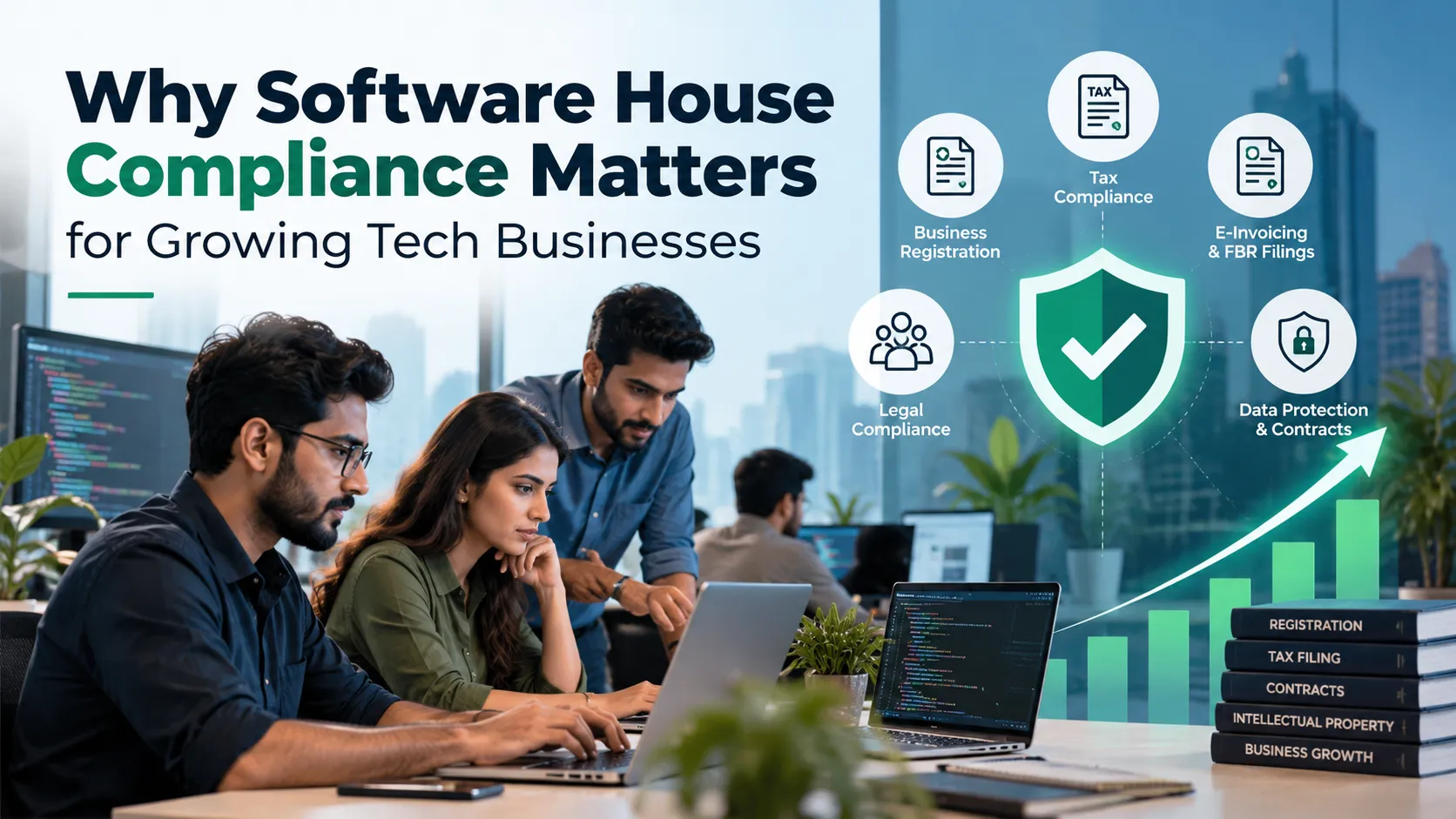
Growth Requires More Than Great Technology
A growing software house needs skilled developers, reliable products, strong client relationships, and an organized approach to tax, company records, employee obligations, and export documentation. When responsibilities are postponed until a deadline or inspection, small administrative gaps can become expensive distractions. Effective software house compliance protects the business while allowing founders to focus on customers, product quality, and long-term growth.
In Pakistan, requirements vary with legal structure, workforce, and business activities. Incorporation is only the beginning. Regular filings, accurate bookkeeping, appropriate registrations, and organized payroll records help a company remain in good standing as it expands.
Why Compliance Matters as You Scale
Informal recordkeeping becomes harder to manage as hiring, revenue, and client volume increase. More employees mean payroll responsibilities; more contracts require better documentation.
A practical company compliance checklist in Pakistan assigns responsibility, tracks deadlines, preserves evidence, and reviews open issues. This repeatable process reduces last-minute pressure and helps management make decisions using consistent information.
Managing Employee Obligations and EOBI
Employee welfare is a core part of responsible business management. As a team grows, employers should assess whether registration with the Employees’ Old-Age Benefits Institution applies. Where coverage is required, EOBI employer registration, accurate employee details, and timely contributions should be integrated into payroll.
The EOBI monthly contribution is generally based on the applicable notified minimum wage: the employer pays five percent, and one percent is deducted from the employee’s salary under the stated scheme. Confirm the wage notification and rules relevant to the establishment’s location. Do not assume one amount applies across every province or territory.
A dependable EOBI contribution calculation process starts with verified staff details and the correct wage basis. Reconcile the amount due with payroll deductions, payment records, and employee lists before submission. Keep receipts and registration documents together, and resolve differences quickly.
Incomplete records can create uncertainty during inspections, reviews, or employee benefit claims. Employers should not deduct money without accurately recording and remitting it as required. A documented payroll compliance process supports transparency and demonstrates responsible employment practices.
Keeping SECP Records Accurate
For a company incorporated through the Securities and Exchange Commission of Pakistan, compliance continues after registration. Applicable annual returns and updates to company officers or other particulars must be handled within prescribed timelines. Requirements vary by company type and circumstances, so confirm which filings apply.
Maintain current records for directors, shareholders, the registered office, and statutory registers. Update relevant records after ownership or leadership changes. A clear SECP compliance calendar helps prevent missed deadlines and supports due diligence when seeking finance, partnerships, or acquisition opportunities.
FBR Registration, Tax Returns, and Bookkeeping
Tax compliance involves more than submitting an annual return. Software houses should keep revenue, expenses, bank receipts, invoices, contracts, and withholding records consistent with actual transactions. Accurate FBR IRIS registration and timely filings help establish a clear tax position. Where withholding tax applies, record deductions and reconcile payments against supporting documents.
Good bookkeeping for software houses helps management understand project profitability, cash flow, unpaid invoices, and tax obligations. It also reveals differences among accounting records, bank statements, and tax filings. Investigate mismatches and correct underlying records before problems recur.
PSEB Registration and Export Documentation
Technology businesses serving international clients should assess their eligibility for Pakistan Software Export Board registration and related facilitation. PSEB registration in Pakistan must be maintained under current requirements, including applicable renewal and documentation obligations. Registration alone does not guarantee a particular tax result.
Contracts, invoices, export receipts, banking evidence, and tax records should consistently describe the services delivered and revenue received. Keep PSEB registration documents organized and verify eligibility before claiming benefits. Complete records help demonstrate that the business meets conditions relevant to its activities.
Common Compliance Gaps
Problems often arise because information is incomplete, outdated, or scattered between departments. Warning signs include missed filing dates, employee lists that do not match payroll, unexplained tax differences, expired registrations, and unrecorded company changes.
Treating obligations as one-time tasks is another risk. Contributions, filings, and records may require ongoing attention. A monthly review is usually easier than reconstructing a year of activity under pressure. Routine reviews turn legal duties into manageable tasks for every team.
Build a Practical Compliance Routine
Assign an owner to each obligation, maintain a shared calendar, and set reminders ahead of deadlines. Store registrations, returns, payment receipts, contracts, invoices, and employee records in secure digital folders with appropriate access controls.
Review payroll and EOBI monthly contribution records each month. Reconcile bank activity and tax deductions regularly. Check company details after leadership changes, and review export documentation before claiming benefits. When rules are unclear, seek qualified advice and verify requirements with the relevant authority rather than relying on outdated checklists or informal social media posts.
When Professional Support Makes Sense
Founders should focus on products, customers, and strategy, but they must ensure obligations are addressed. A qualified adviser can review business structure, identify missing registrations, organize filing schedules, and reconcile payroll and tax records. Good software house compliance services coordinate connected tasks instead of treating each department separately.
Before hiring a consultant, clarify scope, deadlines, required records, responsibilities, and reporting.
Compliance Creates Room for Sustainable Growth
Compliance is more than paperwork. It helps build the trust clients, employees, lenders, partners, and regulators expect from a growing business. Organized employee records, accurate EOBI monthly contribution tracking, reliable tax filings, and current corporate information reduce surprises and support confident planning.
As Pakistan’s technology sector becomes more competitive, strong systems offer a practical advantage. Connecting payroll, tax, company filings, and export documentation helps software houses reduce preventable risk and focus on building valuable technology. Pakistan’s First Online Consultants (PFOC) supports businesses seeking structured compliance guidance and helps identify requirements relevant to their operations.
Strengthen compliance before a missed deadline or unresolved record becomes a larger problem. Review registrations, payroll, filings, and documentation, then maintain the process every month. A company built on accurate records and clear responsibilities is better prepared to scale responsibly.