Why Is Competitor Price Monitoring Important for Dynamic Pricing Strategies?
12 Views
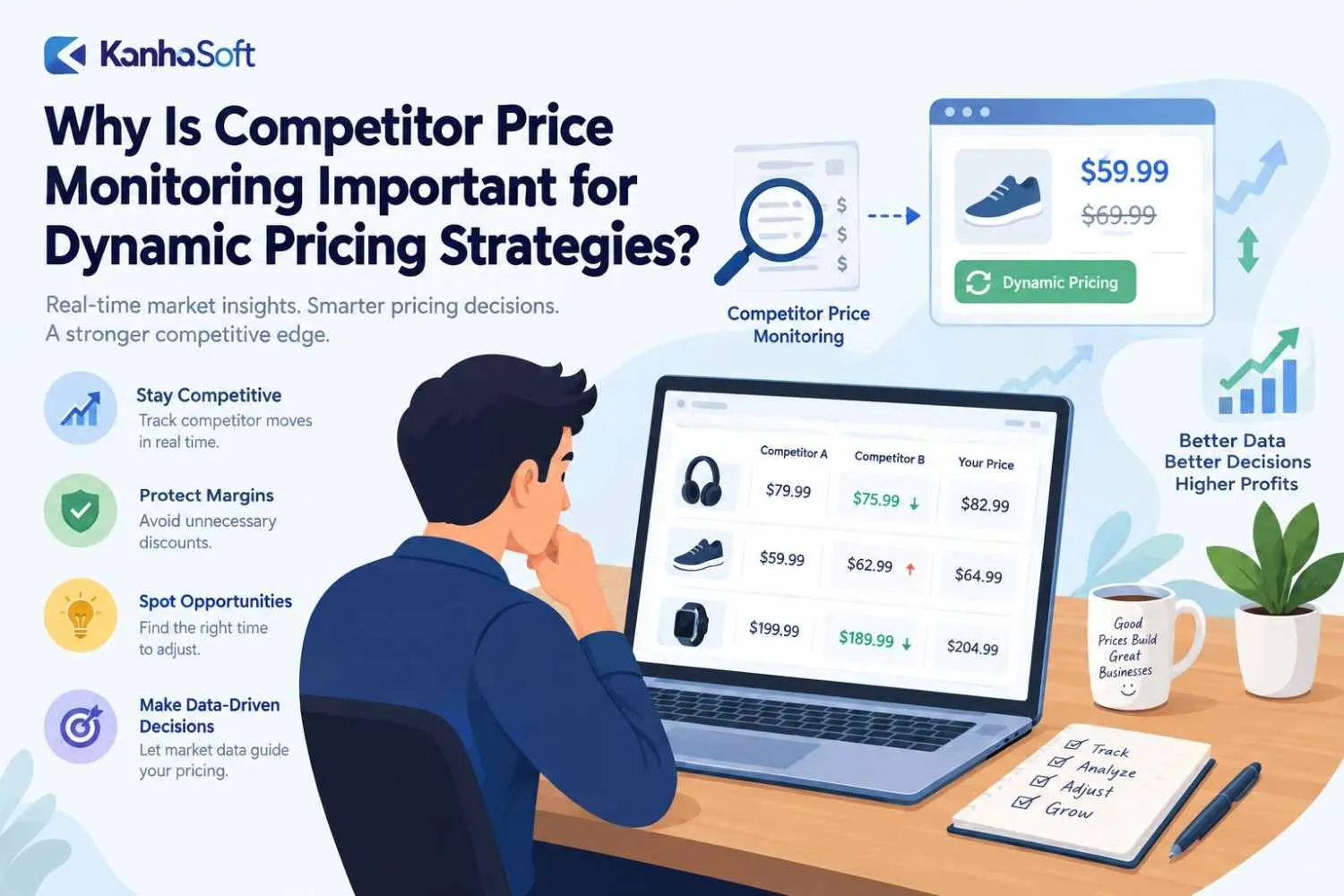
Pricing has never been a “set it and forget it” activity. In competitive markets, a price that looks perfectly reasonable in the morning can suddenly look expensive by lunchtime — because a competitor changed theirs, launched a discount, or decided that apparently everything must be 20% cheaper today.
This is where dynamic pricing becomes useful. Businesses can adjust prices based on demand, inventory, market conditions, customer behavior, and competitor activity. But there is one small problem: dynamic pricing needs fresh information to make sensible decisions.
We have seen this happen before. A business may spend hours creating a pricing strategy, only to discover that the market has already moved in another direction. That is why competitor price monitoring matters. By continuously collecting and analyzing competitor pricing information, businesses can make pricing decisions based on what is actually happening in the market — not what happened last Tuesday.
1. What Is Competitor Price Monitoring?
Competitor price monitoring is the process of regularly tracking and analyzing the prices, discounts, promotions, availability, and other pricing-related information offered by competing businesses.
Traditionally, this meant someone opening dozens of competitor websites, checking product prices, copying numbers into spreadsheets, and hoping nobody changed anything before the report was finished.
That approach does not scale very well.
Automated monitoring uses technologies such as web scraping, APIs, data pipelines, and automated alerts to collect competitor information at regular intervals. Businesses can then compare this information with their own pricing and identify meaningful market changes.
The objective is not simply to know what competitors charge. The real objective is to understand how the market is moving and use that information to make better pricing decisions.
2. What Is Dynamic Pricing?
Dynamic pricing is a pricing strategy where product or service prices change according to changing market conditions.
Instead of maintaining one fixed price, businesses can adjust prices based on factors such as:
- Customer demand
- Competitor prices
- Product availability
- Inventory levels
- Seasonality
- Customer behavior
- Market trends
- Promotions
- Time of day or day of week
Think about airline tickets, hotel rooms, ride-sharing services, and e-commerce products. Their prices can change surprisingly often.
Dynamic pricing can help businesses respond quickly to market conditions. However, it works best when pricing decisions are supported by reliable and timely data.
And this is exactly where competitor price monitoring enters the picture.
3. Why Is Competitor Price Monitoring Important for Dynamic Pricing Strategies?
3.1 Helps Businesses React to Competitor Price Changes
Competitor pricing can change without warning.
A competitor may reduce the price of a popular product to increase sales. Another may increase prices because inventory is running low. A third may introduce a limited-time promotion.
Without regular monitoring, businesses may discover these changes only after losing potential customers.
Competitor price monitoring helps businesses identify these movements faster. Pricing teams can then evaluate whether a response is necessary.
This does not mean matching every price change. Sometimes the smartest response is to do absolutely nothing — which is also a pricing decision.
3.2 Supports Faster Pricing Decisions
Dynamic pricing depends heavily on timing.
If competitor pricing information is several days old, it may no longer represent the actual market. This becomes particularly important in industries where prices change multiple times throughout the day.
Automated data collection allows businesses to receive updated information according to their monitoring requirements.
For example, an e-commerce business selling highly competitive electronics may need much more frequent monitoring than a business selling products with relatively stable prices.
Fresh data gives pricing teams a better foundation for deciding when to change prices and when to leave them alone.
3.3 Helps Maintain Competitive Pricing
Being competitive does not necessarily mean being the cheapest.
A business that continuously undercuts competitors can quickly discover that revenue is increasing while profit is quietly walking out the back door.
Competitor monitoring helps businesses understand their relative market position.
For example, a company may discover that its product is consistently priced 10% higher than similar products. That could indicate a problem — or it could reflect stronger branding, better features, faster delivery, or superior service.
The data provides context. The business still needs to make the decision.
3.4 Protects Profit Margins
Dynamic pricing should not become a race to the bottom.
Suppose a competitor reduces a product price by $5. Automatically reducing the same product by $6 might win a few additional sales, but it could also reduce profitability.
A smarter pricing strategy considers:
- Product cost
- Desired margin
- Competitor pricing
- Customer demand
- Inventory
- Product popularity
- Business objectives
Competitor data becomes one input into the pricing decision rather than the entire decision.
This distinction is important. Good dynamic pricing responds to the market without allowing the market to control the business.
3.5 Identifies Pricing Opportunities
Competitor price monitoring can also reveal opportunities.
Suppose several competitors increase the price of a particular product while demand remains strong. A business may have an opportunity to adjust its own pricing without becoming uncompetitive.
Similarly, if competitors consistently charge premium prices for products with additional features, another company may discover an opportunity to reposition its offering.
The goal is not always to reduce prices. Sometimes the data shows that a business has room to increase them.
And yes, that is usually a much nicer discovery.
3.6 Improves Promotional Planning
Competitor promotions can significantly affect purchasing decisions.
Businesses can monitor:
- Discount percentages
- Sale prices
- Promotional periods
- Coupon offers
- Bundle pricing
- Clearance pricing
- Seasonal campaigns
This helps marketing and pricing teams understand the competitive environment before launching their own promotions.
Instead of offering a discount simply because “everyone else is doing it,” businesses can determine whether a promotion is actually necessary and what level of discount makes commercial sense.
4. How Does Competitor Price Monitoring Work With Dynamic Pricing?
A typical automated pricing workflow can look like this:
Identify competitors → Collect pricing data → Validate data → Compare prices → Analyze market changes → Apply pricing rules → Monitor results
First, businesses identify relevant competitors and products.
Next, pricing information is collected from websites, marketplaces, APIs, or other publicly available sources. The collected information is then cleaned and standardized because competitor product names and formats rarely arrive in a beautifully organized spreadsheet.
The system can then compare competitor prices with internal pricing information.
Finally, predefined pricing rules can help determine whether a price adjustment should occur.
For example:
If competitor prices fall below a defined threshold, review the product price — but never reduce it below the minimum acceptable margin.
This creates a controlled pricing process rather than an automated panic button.
5. What Data Should Businesses Monitor Alongside Competitor Prices?
Price is important, but price alone rarely tells the complete story.
Businesses can monitor additional information such as:
- Product availability
- Stock status
- Original price
- Discounted price
- Promotions
- Shipping charges
- Product variations
- Bundles
- Ratings
- Reviews
- Product specifications
- Delivery information
Consider two products that appear identical at first glance.
One costs $100 with free shipping. Another costs $95 but adds a $10 delivery charge at checkout.
Looking only at the displayed price could lead to the wrong conclusion.
This is why dynamic website data should be collected with enough context to support meaningful competitive analysis.
6. Benefits of Automating Competitor Price Monitoring
Manual monitoring can work when a business has a handful of products and two competitors.
Things become slightly less charming when there are thousands of products, dozens of competitors, and prices changing throughout the day.
Automation can help businesses:
- Monitor large product catalogs
- Track multiple competitors
- Reduce manual research
- Detect price changes faster
- Generate automated alerts
- Maintain historical pricing records
- Compare market prices at scale
- Support data-driven pricing decisions
Businesses looking to scale this process can also use competitor price monitoring services to automate data collection, processing, and competitive pricing analysis.
The important part is that automation should reduce repetitive work while keeping human oversight where strategic decisions are involved.
7. What Challenges Can Businesses Face With Competitor Price Monitoring?
Competitor price monitoring sounds straightforward until businesses actually start doing it at scale.
Some common challenges include:
Changing Website Structures
Competitor websites can change their layouts, HTML structures, product pages, or navigation systems. Monitoring systems need to adapt accordingly.
Dynamic Content
Some websites load pricing information through JavaScript after the initial page loads. Simple data collection methods may fail to capture this information.
Product Matching
One competitor may call a product “Wireless Headphones Pro,” while another calls it “Bluetooth Headset Pro.” Matching equivalent products requires more than comparing names.
Data Quality
Collected information can contain missing prices, duplicates, outdated records, or inconsistent formats.
Anti-Bot Measures
Websites may implement mechanisms that restrict automated requests. Monitoring systems therefore need responsible and technically appropriate approaches.
The bigger lesson is simple: collecting data is not enough. The data needs to be accurate, consistent, and usable.
8. How Can Businesses Use Competitor Pricing Data Without Starting a Price War?
The easiest mistake in dynamic pricing is reacting to everything.
Competitor decreases price → business decreases price.
Competitor decreases again → business decreases again.
Eventually, everyone has achieved the impossible: lower prices and lower margins.
Instead, businesses should establish pricing rules and boundaries.
These can include:
- Minimum profit margins
- Maximum discount levels
- Minimum and maximum selling prices
- Competitor price thresholds
- Inventory-based pricing rules
- Demand-based adjustments
Businesses should also consider brand positioning.
A premium brand does not necessarily need to match a budget competitor. Customers may be paying for quality, service, warranty, convenience, or reputation.
Competitive intelligence should inform the strategy — not replace it.
9. Competitor Price Monitoring Across Different Industries
E-commerce
Online retailers can monitor thousands of products across competing stores and marketplaces. This can help them identify price changes, discounts, and availability.
Travel and Hospitality
Hotels and travel businesses can monitor room rates, seasonal changes, availability, and promotional offers to support demand-based pricing.
Retail
Retail businesses can compare prices across stores, marketplaces, and competitors to understand market positioning.
Electronics
Electronics often experience frequent price changes, especially during product launches, sales events, and inventory changes.
SaaS
Software companies can monitor competitor subscription plans, package pricing, feature differences, and promotional offers to understand their position within the market.
10. How to Build an Effective Competitor Price Monitoring Strategy
A successful monitoring strategy starts with clear objectives.
Step 1: Define the Pricing Goal
Determine whether the goal is improving competitiveness, protecting margins, increasing conversions, or identifying pricing opportunities.
Step 2: Identify Relevant Competitors
Not every competitor needs to be monitored. Focus on businesses that genuinely compete for the same customers.
Step 3: Select Products and SKUs
Determine which products have the greatest pricing sensitivity.
Step 4: Decide Monitoring Frequency
Some products may require hourly monitoring, while others may only need daily or weekly checks.
Step 5: Establish Pricing Rules
Define acceptable price ranges, minimum margins, and conditions for price changes.
Step 6: Validate Collected Data
Remove duplicates, identify missing values, and verify that products are correctly matched.
Step 7: Connect Data With Pricing Systems
Where appropriate, integrate competitive information with internal databases, analytics platforms, or pricing engines.
Step 8: Measure Results
Track revenue, margins, conversion rates, and other business metrics to understand whether the strategy is actually working.
11. What Metrics Should Businesses Track?
A dynamic pricing strategy should be measured rather than simply admired.
Businesses can monitor:
- Conversion rate
- Gross margin
- Revenue per product
- Sales volume
- Competitor price gap
- Inventory turnover
- Average selling price
- Promotional performance
- Customer response
For example, if a price reduction increases conversions by 5% but decreases gross margin by 15%, the change may not be a particularly impressive victory.
The best pricing strategy balances competitiveness, customer demand, and profitability.
12. How Can Web Scraping Support Competitor Price Monitoring?
Web scraping can help businesses automatically collect publicly available competitor information from websites and online marketplaces.
Instead of manually checking each page, automated systems can collect relevant information and transfer it into structured datasets.
This information can then be:
- Cleaned
- Validated
- Stored
- Compared
- Analyzed
- Visualized
- Used for alerts or pricing workflows
For businesses dealing with large catalogs, automation becomes particularly valuable.
However, the quality of the final pricing strategy depends on the quality of the collected information. Poorly matched products or outdated prices can produce poor pricing decisions — no matter how sophisticated the dashboard looks.
13. When Should a Business Consider Automated Competitor Price Monitoring?
Automation becomes increasingly valuable when:
- Product catalogs are large.
- Competitors frequently change prices.
- Multiple marketplaces are involved.
- Manual monitoring consumes significant employee time.
- Pricing decisions need to happen quickly.
- The business operates across multiple regions.
- Competitor promotions change frequently.
- Pricing teams need historical market data.
A spreadsheet can be useful for early-stage research.
But when someone starts maintaining twelve spreadsheets named “Final Price Tracking,” “Final Price Tracking New,” and “Final Price Tracking New FINAL,” it may be time to consider automation.
Conclusion
Dynamic pricing is not about changing prices simply because a competitor changed theirs.
It is about understanding what is happening in the market and responding intelligently.
Competitor price monitoring provides the information businesses need to make those decisions. When combined with demand data, inventory levels, internal costs, customer behavior, and clear pricing rules, it can turn pricing from a reactive task into a strategic advantage.
At the end of the day, the goal is not to chase every competitor price — that would be exhausting, and probably not very profitable. The goal is to know when the market has changed, why it has changed, and whether changing your own price actually makes business sense.
FAQs
1. What is competitor price monitoring?
Competitor price monitoring is the process of tracking competitor prices, discounts, promotions, availability, and related market information to support better pricing decisions.
2. Why is competitor price monitoring important for dynamic pricing?
It provides current competitive information that businesses can use alongside demand, inventory, costs, and other factors when adjusting prices.
3. How often should competitor prices be monitored?
The ideal frequency depends on the industry and product. Fast-moving e-commerce products may require frequent monitoring, while stable products may only need daily or weekly tracking.
4. Can competitor price monitoring be automated?
Yes. Businesses can use web scraping, APIs, automated data pipelines, alerts, and pricing systems to automate much of the monitoring process.
5. Does dynamic pricing always mean lowering prices?
No. Dynamic pricing can increase or decrease prices depending on demand, inventory, competition, seasonality, and business objectives.
6. How does competitor price monitoring improve profitability?
It helps businesses avoid unnecessary discounts, identify pricing opportunities, understand market movements, and maintain pricing within acceptable margin levels.
7. What information should businesses monitor besides competitor prices?
Businesses can monitor discounts, stock availability, shipping charges, promotions, product variations, bundles, ratings, reviews, and other relevant competitive information.
8. Is web scraping useful for competitor price monitoring?
Yes. Web scraping can automate the collection of publicly available pricing and product information from websites and marketplaces, particularly when businesses need to monitor large numbers of products.
9. Can small businesses use dynamic pricing?
Yes. Small businesses can start with a limited number of products, competitors, and pricing rules and gradually expand their monitoring process as their needs grow.
10. How can businesses avoid a price war?
Businesses should avoid automatically matching every competitor price. Instead, they should establish minimum margins, pricing boundaries, and rules based on demand, inventory, costs, and overall business strategy.