Why Do Test Automation Challenges Slow Down Software Releases?
7 Views
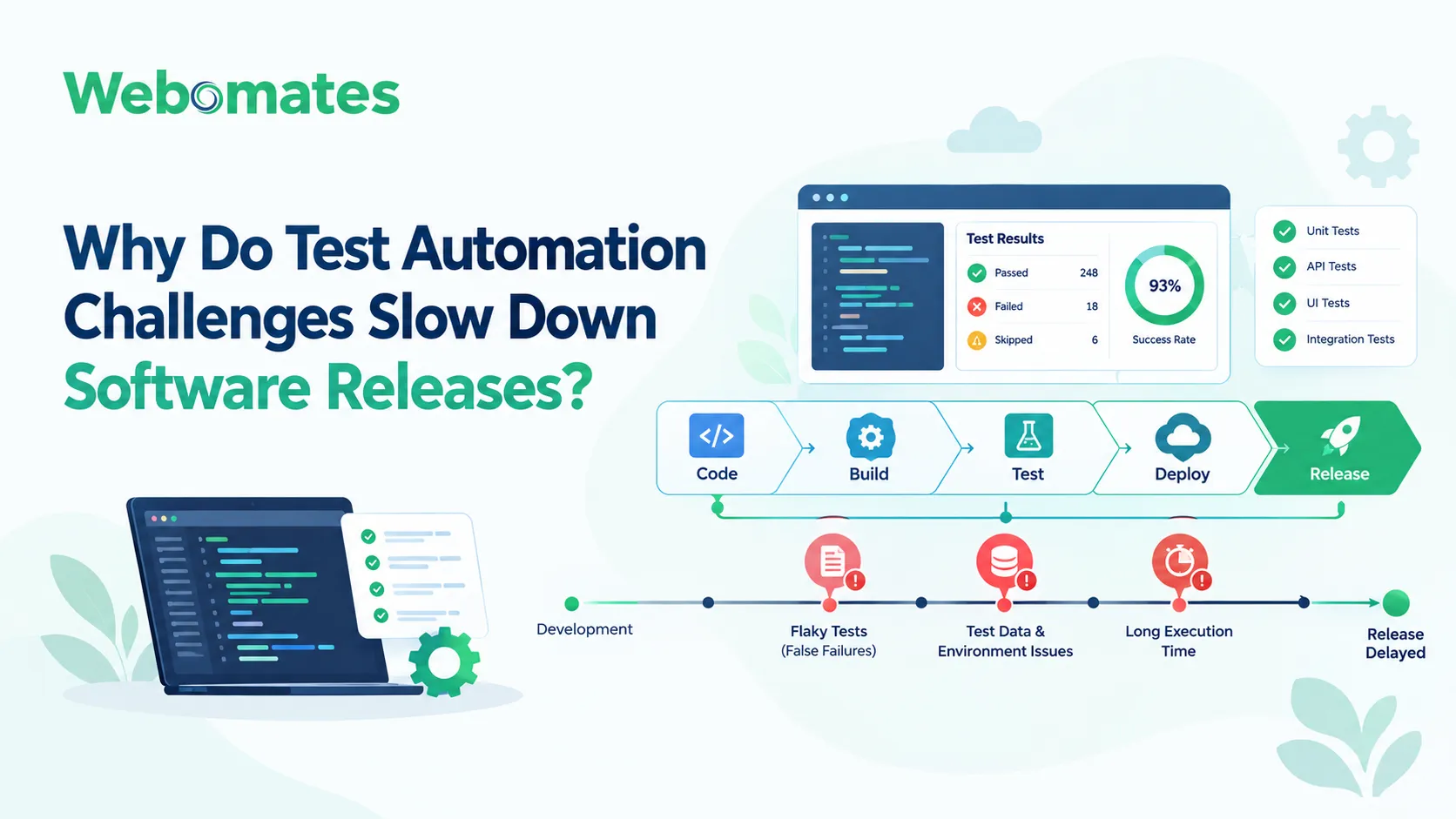
Test automation challenges can delay software releases by increasing testing time, creating unreliable results, and making it harder for teams to identify defects before deployment. Although automation is designed to accelerate software testing, poorly maintained scripts, unstable test environments, and incomplete test coverage can create additional work for QA engineers and developers. When these problems remain unresolved, teams spend valuable time investigating failures instead of delivering improvements. Understanding the causes of delays helps organizations build a more dependable testing process and release software with greater confidence.
Unstable Test Scripts Create Repeated Work
One of the biggest reasons behind Test automation challenges is test script instability. Automated tests may fail when application interfaces change, element locators become outdated, or workflows are modified during development. Sometimes, these failures indicate genuine defects; in other cases, they occur because the scripts no longer match the application.
QA teams must investigate each failure to determine its cause. Repeatedly updating scripts, rerunning tests, and reviewing results can consume time that would otherwise support new test development. When these issues affect critical regression suites, release decisions may be delayed.
Teams can reduce instability by using maintainable test frameworks, reusable components, reliable locators, and regular script reviews. Keeping test cases aligned with application changes also helps prevent unnecessary maintenance.
False Failures Reduce Team Confidence
Test automation challenges become more disruptive when automated tests produce false failures, often called false positives. These failures occur when a test reports a problem even though the application is functioning correctly. Network delays, timing issues, inconsistent test data, and unavailable services can all contribute to unreliable results.
When false failures occur frequently, engineers may need to rerun the same test several times before understanding what happened. This creates additional work and makes it difficult to identify genuine defects quickly. Over time, teams may begin to distrust automated reports, reducing the value of automation in release decisions.
To address this issue, teams should monitor flaky tests, improve synchronization, stabilize test environments, and record sufficient diagnostic information. Reviewing recurring failures can help distinguish application defects from infrastructure or script problems.
Incomplete Test Coverage Leaves Risks Undetected
Automation cannot accelerate releases effectively when important application workflows remain untested. Limited test coverage may leave critical user journeys, integration points, business rules, or edge cases dependent on manual validation. As a result, teams may discover defects late in the release cycle, when fixing them becomes more disruptive.
A strong testing strategy should prioritize scenarios according to business risk, application usage, and the potential impact of failure. Frequently used features, high-risk transactions, and areas affected by recent code changes deserve particular attention.
Teams should also review test coverage whenever requirements or application architecture change. Combining automated regression tests with targeted exploratory and manual testing helps identify gaps without attempting to automate every possible scenario.
Slow Feedback Delays Development Decisions
Test automation challenges also arise when test suites take too long to execute. Large regression suites, unnecessary test duplication, limited infrastructure, and inefficient execution can extend feedback cycles. Developers may have to wait for test results before merging code or moving a build toward deployment.
Delayed feedback makes defect diagnosis harder because more changes may accumulate before a failure is identified. It can also create bottlenecks in continuous integration and continuous delivery pipelines, especially when multiple teams depend on the same testing resources.
Organizations can improve execution speed by selecting appropriate tests for each pipeline stage, running independent tests in parallel, removing redundant cases, and prioritizing fast checks before comprehensive regression testing. Faster feedback helps developers resolve issues while the relevant code changes are still easy to understand.
Poor Test Data and Environment Management
Reliable automation depends on predictable test data and consistent environments. Missing records, outdated datasets, shared-state conflicts, configuration differences, and unavailable dependencies may cause tests to behave differently across executions.
These problems make results difficult to reproduce and increase the time needed to identify the actual source of a failure. A test that passes in one environment but fails in another can delay release approval while teams investigate whether the issue originates in the application, configuration, or infrastructure.
Using controlled test datasets, isolated environments where practical, documented configurations, and repeatable setup procedures can improve consistency. Teams should also establish clear processes for refreshing test data and recovering from environment failures.
Communication Gaps Slow Defect Resolution
Testing involves developers, QA engineers, product owners, and operations teams. When test reports lack context or ownership is unclear, defects may remain unresolved while teams exchange messages to understand the issue. Missing screenshots, logs, reproduction steps, and environment details can further extend investigation time.
Clear defect reports should explain the observed behavior, expected outcome, affected build, reproduction steps, and available diagnostic evidence. Defining responsibilities for triage and resolution also helps prevent issues from being overlooked.
How Can Teams Reduce Release Delays?
Reducing Test automation challenges requires a consistent improvement process rather than simply adding more automated tests. Teams should track meaningful indicators such as test execution time, flaky-test frequency, defect detection trends, maintenance effort, and failures discovered after release.
Regularly reviewing these indicators helps identify bottlenecks and determine where improvements will have the greatest impact. Maintainable scripts, dependable environments, risk-based coverage, and clear reporting can make automated testing more useful throughout the delivery pipeline.
Conclusion
To reduce Test automation challenges, organizations should treat automation as an ongoing engineering practice that requires monitoring, maintenance, and collaboration. Reliable test results and timely feedback allow teams to identify defects earlier, limit avoidable rework, and make release decisions with better information. Businesses seeking a more structured approach to software quality can explore how Webomates supports software testing workflows and helps teams work toward more reliable releases.