Which Physics Laboratory Instruments Are Best with STEM Kits?
By Payal Verma
62 Views
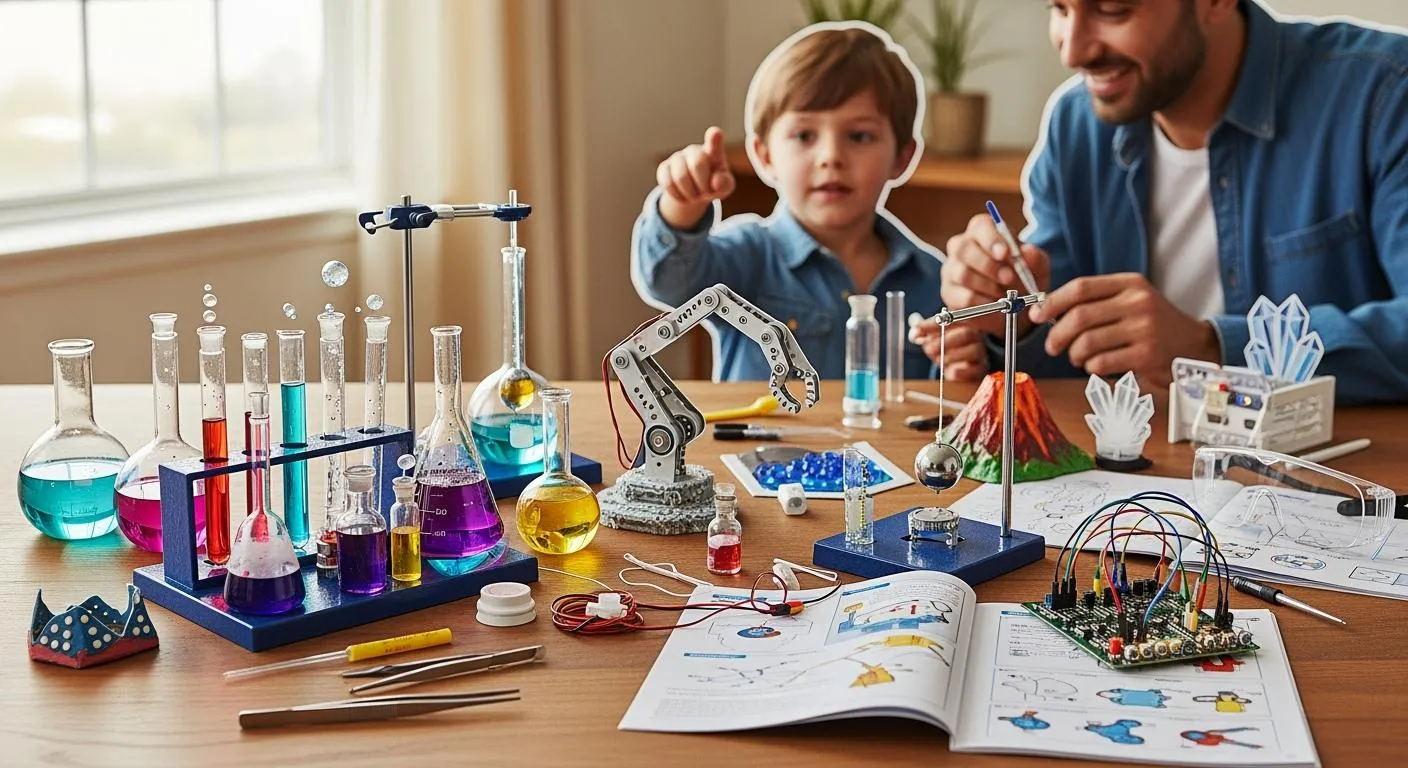
Practical learning is an essential part of science education, helping students understand theoretical concepts through real world experiments. Physics laboratory instruments provide hands on experience with fundamental principles such as motion, electricity, magnetism, optics, and mechanics. When combined with Stem Kits, these instruments create an engaging learning environment that encourages creativity, innovation, and critical thinking. Schools, colleges, and educational institutions increasingly use this combination to strengthen students' scientific knowledge and problem solving skills.
Importance of Physics Laboratory Instruments
Physics laboratory instruments allow students to observe scientific principles in action instead of only reading about them in textbooks. Practical experiments improve conceptual understanding, enhance analytical thinking, and build confidence in conducting scientific investigations.
Common physics laboratory instruments include vernier calipers, micrometers, spring balances, pendulums, stopwatches, voltmeters, ammeters, galvanometers, resistance boxes, optical benches, prisms, lenses, tuning forks, and spectrometers. These tools enable students to perform accurate measurements and understand the relationship between theory and practical application.
Well equipped laboratories also help develop observation, measurement, recording, and data analysis skills that are valuable for higher education and future careers in science and engineering.
Why STEM Kits Complement Physics Laboratories
Stem Kits are designed to promote Science, Technology, Engineering, and Mathematics education through interactive activities and project based learning. Unlike traditional laboratory exercises, STEM Kits encourage students to design, build, test, and improve models using scientific principles.
When used alongside physics laboratory instruments, STEM Kits make learning more engaging and enjoyable. Students can apply classroom concepts to create working models such as electric circuits, hydraulic systems, renewable energy projects, robotic mechanisms, and structural engineering models.
This practical approach helps learners develop creativity, teamwork, communication, and innovation while reinforcing important scientific concepts.
Best Physics Laboratory Instruments to Use with STEM Kits
Several physics laboratory instruments work exceptionally well with STEM Kits. Measuring instruments such as vernier calipers and micrometers help students perform precise calculations during engineering projects. Electrical instruments including voltmeters, ammeters, multimeters, and power supplies allow students to build and analyze electrical circuits safely.
Optical instruments such as convex and concave lenses, mirrors, prisms, and optical benches help students explore light, reflection, and refraction through interactive experiments. Mechanical instruments like pulley systems, spring balances, inclined planes, and force tables support STEM engineering activities involving motion and force.
Timing devices, thermometers, magnets, electromagnets, and wave demonstration equipment also enhance project based learning by allowing students to investigate various scientific phenomena through experimentation.
Educational Benefits of Combining Both
Combining physics laboratory instruments with Stem Kits creates a balanced educational experience that integrates theory with practical application. Students become active participants in learning rather than passive observers. They gain valuable experience in experimentation, problem solving, logical reasoning, and collaborative learning.
Teachers also benefit because STEM based activities increase classroom engagement and encourage inquiry based education. Students learn to design experiments, collect data, analyze results, and improve their solutions through repeated testing. This process develops scientific thinking and prepares learners for advanced academic and professional challenges.
Furthermore, this integrated approach supports national education goals that emphasize innovation, technical skills, and experiential learning, making science education more relevant to today's technology driven world.
Conclusion
Physics laboratory instruments and Stem Kits together create an effective learning environment that combines scientific theory with practical experience. They improve analytical thinking, creativity, and problem solving while making science education more interactive. This combination prepares students with essential skills needed for future academic success, engineering studies, scientific research, and technology based careers.
Related Reading
Top 10 Hidden Secrets About Business & Finance You Need to Know
Welcome to our in-depth exploration of Business & Finance. In an era defined...
Why Business & Finance is Transforming the Global Industry Landscape
Welcome to our in-depth exploration of Business & Finance. In an era defined...