Which Fastener Types Are Best for Heavy-Duty Applications?
68 Views
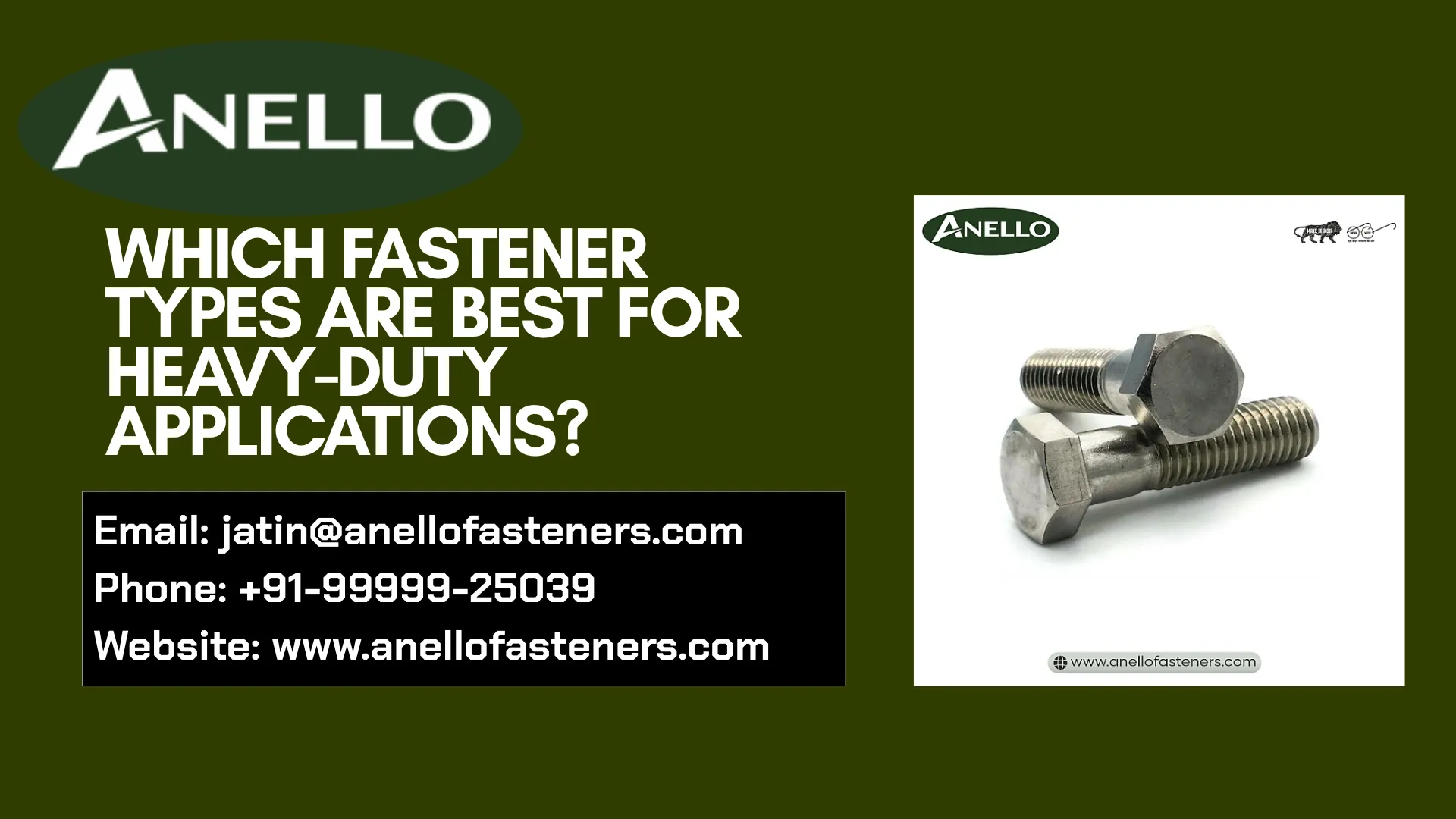
Heavy-duty failures rarely start with the machine. They start with the wrong joint.
I’ve seen businesses spend lakhs on equipment, fabrication, foundations, motors, frames, and steel structures… then save a few rupees on the fastener holding everything together. Honestly, that’s where the real risk begins.
For heavy-duty work, fasteners aren’t just “small hardware.” They carry load, absorb vibration, resist corrosion, manage alignment, and keep assemblies stable when pressure, movement, heat, and impact start doing their job.
And they always do.
Why Heavy-Duty Fasteners Need a Different Mindset
Look, a normal screw may work fine on a light panel or enclosure. But heavy-duty applications? Different game.
You’re dealing with tensile strength, shear load, torque control, thread engagement, surface coating, fatigue resistance, and sometimes even chemical exposure. That’s why business owners buying from a Fasteners Manufacturer shouldn’t only ask, “What size is this?” They should ask, “What load will this joint face after six months of real use?”
There’s a difference.
A big one.
Heavy-duty industries like construction, railway parts, automotive fabrication, machinery manufacturing, structural steel, warehouse racking, and plant maintenance need hardware that doesn’t loosen, snap, rust, or deform under stress. Cheap material may look similar on day one, but after vibration and load cycles, the truth comes out.
The Fastener Types That Actually Hold Up
High-Tensile Bolts and Nut Assemblies
For heavy machinery, structural frames, cranes, trailers, and industrial equipment, high-tensile bolts are usually the first choice. They’re designed to handle serious clamping force without stretching beyond safe limits.
Pair them with the right nut fastener, washer, and torque setting, and you get a joint that behaves predictably. That’s the key word — predictably.
I’ve seen clients replace standard mild-steel bolts with high-tensile bolt sets and immediately reduce loosening issues in vibrating equipment. Not magic. Just correct selection.
A reliable Fasteners Manufacturer in India will usually guide you on grade, coating, thread type, and application suitability instead of just selling whatever is available in stock.
Heavy-Duty Screws for Fittings and Fabrication
Not every heavy-duty job needs a large bolt. Sometimes the smarter choice is strong industrial screws, especially in enclosures, metal fittings, panels, brackets, machine guards, and assembly units.
This is where fasteners screws bolts selection matters.
For example, fitting screws used in industrial assemblies must have proper head design, thread grip, and material strength. A wrong screw head can strip. A poor thread can fail. And honestly? Once maintenance teams start drilling out damaged screws, downtime becomes more expensive than the hardware ever was.
That’s the part many purchase teams miss.
Anchor Fastening for Concrete and Structural Loads
When the job involves fixing machinery, base plates, railings, racks, supports, or structural members into concrete, anchors become critical. Especially pin type anchor fasteners.
These are commonly used where firm grip inside concrete is needed, but the exact selection depends on base material, load direction, embedment depth, and site conditions. You can’t treat all anchors the same. A floor-mounted machine with vibration needs different thinking than a static wall bracket.
A good Leading Fasteners Supplier won’t just quote an anchor size. They’ll ask where it’s going.
And if they don’t ask… be careful.
Dowel Pins for Alignment, Not Just Holding
Here’s the thing: not every component is meant to “pull together.” Some parts need accurate alignment. That’s where dowel pins come in.
In dies, fixtures, jigs, machine assemblies, automotive parts, and precision fabrication, dowel pins help maintain exact positioning between two components. Bolts provide clamping force, but dowel pins handle alignment and shear control better in many cases.
Small part. Big responsibility.
When alignment is wrong, wear increases. Vibration starts. Holes elongate. Then people blame the machine.
Don’t Buy Only by Size — Buy by Application
A 10 mm part isn’t automatically suitable just because the drawing says M10. Material grade, finish, pitch, hardness, coating, and tolerance matter.
For outdoor or corrosive environments, zinc plating, hot-dip galvanizing, stainless steel, or special coatings may be needed. For machinery, high-tensile grades and controlled torque matter more. For electrical or panel fittings, finish and head type may become important.
This is why working with experienced Fasteners Suppliers saves headaches. You don’t just need stock. You need the right match.
And no, the cheapest quote usually doesn’t show the full cost.
Why Anello Fasteners Fits Heavy-Duty Buying Needs
At Anello Fasteners, the focus should be simple: supply hardware that performs where ordinary parts start giving trouble. Whether it’s fastener sets, industrial screws, anchors, nuts, bolts, or application-specific components, heavy-duty buyers need consistency in quality, dimensions, and material reliability.
We’ve worked with enough industrial purchase situations to know one thing — buyers don’t want drama. They want dispatch clarity, correct specifications, and parts that don’t come back as complaints from the shop floor.
That’s what separates a regular seller from a Leading Fasteners Supplier in India.
Some buyers compare only with the largest Fasteners Manufacturers, and that’s fair. But size alone isn’t everything. Responsiveness, technical understanding, batch consistency, and honest recommendation matter just as much.
FAQs
Which fastener is best for heavy machinery?
Long-lasting, high-tension bolts with matching nuts and washers are usually preferred since they are able to endure strong clamping loads and vibrations better than standard hardware.
Are anchor fasteners good for heavy-duty applications?
Absolutely. They are great for bolting down machinery, base plates, racks, and securing structural supports in concrete. There are many types of anchors and the appropriate one depends on the load, quality of the concrete, and how deep the fastener is set.
When should dowel pins be used?
Dowel pins should be used when you need to maintain precise alignment. They are often used in dies and fixtures as well as in assemblies and machines with precision requirements and where components are held under a load.
How do I choose the right supplier?
Choose suppliers who understand grades, coatings, load conditions, and application requirements — not just size and price. That’s where a professional Fasteners Manufacturer or supplier adds real value.
Final Word
A heavy-duty fastener is not a small purchase decision. It’s a safety decision, a downtime decision, and sometimes a reputation decision. Buy the right one once, from people who understand the application, and your equipment will thank you quietly — by not failing.
Related Reading
Top 10 Hidden Secrets About Business & Finance You Need to Know
Welcome to our in-depth exploration of Business & Finance. In an era defined...
Why Business & Finance is Transforming the Global Industry Landscape
Welcome to our in-depth exploration of Business & Finance. In an era defined...