Which Cream Separator Is Best for Small Dairy Farms?
By Mei Medical
86 Views
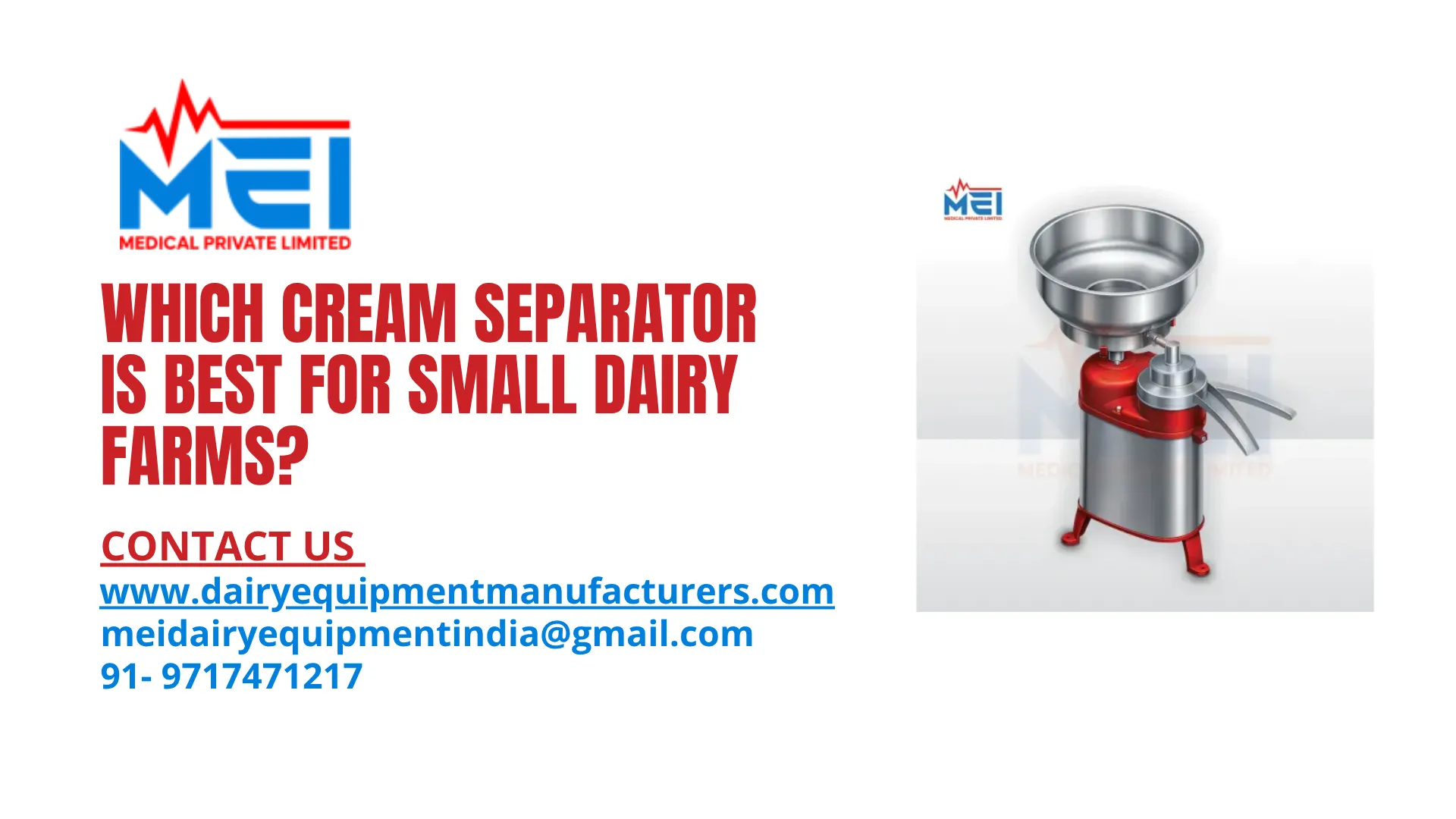
Small dairy farms don’t lose money in one big dramatic mistake. They lose it quietly — in slow skimming, uneven fat separation, milk wastage, cleaning delays, and machines that looked “affordable” on day one but became expensive within six months.
That’s why choosing the right Cream Separator isn’t just a machinery decision.
It’s a workflow decision.
Look, I’ve seen small dairy owners buy oversized equipment because it “looks professional.” I’ve also seen others buy low-grade units and then fight with breakdowns every week. Both are bad calls. The best choice sits somewhere in the middle — practical, durable, easy to clean, and matched to your daily milk volume.
Don’t Buy the Biggest Cream Separator First
Here’s the thing most small dairy farms get wrong. They assume bigger capacity means better value.
Not always.
If your farm handles 100 to 300 litres of milk daily, you don’t need an industrial-size separator built for a large chilling plant. You need a machine that can process your milk smoothly without overloading your staff, power supply, or cleaning routine.
A good separator for a small dairy farm should give consistent cream separation, stable bowl speed, low vibration, and easy dismantling for washing. The cream outlet and skim milk outlet should work cleanly, without frequent adjustment drama.
Simple machines win here.
Manual or Electric — Which One Makes Sense?
Honestly, manual cream separators still have a place, especially in very small village-level operations where electricity isn’t reliable. They’re low-cost, easy to move, and don’t need much infrastructure.
But let’s be real.
If you’re running a business and not just separating milk occasionally, an electric model is usually the better choice. It saves labour, gives more uniform separation, and helps you process milk faster during peak hours. Morning collection doesn’t wait. Your staff doesn’t wait. Customers definitely don’t wait.
For small commercial dairy farms, electric separators in the lower-to-mid capacity range are usually the sweet spot.
What I’d Check Before Choosing a Cream Separator
I wouldn’t start with price. Price matters, of course, but it shouldn’t be the first filter.
I’d check these four things first:
- Daily milk handling capacity
- Cream fat consistency requirement
- Cleaning and maintenance time
- Availability of spare parts and service support
That last point sounds boring… until the machine stops during production.
And that’s where most businesses get it wrong. They compare brochures, not after-sales support. Reliable Cream Separator Suppliers can make a huge difference because even a good machine needs proper guidance, spare bowls, rubber parts, and service backup over time.
Stainless Steel Build Is Not Optional
For dairy use, stainless steel contact parts are not a luxury. They’re basic hygiene.
Milk is sensitive. Fat residue builds up fast. If the separator bowl, discs, and milk-contact components aren’t easy to clean, you’ll invite quality issues. Sour smell, contamination risk, poor product shelf life — small things become big headaches.
A well-built separator should allow regular cleaning without making your operator hate the machine.
That matters more than people admit.
Why Local Support from Indian Manufacturers Helps
Working with Cream Separator Manufacturers in India has one clear advantage: practical understanding of Indian dairy conditions.
Voltage fluctuation, mixed milk quality, rural handling practices, hard water cleaning, long operating hours — imported-style machines don’t always account for this. Good Indian manufacturers usually design for tougher, less controlled environments.
MEI, as a B2B dairy equipment provider, should position its products around that reality. Small dairy owners don’t need fancy promises. They need a machine that works every day, handles local conditions, and doesn’t demand a technician for every small adjustment.
That’s real value.
Best Type of Cream Separator for Small Dairy Farms
For most small dairy farms, the best option is an electric stainless-steel separator with moderate capacity, stable motor performance, simple maintenance, and dependable service support.
Not the cheapest.
Not the biggest.
The right one.
If you process milk daily and sell cream, ghee, butter, paneer, or value-added dairy products, consistency matters. A poor separator gives uneven cream output, which affects your costing. One batch gives good yield, the next doesn’t. Now your pricing, production planning, and customer commitments all become guesswork.
No serious business should run like that.
Questions Small Dairy Owners Usually Ask
Is a manual separator good for a small dairy farm?
It can be, but only for very low-volume use. If you’re processing milk every day for commercial production, an electric model usually gives better speed, consistency, and labour savings.
How much capacity should a small dairy farm choose?
Choose capacity based on your daily milk volume and peak-hour processing need. Don’t buy too small, or you’ll waste time. Don’t buy too large, or you’ll pay extra for capacity you don’t use.
Are Indian suppliers reliable for dairy equipment?
Yes, provided you choose experienced Cream Separator Suppliers in India with proper product support, spare availability, and dairy-sector knowledge. The supplier matters almost as much as the machine.
What is the biggest mistake while buying one?
Buying only on price. Cheap separators often cost more later through downtime, poor separation, spare issues, and cleaning problems.
Final Word
The best Cream Separator for a small dairy farm is the one that fits your milk volume, protects product quality, reduces labour pressure, and keeps running without daily drama. I’d rather see a dairy owner buy one reliable, serviceable machine from experienced Cream Separator Manufacturers than waste money replacing a “budget” unit twice.
That’s not overspending.
That’s business sense.
Related Reading
Top 10 Hidden Secrets About Business & Finance You Need to Know
Welcome to our in-depth exploration of Business & Finance. In an era defined...
Why Business & Finance is Transforming the Global Industry Landscape
Welcome to our in-depth exploration of Business & Finance. In an era defined...