When DIY Fails: Why Professional Window Replacement Services Deliver Better Long-Term Results
By Shivani
82 Views
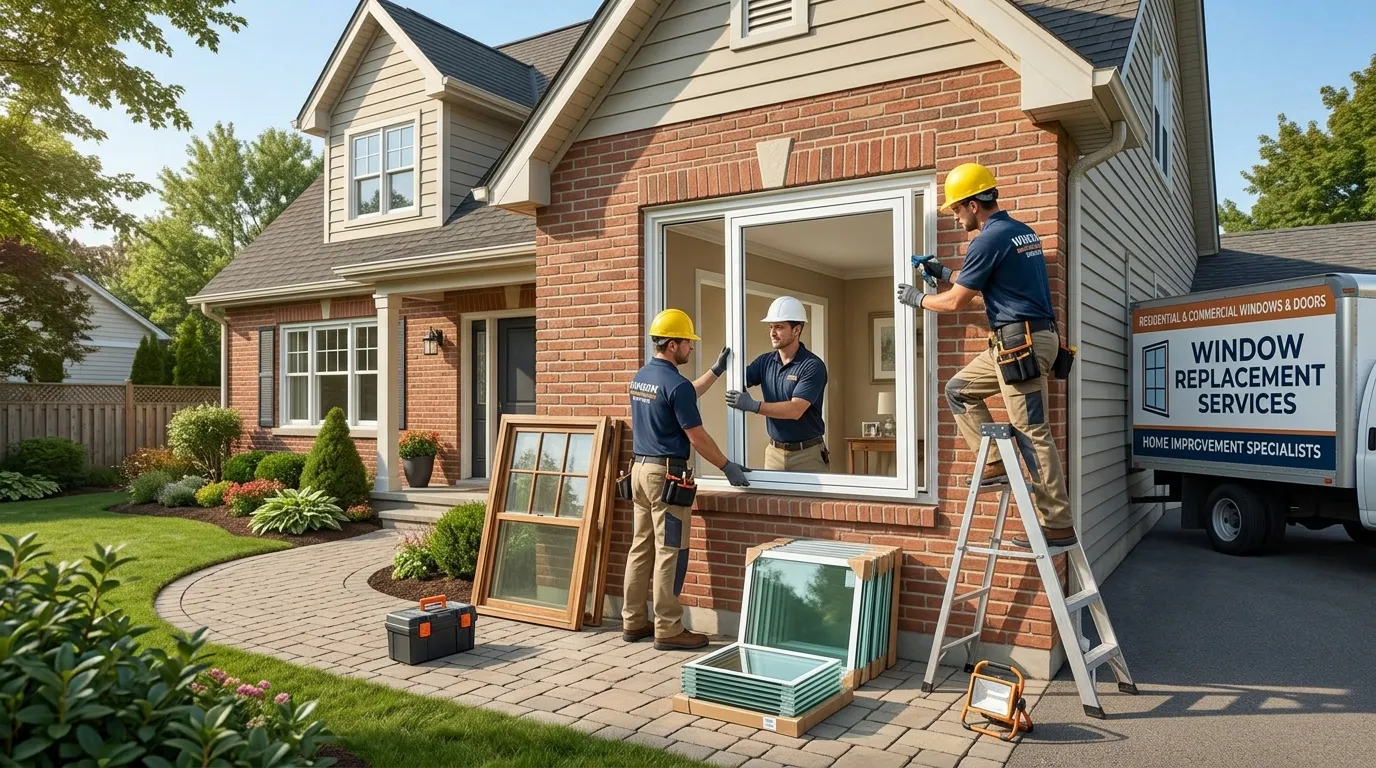
Introduction: The DIY Temptation and the Reality Behind It
There's something deeply appealing about the idea of replacing your own windows. YouTube tutorials make it look straightforward, home improvement stores stock everything you think you need, and the potential savings seem significant — especially when contractor quotes arrive and the numbers feel high.
But here's what those tutorials don't show you: the botched flashing job discovered six months later, the window that never quite seals properly, the voided manufacturer warranty, or the mold growing silently inside a wall cavity because the installation wasn't done correctly the first time.
Window replacement is one of those home improvement projects where the gap between "looks done" and "done correctly" is enormous — and expensive. Window replacement services exist because replacing windows properly requires a level of technical knowledge, precision, and experience that even skilled DIY enthusiasts rarely possess.
In this article, we'll examine exactly where DIY window replacement falls short, what the real costs look like, and why professional window replacement services consistently deliver better long-term results for homeowners across Texas and beyond.
The Growing DIY Culture and Where It Works — And Doesn't
The DIY home improvement market has exploded in recent years. According to Harvard University's Joint Center for Housing Studies, Americans spend over $400 billion annually on home improvements and repairs, with DIY projects accounting for a significant and growing share of that total.
DIY success stories are real — painting rooms, installing light fixtures, replacing faucets, and laying tile are projects where motivated homeowners with moderate skill levels can achieve quality results. These tasks have relatively low technical complexity and modest consequences for minor errors.
Window replacement is a fundamentally different category. It sits at the intersection of:
- Structural integrity — windows are part of your home's building envelope
- Weatherproofing systems — requiring precise flashing, sealing, and drainage sequencing
- Energy performance — dependent on correct installation as much as product quality
- Building code compliance — with legal and insurance implications for non-compliant work
- Manufacturer warranty requirements — most of which require certified professional installation
When any one of these elements is compromised by inexperienced installation, the consequences extend far beyond the window itself.
Where DIY Window Replacement Most Commonly Fails
Understanding the specific failure points of DIY window replacement helps illustrate why professional window replacement services are worth the investment.
Failure Point 1: Incorrect Measurements and Window Sizing
Window replacement begins with precise measurement — and precision in this context means accuracy to within 1/8 of an inch for proper fit and performance. Rough opening dimensions, window unit sizes, and the relationship between them must account for shimming space, flashing layers, and frame expansion.
DIY installers frequently make measurement errors that result in:
- Windows that don't fit correctly — requiring excessive gap-filling that compromises performance
- Ordered windows that must be returned — causing project delays and potential restocking fees
- Windows set incorrectly in the opening — leading to operational problems and seal failures
Professional window replacement services use calibrated measurement tools and follow manufacturer-specified sizing protocols that eliminate guesswork entirely.
Failure Point 2: Improper Flashing Installation
Flashing is the single most critical element of a weatherproof window installation — and the element DIY installers most consistently get wrong.
The Building Science Corporation has documented extensively that improper flashing sequencing is a leading cause of residential water damage originating from window openings. The correct installation sequence — sill pan flashing first, then jamb flashing, then head flashing, each layer overlapping the previous — is non-negotiable for proper water management.
DIY tutorials frequently simplify or skip flashing steps entirely, presenting caulk as an adequate substitute. It isn't. Caulk is a secondary sealant, not a primary water management system. When caulk is used as the sole water barrier — as it commonly is in DIY installations — it's not a question of whether water infiltration will occur, but when.
Failure Point 3: Air Sealing Errors
Proper air sealing around window frames requires using the correct type of foam insulation — low-expansion window and door foam — applied in appropriate quantities and locations.
Standard expanding foam, which many DIY installers use because it's more readily available, can exert significant outward pressure as it cures. This pressure can:
- Bow vinyl or composite window frames — affecting operation and seal integrity
- Distort frame geometry — preventing sashes from opening and closing properly
- Create stress points — that lead to premature seal failure at frame corners
Professional window replacement services use products specifically formulated for window applications — a detail that seems minor but has significant long-term performance implications.
Failure Point 4: Failure to Identify and Address Pre-Existing Damage
One of the most valuable aspects of professional window replacement services is the pre-installation assessment — a systematic inspection of the rough opening, surrounding framing, and wall conditions before the new window is installed.
DIY installers typically remove the old window, find the opening looks "okay," and proceed with installation. What they miss:
- Early-stage wood rot in sill plates and jack studs that isn't visually obvious until probed
- Existing mold in wall cavities revealed only when framing is fully exposed
- Compromised structural headers that require reinforcement before supporting a new window
- Previous improper flashing that has allowed moisture to saturate surrounding insulation
Installing a new window over any of these conditions doesn't solve the problem — it conceals it until the damage becomes severe enough to force expensive remediation.
The Real Cost Comparison: DIY vs. Professional Window Replacement Services
The financial case for DIY window replacement rests on the assumption that the project goes smoothly. It frequently doesn't.
The True DIY Cost Picture
A realistic DIY window replacement cost analysis includes:
- Window unit purchase — typically similar pricing to what professionals source, since most manufacturers sell direct to consumers
- Tools and equipment — levels, caulk guns, foam applicators, flashing materials, safety equipment
- Time investment — industry estimates suggest an experienced professional installs a standard window in 2 to 4 hours; DIY first-timers commonly spend 6 to 12 hours or more per window
- Correction costs — when errors occur, the cost of removing and reinstalling a window can approach or exceed the original installation cost
- Remediation costs — if water damage results from improper installation, the National Association of Home Builders (NAHB) estimates remediation costs of $2,500 to $7,500 per affected wall cavity
The Professional Installation Value Equation
Professional window replacement services offer:
- Guaranteed workmanship — most reputable contractors provide installation warranties of 1 to 10 years covering labor and materials
- Manufacturer warranty preservation — most window manufacturers require certified professional installation to validate product warranties, which commonly cover 10 to lifetime on glass and frames
- Building code compliance — ensuring your project meets local requirements and doesn't create complications during future home sales or insurance claims
- Efficiency — professional crews complete in hours what DIY attempts take days to accomplish
When you factor in the full cost picture — including the very real risk of remediation expenses — professional window replacement services represent the economically rational choice for most homeowners.
Warranty Implications: A Critical Factor Most DIY Installers Overlook
This point deserves its own section because it's both commonly overlooked and financially significant.
Major window manufacturers — including Andersen, Pella, Marvin, and JELD-WEN — specify in their warranty documentation that product warranties are valid only when windows are installed by qualified professionals following manufacturer installation guidelines.
DIY installation typically voids the manufacturer's warranty entirely.
Consider what that means: you might purchase a window with a lifetime glass breakage warranty and a 20-year seal warranty — and have both voided the moment you install it yourself. If a seal fails at year three, you're bearing the full replacement cost without manufacturer support.
Professional window replacement services preserve these warranties, giving you the full protection the manufacturer intended — protection that can be worth thousands of dollars over a window's service life.
Building Code Compliance: The Legal Dimension of DIY Window Replacement
In Texas, window replacement work — particularly in older homes, historic districts, or where structural modifications are involved — may require building permits and inspection by local code enforcement officials.
DIY homeowners frequently proceed without pulling required permits, creating several serious problems:
- Insurance complications — unpermitted work can void homeowner's insurance coverage for related damage
- Real estate transaction issues — unpermitted improvements must be disclosed during home sales and can complicate or kill transactions
- Code violation penalties — local municipalities can require removal and reinstallation of non-compliant work at the homeowner's expense
Professional window replacement services handle permitting requirements as part of the project — ensuring your installation is fully compliant, documented, and protected from these risks.
Energy Performance: Why Installation Quality Determines Real-World Results
Even the highest-rated energy-efficient windows deliver their rated performance only when installed correctly. The U.S. Department of Energy acknowledges that installation quality is a primary determinant of real-world window energy performance — separate from the product's rated specifications.
Gaps in air sealing, improper frame leveling that stresses seals, and inadequate insulation around the frame can collectively reduce a window's effective energy performance by 30% to 50% below its rated specifications.
Professional window replacement services install windows to manufacturer specifications using tested techniques that ensure the product performs as rated — delivering the energy savings you're investing in, rather than a compromised version of them.
You can explore Affordable Replacement Window Systems that combine certified professional installation with high-performance window products — ensuring your investment delivers its full energy-saving potential from day one.
Long-Term Results: What Professional Installation Actually Delivers
The case for professional window replacement services ultimately comes down to long-term outcomes — and the data is consistent:
- Properly installed windows last longer — manufacturer-specified installation reduces stress on seals, frames, and hardware, extending service life
- Energy savings are realized as projected — correct air sealing and flashing deliver the efficiency gains that justify the investment
- Water damage risk is minimized — proper flashing and drainage systems prevent the costly moisture infiltration that DIY installations frequently cause
- Warranties remain valid — providing financial protection for years or decades
- Home value is preserved — professionally installed, code-compliant windows are an asset during real estate transactions; DIY installations with unknown compliance status are a liability
When DIY Is Absolutely Not Recommended
Certain window replacement scenarios should never be attempted as DIY projects, regardless of skill level:
- Second-story or higher window replacement — fall risk is significant without proper equipment and training
- Large or oversized window units — require multiple installers and specialized handling equipment
- Windows in load-bearing walls — where header integrity must be verified by a qualified professional
- Historic or architecturally significant windows — where incorrect installation can cause irreversible damage
- Windows in homes with known moisture or mold issues — where pre-existing damage assessment is essential
Conclusion: The Long Game Always Favors Professional Window Replacement Services
DIY window replacement can feel like the smart financial move — right up until it isn't. The combination of technical complexity, warranty implications, building code requirements, and the very real risk of water damage from improper installation makes window replacement a project where professional expertise genuinely pays for itself.
Professional window replacement services deliver something DIY simply cannot: the confidence that your windows are installed correctly, perform as rated, comply with applicable codes, carry valid warranties, and will protect your home for years without hidden damage developing in the walls around them.
In the long run, that confidence — and the real financial protection it represents — is worth every dollar of professional installation cost.
Related Reading
Top 10 Hidden Secrets About Business & Finance You Need to Know
Welcome to our in-depth exploration of Business & Finance. In an era defined...
Why Business & Finance is Transforming the Global Industry Landscape
Welcome to our in-depth exploration of Business & Finance. In an era defined...