What Makes Inconel 625 Bars Suitable for Marine and Chemical Applications?
By Isha
21 Views
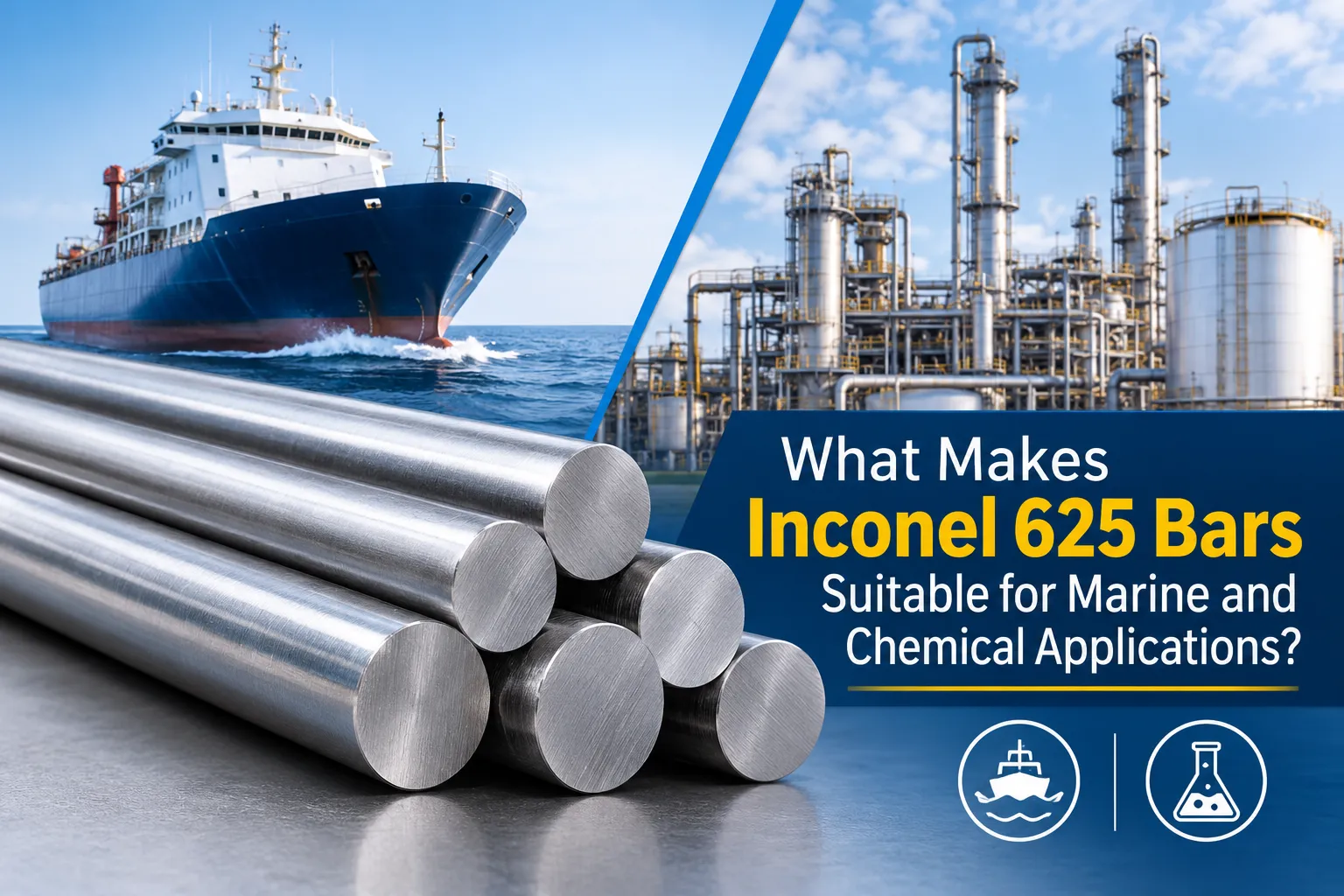
Seawater damages metal in a few weeks, and process chemicals attack it faster. Inconel 625 bars for marine and chemical applications solve that problem with a nickel-based alloy that pairs high strength with excellent corrosion resistance. Offshore parts face seawater, chlorides, salt spray and constant moisture. Chemical plants add acids, aggressive solutions and elevated temperatures. Inconel 625 survives both lists without losing shape or surface integrity.
What Are Inconel 625 Bars?
Nickel forms the base of Inconel 625 (UNS N06625), at a minimum of 58%. Chromium, at 20% to 23%, builds a protective oxide film on the surface. Molybdenum, at 8% to 10%, and niobium, at 3.15% to 4.15%, stiffen the alloy's matrix and deliver strength without precipitation hardening. Bars arrive as solid round sections in a range of diameters and lengths. Fabricators machine them into shafts, fasteners, flanges and custom components.
Excellent Resistance to Marine Corrosion
Seawater carries roughly 19,000 mg/L of chloride, a level that pits many standard stainless grades. Inconel 625 withstands it. Nickel and molybdenum block pitting and crevice corrosion, the two failure modes that dominate submerged service, while the chromium oxide film reforms after scratches or abrasion. Localized corrosion rarely gets a foothold. Splash zones, salt-laden air and daily humidity cause little damage, so offshore components keep their dimensions and surface finish across long service intervals.
Resistance to Chemical Attack
In a chemical plant, one corroded fitting can halt production. Inconel 625 resists chloride-bearing solutions, and its alloy balance covers both oxidizing acids, which chromium handles, and reducing acids, which molybdenum handles. That range matters in plants where process streams change between batches or contain mixed contaminants. Corrosion thins walls, contaminates product and weakens joints. A resistant bar holds its section, protects fluid purity and keeps equipment inside its inspection schedule instead of forcing early repairs.
High Strength in Demanding Conditions
Annealed bar meets ASTM B446 Grade 1 minimums of 827 MPa tensile strength and 414 MPa yield strength. Marine shafts carry torsional loads, and chemical process fasteners hold gasketed joints under constant clamping stress, so a soft alloy would creep or yield. Inconel 625 keeps its load-bearing capacity while it resists corrosion. Machinists turn it into shafts, studs, bolts, bushings and valve parts that need tight tolerances and dependable mechanical performance.
Performance at Elevated Temperatures
Heat speeds up corrosion, so heated equipment needs an alloy that holds both strength and surface protection. Inconel 625 keeps useful mechanical properties from cryogenic temperatures up to about 650°C and resists oxidation to roughly 980°C. Shipboard exhaust-handling parts, heated seawater systems, reactors and heat exchanger components in chemical plants all see this combination of warmth and corrosive media. Strength stays available, and the protective film keeps working.
Resistance to Pitting, Crevice Corrosion, and Stress Corrosion
Molybdenum raises the alloy's resistance to chloride breakdown of the surface film, and chromium rebuilds the film where it thins. Together they give Inconel 625 a pitting resistance equivalent number above 50, well beyond common 316 stainless. Tight gaps under washers, flanges and gaskets invite crevice attack, yet the alloy resists it. Its high nickel content also protects against chloride stress corrosion cracking. Seawater, brine and chemical solutions test every one of these defenses at once.
Marine Applications of Inconel 625 Bars
-
Marine fasteners resist chloride attack and crevice corrosion, so bolts and studs keep their clamping force in submerged seawater joints.
-
Shafts and machined components combine high yield strength with corrosion resistance, so they carry torque without pitting or losing accuracy.
-
Offshore equipment relies on the alloy's resistance to salt spray and constant moisture, which protects mechanical parts above the waterline.
-
Seawater handling parts such as pump shafts and valve stems tolerate chloride-rich water without pitting where turbulence strips protective films.
-
Subsea and marine engineering parts stay immersed for years, and Inconel 625 pairs corrosion resistance with strength to bear pressure.
Chemical Industry Applications
Chemical equipment needs bars that machine into leak-tight parts. Fabricators turn Inconel 625 into valve stems, pump shafts, agitator shafts, fittings and flanges for lines that carry corrosive fluids. Chemical handling systems benefit from chloride and acid resistance, which preserves seal faces and threads. Processing equipment such as reactors and heat exchangers uses the alloy where strength under pressure must coexist with corrosion resistance.
Factors to Consider When Selecting Inconel 625 Bars
Base selection on actual service conditions and check these factors.
-
Required bar diameter and length determine machining allowance and material yield, so confirm finished part dimensions before you order stock.
-
Required mechanical properties such as tensile and yield strength must match component loads, and the heat treatment condition changes those values.
-
Operating temperature sets limits on strength retention and oxidation resistance, so list both normal running temperature and any peak excursions.
-
Chemical or marine exposure defines corrosion risk, so identify chloride levels, acid types, concentrations and whether the part sits immersed.
-
Applicable standards and specifications, such as ASTM B446 or ASME SB446, set composition, testing and documentation requirements for your project.
-
Machining or fabrication requirements matter because Inconel 625 work hardens, so confirm tooling, cutting speeds and welding plans with machinists.
-
Surface and dimensional requirements, including finish, straightness and tolerance, belong on the purchase order so delivered bars need little rework.
Why Inconel 625 Bars Are a Reliable Choice
Four properties carry the case. Corrosion resistance protects surfaces in seawater and chemical streams. Chloride resistance stops pitting, crevice attack and stress corrosion cracking. High strength lets shafts, fasteners and machined parts carry load. Temperature performance keeps those benefits intact when equipment runs hot. Inconel 625 bars for marine and chemical applications deliver all four in one solid product.
Conclusion
Inconel 625 bars for marine and chemical applications work because they combine corrosion resistance with mechanical strength and steady performance in aggressive environments. The right result still depends on matching grade, dimensions, specifications and properties to the real operating conditions of each component. Share your service details with Adarsh Stainless Pvt Ltd to select the correct bar size and condition.
Related Reading
Expert Insights: Navigating the Complex World of Education & Learning
Welcome to our in-depth exploration of Education & Learning. In an era defin...
Why Education & Learning is Transforming the Global Industry Landscape
Welcome to our in-depth exploration of Education & Learning. In an era defin...