What Is Rebar — and Why Bending Quality Decides Structural Safety
By AMACO
57 Views
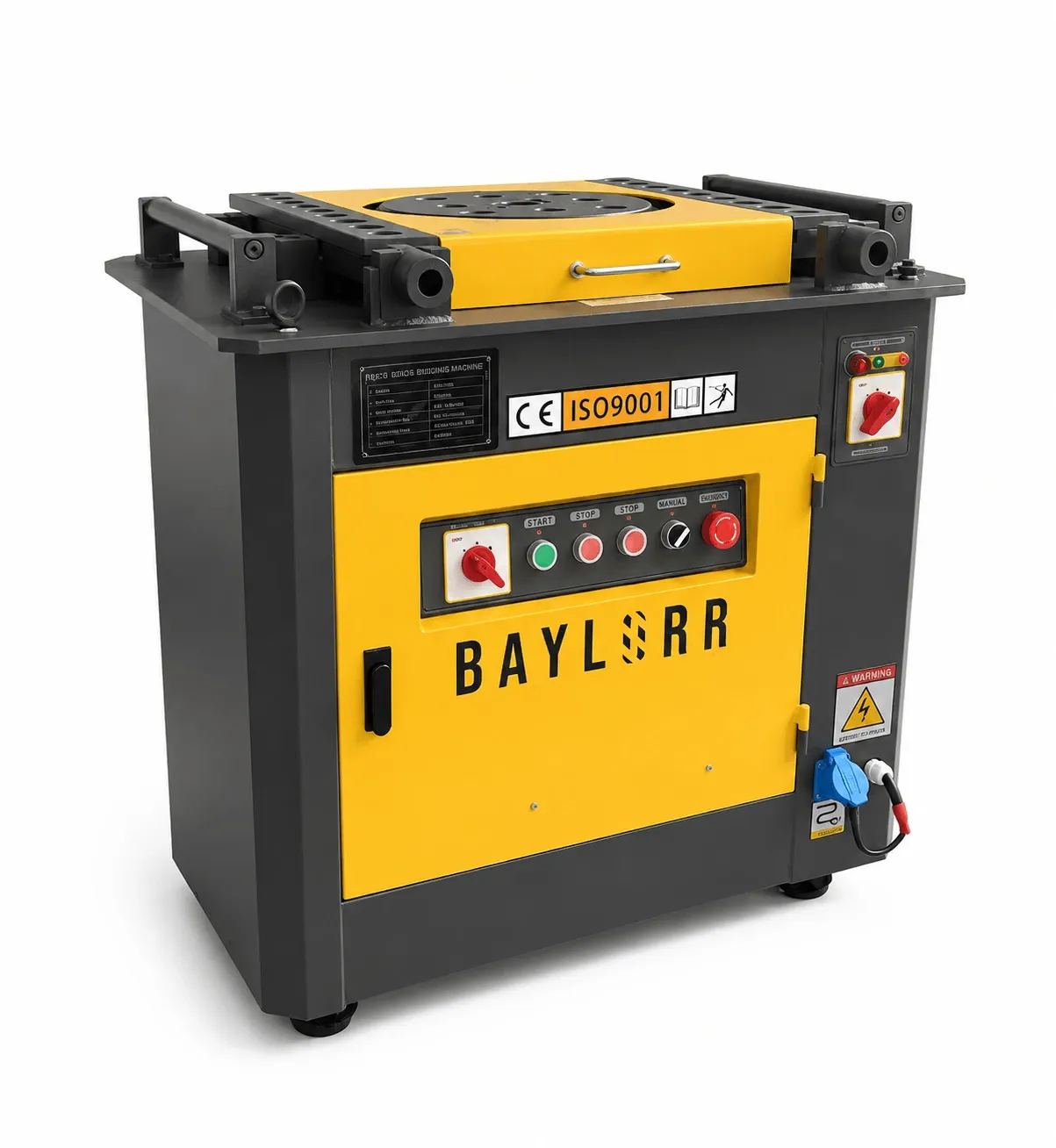
Concrete is remarkable in compression and hopeless in tension. Pull on a plain concrete beam and it cracks at a fraction of the load it can carry when squeezed. Rebar — reinforcing steel bar — exists to solve that single problem. Cast into the concrete, the ribbed steel bars carry the tensile forces the concrete can't, and the two materials work as one composite because they expand and contract at almost identical rates in heat.
That partnership is why every column, slab, and raft foundation in the UAE contains a skeleton of bent and tied steel. And it's also why the quality of the bending — not just the steel itself — quietly decides how safe a structure really is.
Why rebar is ribbed, graded, and bent to code
The ribs (deformations) rolled into rebar aren't decorative. They mechanically lock the bar into the surrounding concrete so load transfers along the full embedded length. UAE structural work typically uses high-yield deformed bars — commonly B500B grade to BS 4449 — in diameters from 8 mm ties up to 32 mm and 40 mm bars in heavy foundations.
Every hook, stirrup, and starter bar on a drawing specifies a bend radius for a reason. Bend steel too tightly and you create micro-cracking on the outer face of the bend, work-harden the bar, and reduce its ductility exactly where stresses concentrate. Codes mandate minimum mandrel diameters — usually 4 to 7 times the bar diameter depending on size — and a proper bend must be formed cold, in one smooth motion, around the correct former.
Where manual bending goes wrong
On small sites you'll still see bars bent over a pipe jammed into a bench. The problems compound fast:
- Inconsistent angles: a stirrup bent at 87° instead of 90° throws off cage geometry and cover distances.
- Tight radii: improvised formers are almost always too small for larger diameters, damaging the bar at the bend.
- Heating to bend: torching thick bars to soften them alters the steel's microstructure and is prohibited for good reason.
- Re-bending: straightening a wrong bend and re-bending it fatigues the steel — a bar gets one chance.
None of these failures show up at inspection. They show up years later as cracking at beam-column joints, or during seismic or settlement events when ductility is suddenly needed.
What machine bending changes
A proper bench-type bending machine forms every bar around a code-sized roller at a controlled speed, with adjustable angle stops that repeat the same bend hundreds of times to the degree. Paired with a hydraulic or gear-driven cutter that shears bars cleanly instead of crushing them, a two-machine steel yard produces cages that fit the drawing — which also means faster fixing and fewer rejected inspections.
For UAE contractors processing steel daily, purpose-built rebar bending and cutting machines pay for themselves in labour hours alone: a single operator on a 42 mm class bench machine outputs what three men produce manually, with none of the quality variance. Italian-engineered lines have set the benchmark in this category for decades — machines from manufacturers like EdilPro, available in the Emirates through the brand's authorised UAE distributor, are commonly still in service after fifteen years of yard work.
A practical spec checklist for buyers
- Match maximum bar diameter to your real workload — a 32 mm machine straining at its limit daily wears faster than a 42 mm machine cruising
- Check the turntable drive: gear-driven tables handle repeated heavy bends better than light-duty friction systems
- Confirm roller and former sets cover every bar size you fix, at code-compliant radii
- Insist on local spare parts and service — a steel yard stops completely when its bender stops
Rebar is the most safety-critical material on any concrete site, and the bending bench is where its performance is either preserved or quietly destroyed. Spend your attention there, and the concrete will take care of the rest.