What Is a Work Platform? Types, Uses & Safety Tips 2026
By ygroup
25 Views
By Y Group Team - Updated for 2026
Have you ever climbed a ladder, leaned sideways to reach a bolt, and felt the whole thing wobble? Many technicians, painters and maintenance crews face this moment every week. It is stressful, and it is risky. The fix is simple: give workers a steady surface to stand on. That is exactly what a work platform does. It lifts a person to the right height, keeps both hands free and gives the feet room to rest.
In this guide, Y Group Team explains the meaning, main types, everyday uses and safety rules in plain language. You will also learn how to pick the right option for your site, whether you work in a factory in Greater Noida, a warehouse in Gurugram or a plant in Mumbai.
Quick Summary
-
A raised, stable standing surface helps you work safely above floor level.
-
Common options include podium steps, platform ladders, telescopic platforms, heavy-duty aluminium decks and swing platforms.
-
Match the platform to your height, load, floor surface and working environment.
-
Inspect the equipment before every use and never exceed the rated load.
-
Choose certified equipment from a supplier that also offers trained crews and support.
What It Means in Simple Words
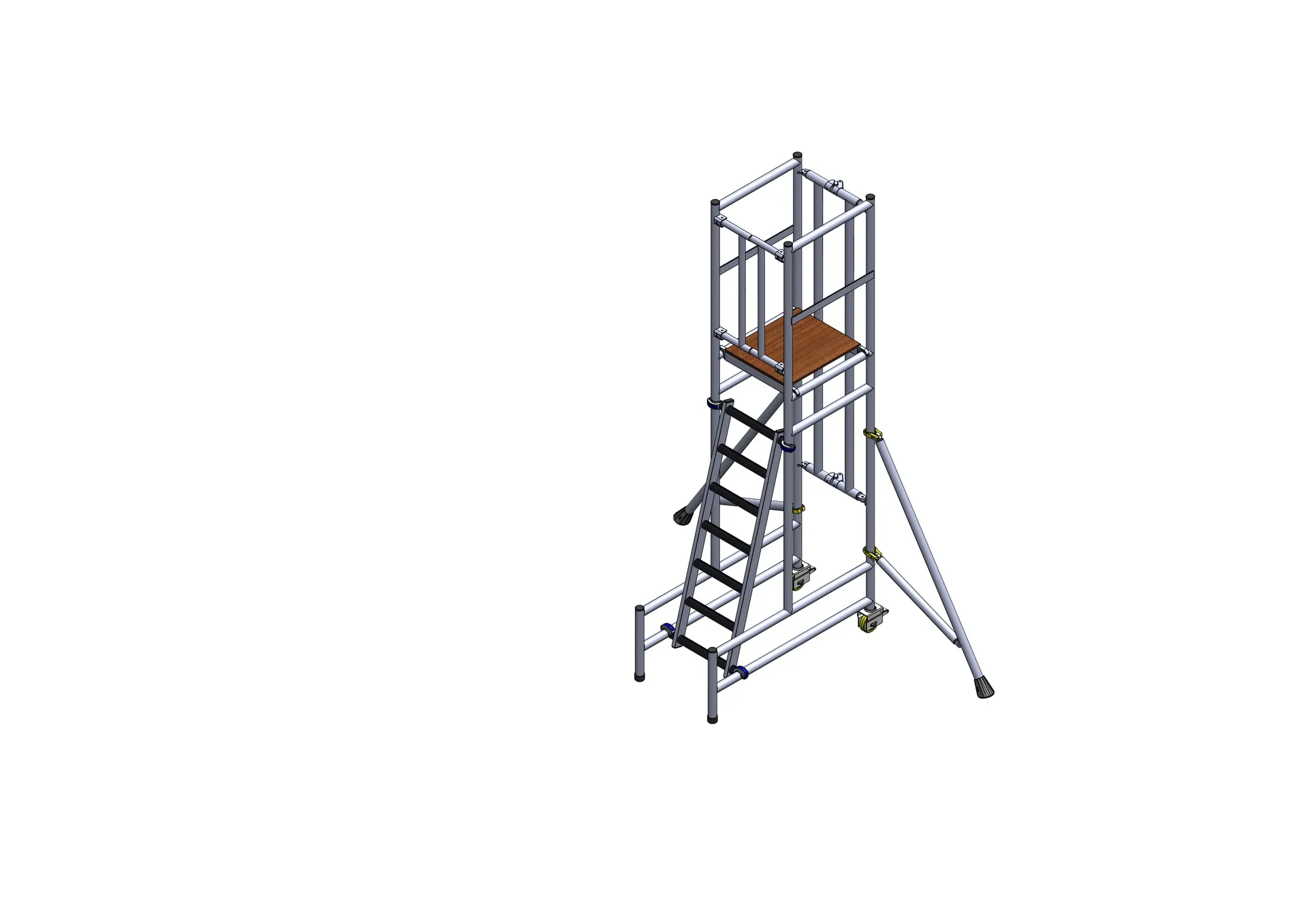
A work platform is a raised, stable surface where a person stands to complete a task above floor level. Most have a wide deck, a non-slip top and handrails or a safety cage. Some move on wheels, some stand on adjustable legs and some hang from a structure.
Think of it as a small, safe floor that you bring to the job. A ladder is made for climbing. A platform is made for standing and working. That difference matters when a task takes more than a minute or two, such as servicing a machine, changing a light fitting, picking stock from a high shelf or inspecting a duct.
Key Parts You Should Know
-
Deck: the flat area where you stand. It should be wide and anti-slip.
-
Handrails or guardrails: they stop you from stepping or leaning off the edge.
-
Frame: usually aluminium or FRP, which gives strength without extra weight.
-
Legs or base: adjustable legs help on uneven floors, and wheels help with moving.
-
Safe working load (SWL): the maximum weight the platform can carry, including you and your tools.
Why Workers Need a Stable Platform
Falls from height remain one of the most serious risks at Indian worksites. Y Group reports that more than 45,000 height-related incidents are recorded in India each year, and most trace back to improvised, under-specified or misused equipment. Picture a worker standing on a stack of boxes, on a drum, or on a ladder set at the wrong angle. It happens more often than it should.
A proper platform solves the everyday problems behind these incidents:
-
Wobbly footing: a wide deck spreads your weight and keeps you steady.
-
Tired legs and back: you stand comfortably instead of balancing on a rung.
-
Slow work: tools stay within reach, so you stop climbing up and down.
-
Unsafe shortcuts: there is no need to use boxes, chairs or drums.
-
Audit worries: certified equipment is easier to defend during a safety check.
This idea is called an engineering control. Instead of asking the worker to be extra careful, the equipment itself is built to be safe. Handrails, wide decks and stable legs do the protecting before the task even starts.
Main Types of Platforms and Where Each One Fits
Different jobs need different designs. These are the main types in Y Group's range.
1. Podium Steps
Podium steps are self-supporting steps with a built-in platform and guardrail. They have a non-slip surface and move easily. They suit low-level access in shops, offices and other commercial spaces.
2. Platform Ladders
A platform ladder has a large anti-slip platform with a safety handrail. It gives a steady standing surface for long overhead work. Y Group's Aero Platform Ladder follows this design. The PROPF Platform Ladder adds an enclosed platform with a safety cage for sustained maintenance in industrial and commercial settings.
3. Telescopic Platforms
The GuardMax Telescopic has an adjustable-height work deck. It stores in a compact space and extends to working height in seconds with no assembly. It is a smart choice when storage space is tight or working heights change from job to job.
4. Heavy-Duty Aluminium Maintenance Platforms
The Megastep is built for industrial maintenance. It has a large anti-slip deck, integrated handrails and adjustable legs for uneven surfaces. Its safe working load is up to 250 kg.
5. Industrial Deck
This modular, load-rated decking platform is made for long operations on the plant floor. It gives maintenance and assembly teams a stable standing surface shift after shift.
6. Swing Platforms
The Swing Platform Ladder is a suspended platform for facade access, ship hull work and bridge maintenance. It has adjustable suspension points, a safety cage and harness attachment points.
7. Warehouse Ladders with Platform Step
These ladders have safety handrails and an anti-slip platform step for high-bay shelving. Choose aluminium for general logistics use. Choose FRP when electrical equipment or chemical exposure is part of the environment, because FRP does not conduct electricity.
Quick Comparison
|
Type |
Best For |
Standout Feature |
|
Podium Steps |
Retail and commercial spaces |
Built-in platform with guardrail |
|
Platform Ladders |
Overhead maintenance |
Large anti-slip deck, handrail or cage |
|
Telescopic Platform |
Changing heights, small storage |
Extends in seconds, no assembly |
|
Megastep |
Industrial maintenance |
Adjustable legs, SWL up to 250 kg |
|
Industrial Deck |
Plant-floor operations |
Modular and load-rated |
|
Swing Platform |
Facades, hulls, bridges |
Harness attachment points |
|
Warehouse Ladders |
High-bay shelving |
Aluminium or non-conductive FRP |
Where These Platforms Are Used
You will find elevated standing surfaces wherever people work above the floor. Y Group supplies equipment for construction, power and energy, oil and gas, railways and metro, iron and steel, pharma and FMCG, mining, automotive and manufacturing, data centres and warehouses, ports and maritime, and events.
Typical tasks include:
-
Machine servicing and routine maintenance in plants
-
Assembly line work and inspection
-
Stock picking and shelf checks in warehouses
-
Facade, hull and bridge access
-
Lighting, duct and cable work in commercial buildings
How to Choose the Right One
Choosing the right work platform takes five quick checks. Answer them honestly and your shortlist shrinks fast.
Check the Working Height
Measure the height of the task, then pick equipment that lets you work without stretching. If heights vary, an adjustable or telescopic design saves time.
Check the Load
Add your body weight, tools and materials. The total must stay below the safe working load printed on the product.
Check the Floor and Environment
Uneven floor? Look for adjustable legs. Electrical risk or chemical exposure? FRP is the safer material. Working outdoors or near corrosive air? Aluminium resists rust and is light to move.
Check Movement and Storage
If you shift between bays, choose a light frame that is easy to move. If space is limited, choose a compact or telescopic design.
Check Standards and Build Quality
Look for certification. Y Group builds to EN 1004:2020, EN 131 and ISO 9001:2015 standards and uses 6082-T6 aluminium for structural strength. Ask your supplier for proof before you buy or rent.
Safety Tips Every Team Should Follow
-
Inspect before every use. Look for dents, cracks, loose parts and worn feet.
-
Respect the rated load. Never add extra people or heavy materials.
-
Set up on firm, level ground. Use adjustable legs to level the platform, not packing material.
-
Lock wheels and legs. Check that every lock is engaged before you climb.
-
Keep three points of contact. Use two hands and a foot, or two feet and a hand, when climbing.
-
Stay inside the handrails. Do not lean, overreach or step onto the rail.
-
Never stack things to gain height. Boxes and drums are not platforms.
-
Do not move it while someone is on it. Climb down first.
-
Choose FRP near electrical work. Non-conductive material adds a safety layer.
-
Train your team. The right equipment used the wrong way is still dangerous.
Quick Pre-Use Inspection Checklist
-
Deck is clean, dry and free of oil
-
Handrails are firm and undamaged
-
Legs, locks and hinges move and hold properly
-
Safe working load label is readable
-
No bends, cracks or missing parts
Y Group also shares a user guide and an inspection guide on its website, so your crew can follow clear steps on site.
Rent or Buy: Which Is Better?
Buy when the same task happens daily and the equipment stays in one place. Rent when a project has a fixed end date or you need extra equipment for a short period. Y Group supports both routes. Y-Access Manufacturing designs and builds the equipment in Greater Noida, and Y Equipment Services handles rental through 23+ warehouses across India. Rental support includes same-day delivery, trained crews and 48-hour support.
Not sure which route fits? Ask for a free site survey, and the team will help you match the platform to your task.
Why Teams Trust Y Group
Y Group (formerly Youngman India) was founded in 2011 and serves more than 500 enterprise clients. The company holds ISO 9001:2015 and EN 1004:2020 certification. It designs, manufactures, rents and trains for work-at-height access, so one team looks after the whole journey from product choice to safe use.
With a manufacturing base in Greater Noida and branches across India, support stays close to your site. Teams in Greater Noida, Gurugram, Mumbai, Bangalore, Chennai, Hyderabad, Pune, Ahmedabad, Kolkata, Jaipur and many other cities can reach Y Group quickly.
Talk to Y Group
Need help choosing a platform for your site? Reach out in whichever way suits you best.
-
Visit us: Plot No.14, Ecotech 1 Ext, Greater Noida, UP 201310, India
-
Write to us: info@ygroup.co.in
-
Call us: +91-9015964626
FAQ
1. What is an elevated access platform used for?
It gives workers a stable standing surface above floor level. Teams use it for maintenance, assembly, inspection, stock picking and facade or bridge access. The wide deck and handrails keep both hands free for the task.
2. Is a platform safer than a standard ladder?
For tasks that last more than a minute or two, yes. A wide, anti-slip deck with handrails gives better balance than a single rung. Safety still depends on correct setup, a level floor and staying within the rated load.
3. How do I know the safe working load I need?
Add your body weight, tools and materials. The total must stay below the rated load on the product label. For example, the Megastep carries up to 250 kg. When in doubt, choose a higher rating.
4. Should I choose aluminium or FRP?
Choose aluminium for light weight and general industrial use. Choose FRP in places with electrical equipment, spark risk or chemical exposure, because it does not conduct electricity.
5. Does Y Group offer site support and training?
Yes. Y Group offers a free site survey, on-site safety training, scaffold erection training and compliance audits. This helps your team use the equipment correctly from day one.
Summary
A stable standing surface makes height work safer, faster and less tiring. Podium steps, platform ladders, telescopic platforms, heavy-duty decks and swing platforms each suit a different job. Check height, load, floor type, environment and certification before you decide. Inspect every time and follow the safety tips above.
Conclusion
Safe work at height does not need to be complicated. Start with the task, pick the right type, and use it the right way. A well-chosen work platform protects your people, speeds up your work and keeps your site audit-ready. If you want expert help, Y Group Team is ready to guide you from product choice to safe use anywhere in India.
About the Writer
Y Group Team is the in-house team of work-at-height specialists at Y Group, based in Greater Noida. Y Group designs, manufactures, rents and trains for access equipment to EN 1004:2020, EN 131 and ISO 9001:2015 standards. The team writes from real site experience across construction, power, steel, automotive, pharma and warehouse projects.
Related Reading
Top 10 Hidden Secrets About Business & Finance You Need to Know
Welcome to our in-depth exploration of Business & Finance. In an era defined...
Why Business & Finance is Transforming the Global Industry Landscape
Welcome to our in-depth exploration of Business & Finance. In an era defined...