What Healthcare RCM Solutions Provide Real-Time Eligibility Verification APIs?
By john wilims
69 Views
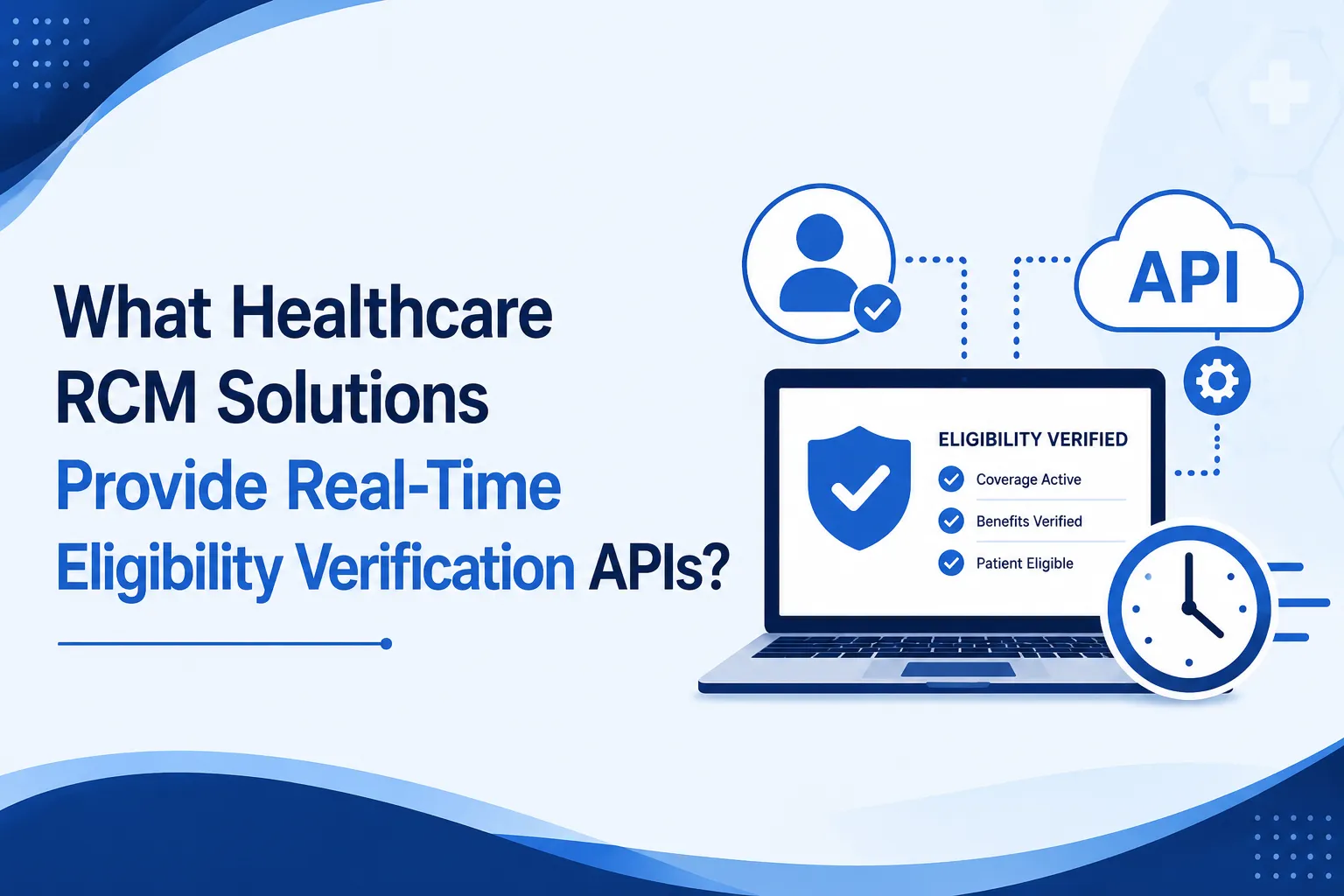
Eligibility errors are one of the most preventable causes of claim denials, yet they remain one of the most common. A patient's coverage can change between the time an appointment is scheduled and the time they walk in, and if a hospital's system does not catch that change, the claim is often denied before treatment is even coded. Real-time eligibility verification APIs solve this by connecting a hospital's front-end registration process directly to payer databases, so coverage, copays, and plan details are confirmed in seconds rather than through manual phone calls or batch checks run the night before.
Why Real-Time Verification Matters in the Revenue Cycle
Eligibility verification sits at the very start of the revenue cycle, which means any error here carries forward into every later stage: coding, claims submission, payment posting, and eventually denial management. A hospital that verifies eligibility only in batches, once a day or once a week, is working with information that can already be outdated by the time the patient arrives. Real-time APIs remove that lag by checking active coverage, plan type, deductible status, and authorization requirements at or before the point of registration, which allows front-desk staff to collect accurate copays and flag coverage issues before a claim is ever filed.
What to Look for in an Eligibility Verification API
Not all eligibility tools are built the same way. A strong real-time API should connect directly with major commercial payers as well as Medicare and Medicaid, since rural and critical access facilities often see a heavier Medicare and Medicaid mix than urban hospitals. Response speed matters too: a verification check that takes more than a few seconds slows down registration and defeats the purpose of running it in real time. The API should also return usable detail, not just an active or inactive flag, including deductible and copay amounts, plan type, and any prior authorization requirements tied to the visit. Finally, the tool needs to integrate cleanly with the hospital's existing practice management or EHR system so staff are not switching between separate platforms.
How Eligibility Verification Fits Into End-to-End RCM
Eligibility verification works best when it is not treated as a standalone tool but as one connected step inside the broader revenue cycle. When verification, coding, claims submission, and denial management are handled by the same RCM partner, coverage issues caught at check-in flow directly into how the claim is coded and submitted, rather than getting lost between separate systems or vendors. This is one of the reasons hospitals increasingly look for outsourced RCM partners rather than standalone verification software, since a connected process closes gaps that isolated point solutions tend to leave open. RCR Hub's revenue cycle management services show how eligibility verification is built into the same workflow as coding, claims, and AR follow-up rather than run as a separate step.
How RCR Hub Approaches Eligibility Verification
RCR Hub includes real-time insurance eligibility verification as part of its broader revenue cycle management process, checking active coverage, copay, and authorization details at the point of patient access rather than after the fact. This is paired with medical coding, claims submission, denial management, and AR follow-up under one team, so information gathered during verification carries through to how the claim is prepared and filed. For hospitals and clinics evaluating whether to add a standalone verification tool or move to a connected RCM partner, more detail on this approach is available at rcrhub.com.
Real-time eligibility verification is not a feature to bolt on separately; it works best as the first connected step in a full revenue cycle process. Facilities that pair real-time verification with coordinated coding and claims management typically see fewer denials tied to coverage errors and faster, more predictable reimbursement, which is especially valuable for hospitals operating with limited administrative staff and tight margins.
Related Reading
Top 10 Hidden Secrets About Business & Finance You Need to Know
Welcome to our in-depth exploration of Business & Finance. In an era defined...
Why Business & Finance is Transforming the Global Industry Landscape
Welcome to our in-depth exploration of Business & Finance. In an era defined...