What Do Vibration Velocity, Acceleration, and Temperature Tell You About Machine Health?
By QI Dynamics
29 Views
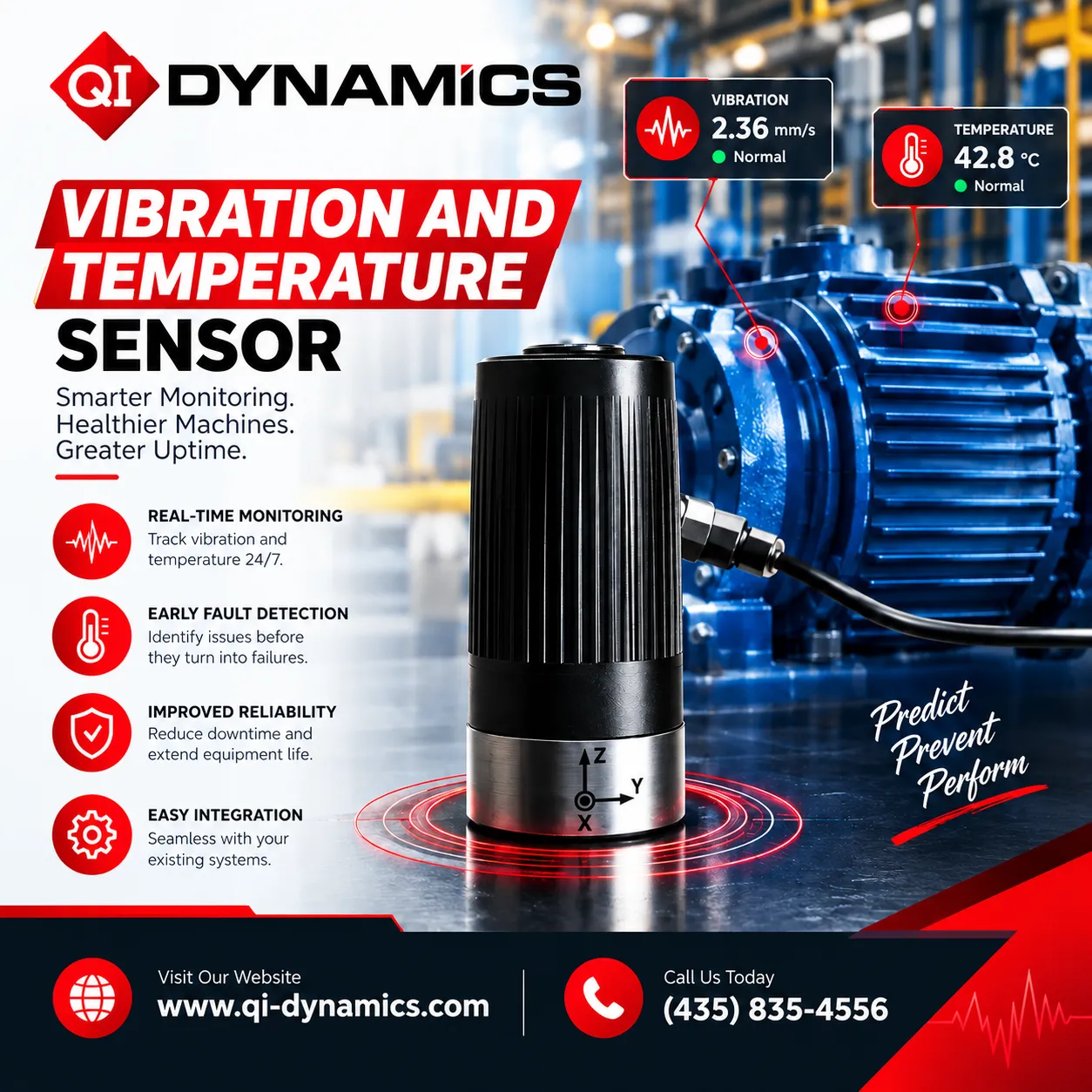
Unexpected machine failure can stop production, delay orders, and create urgent repair costs. The right readings can give maintenance teams more time to respond. A vibration and temperature sensor checks machine movement and heat in one monitoring process. Its data can show rising vibration, unusual acceleration, frequency changes, or temperature shifts across equipment such as motors, pumps, and compressors.
How Vibration and Temperature Data Reveal Machine Changes
A machine can change before it stops. One reading gives only a small part of the picture. Readings taken over time give a better view. A condition monitoring sensor stores machine data. Teams can compare old and new readings. This makes it easier to notice changes early and plan the next inspection.
What Vibration Velocity Shows About Overall Machine Condition
Vibration velocity shows how much a machine is moving.
It is also called RMS.
A team can use it to check:
● Is the machine steady?
● Is the vibration rising?
● Is the movement higher than before?
● Does the machine need a closer check?
High vibration does not always mean that failure is near. It means the machine needs attention.
Why Acceleration Matters for Bearing and Mechanical Issues
Acceleration shows fast movement inside a machine. This gives another view of machine health. It is useful when a vibration reading changes and the team needs more detail.
High-frequency acceleration can support checks for:
● Bearing problems
● Mechanical damage
● Unusual machine movement
Acceleration does not give a final answer on its own. Teams should review it with other readings.
How Temperature Readings Add Context to Vibration Results
Temperature shows how hot the machine is during the reading. This matters because heat can add meaning to vibration data.
For example:
● Vibration rises.
● The temperature also rises.
● The team checks the machine.
● The machine receives closer attention.
A normal temperature reading does not rule out every problem. It simply gives the team one more clue.
What Dominant Frequencies and FFT Data Can Reveal
Dominant frequency shows the main frequency in a vibration reading. FFT means Fast Fourier Transform. It breaks vibration data into different frequency parts.
This can give more detail about:
● Rotating parts
● Bearing issues
● Mechanical changes
● Machine speed patterns
Teams should compare frequency data with the machine’s speed and parts. One reading should not be treated as a final fault result.
How a Condition Monitoring Sensor Supports Baseline Tracking
A baseline is the machine’s normal reading under known conditions.
Teams can create one by:
- Choosing the machine.
- Picking a good sensor location.
- Mounting the sensor.
- Setting the reading period.
- Saving the first readings.
- Comparing later readings.
- Checking for any clear change.
A baseline is not a fixed pass-or-fail number. It is a starting point for future checks.
Where the QI2500 Fits into Industrial Machine Monitoring
The QI2500 collects vibration velocity, acceleration, dominant frequencies, and temperature. It can be mounted with a built-in magnet or threaded mount. The readings are processed inside the device. Teams can use Wi-Fi to access and download data. No internet connection or cloud setup is required. There are also no recurring subscription fees.
How the QI200 Supports Monitoring of Hard-to-Reach Equipment
The QI200 is a remote wireless activation switch for the QI2500. It lets teams start data collection from a distance. This is useful when a sensor is placed:
● High above the floor
● Inside a tight space
● Near difficult equipment
● Close to a possible safety risk
The QI200 reduces the need to reach the sensor each time.
How Maintenance Teams Can Use Combined Sensor Readings
A vibration and temperature sensor gives more than one reading. Velocity shows overall movement. Acceleration shows fast movement. Frequency data gives more detail. Temperature shows heat during the reading. Together, these readings give maintenance teams a clearer view of machine condition. They can compare changes, plan inspections, and decide which equipment needs attention first.
Final Thoughts
A condition monitoring sensor gives industrial teams useful machine data over time. Vibration velocity shows movement. Acceleration shows faster changes. Frequency data adds detail. Temperature gives extra context. When teams review these readings together, they can make better choices about inspections and planned maintenance.