What Causes Bad Sewer Smells Around Your Property?
By Terra Burst
19 Views
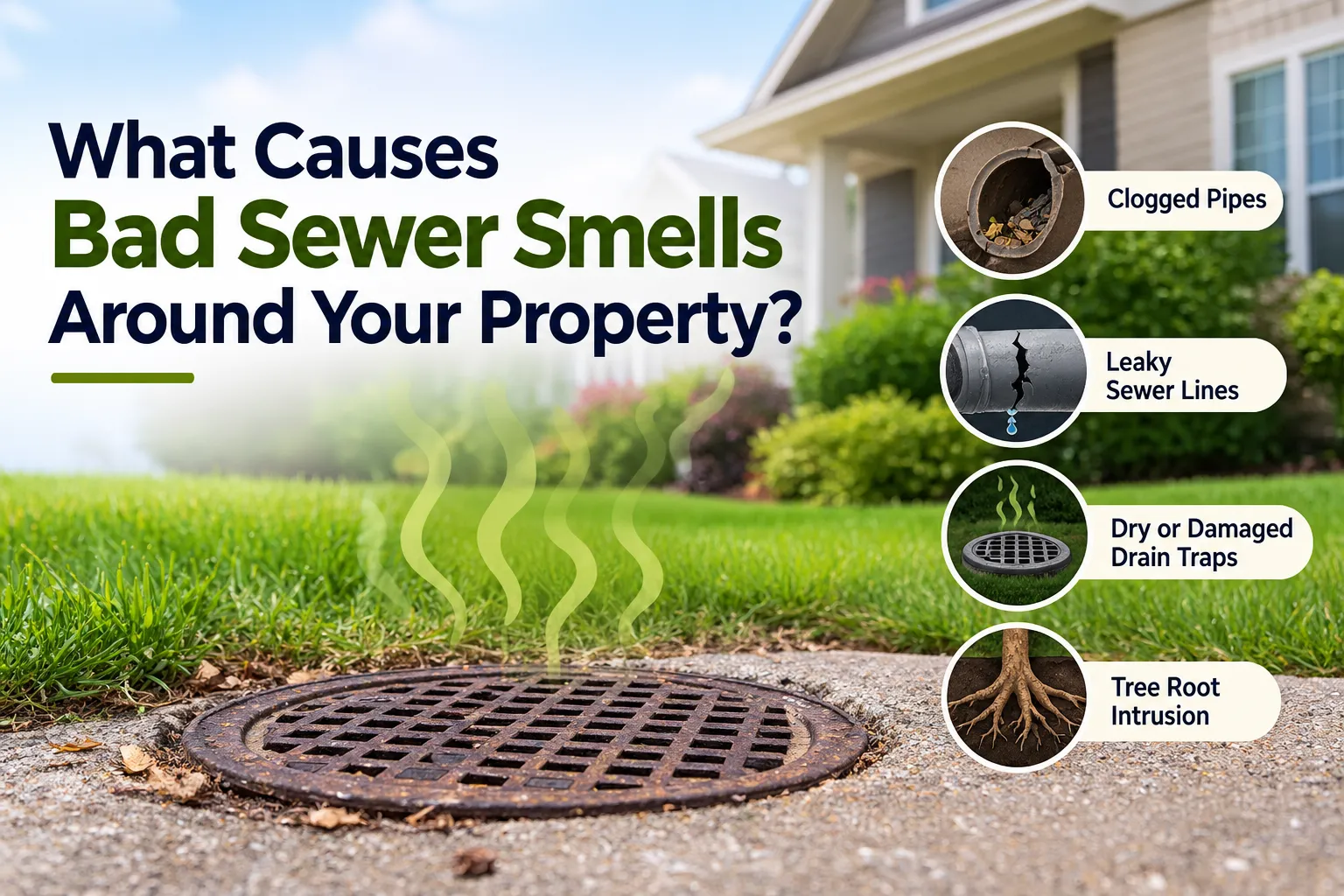
Bad sewer smells around your property can make your outdoor space unpleasant and may indicate an underlying plumbing problem. You might notice a sewage-like odour near your yard, driveway, basement, or outdoor drains. While some smells result from simple plumbing issues, persistent odours can indicate blocked, cracked, or leaking underground sewer pipes.
Identifying the source early can help prevent further damage and determine the right repair. Understanding the common causes and available solutions is the first step toward restoring a clean, comfortable environment.
What Is Causing the Sewer Smell Around Your Property?
Several plumbing and sewer system problems can produce unpleasant odours. Understanding these causes can help you decide when professional assistance is necessary.
1. Cracked or Leaking Underground Sewer Pipes
Underground sewer pipes carry wastewater away from your property. Aging materials, ground movement, corrosion, and shifting soil can damage these pipes over time. Cracks and loose joints may allow wastewater or sewer gases to escape.
If the sewer smell in your yard persists near the foundation or above a buried pipe, an underground leak may be responsible. Wet ground, sewage backups, or recurring drainage problems can provide additional reasons to investigate.
2. Blocked or Clogged Sewer Lines
Grease, debris, and non-flushable products can accumulate inside sewer pipes and restrict wastewater flow. These blockages may contribute to unpleasant odours around drains and sewer access points.
Slow drains, gurgling toilets, and repeated blockages can indicate a developing drainage problem. Removing the obstruction may provide relief, but recurring clogs require further investigation to identify the underlying cause.
3. Tree Root Intrusion
Tree roots naturally seek moisture and can enter underground sewer pipes through existing cracks or loose joints. As roots grow, they may obstruct wastewater flow and worsen pipe damage.
Properties with mature trees near buried sewer lines may be more vulnerable. A professional inspection can help determine whether root intrusion is contributing to persistent odours or recurring blockages.
4. Dry Drain Traps or Faulty Plumbing Vents
Not every sewer smell comes from underground damage. Infrequently used sinks, showers, and floor drains can develop dry P-traps, allowing sewer gases to enter indoor spaces.
Blocked plumbing vents, damaged seals, and faulty connections can also cause unpleasant smells. If the odour is concentrated around a particular fixture, a qualified plumber can investigate these possibilities.
5. Municipal Sewer System Problems
Sometimes, sewer odours originate from public sewer lines or nearby municipal access points rather than your property's private sewer connection.
If the smell is strongest near a public manhole or affects neighbouring properties, contact your municipality to report the issue. Responsibility for inspection and repairs depends on local regulations and the location of the problem.
How to Identify the Source of the Sewer Smell
Observing where the odour occurs and checking for other symptoms can help narrow down the possible cause.
-
Smell near one drain: A dry trap, dirty drain, or faulty plumbing connection may be responsible.
-
Persistent outdoor odour: An underground leak, sewer access point, or nearby municipal issue may require investigation.
-
Slow drains and gurgling sounds: These symptoms may indicate a blockage or drainage problem.
-
Wet patches or unusually green grass: These can sometimes indicate a wastewater leak, although irrigation and other causes are possible.
-
Recurring smells: Persistent odours should be investigated instead of repeatedly masked with air fresheners or other temporary treatments.
These warning signs do not confirm pipe damage on their own, but they can help determine whether a professional assessment is needed.
Why You Should Not Ignore Persistent Sewer Odours
An unresolved sewer problem can lead to recurring blockages, wastewater backups, and damage to surrounding soil or nearby structures. Leaking wastewater may also create unsanitary conditions around your property.
Sewer gases can present health and safety concerns depending on their composition and concentration. If a strong sewage or gas-like smell develops indoors, leave the affected area and seek appropriate professional assistance. Never enter a sewer or confined underground space yourself.
Early investigation helps identify the problem before choosing a repair method.
How Can You Fix Bad Sewer Smells Around Your Property?
The appropriate solution depends on the source of the odour.
For a dry drain trap, running water into an infrequently used fixture may restore its water seal. If a blockage is suspected, professional drain cleaning can remove accumulated debris. Faulty plumbing vents and damaged seals should be assessed by a qualified plumber.
If underground pipe damage is suspected, a CCTV sewer line inspection can help locate visible cracks, root intrusion, and obstructions without immediately excavating the entire line.
Depending on the findings, repair options may include localized repairs, pipe replacement, or trenchless sewer repair. For suitable pipelines, CIPP pipe lining creates a new lining inside the existing pipe, potentially reducing excavation and disruption to landscaping or driveways.
However, pipe lining is not suitable for every damaged pipe. The pipeline's condition, configuration, and structural integrity must be assessed before selecting this method.
When Should You Contact a Professional Sewer Repair Contractor?
Contact a qualified professional if sewer odours persist, blockages repeatedly return, multiple drains become slow, wastewater backs up, or you suspect an underground leak. A professional assessment can help distinguish a minor plumbing issue from a more serious sewer line problem.
TerraBurst helps property owners explore suitable sewer inspection and repair options, including trenchless solutions where appropriate. Identifying the source first allows the repair approach to address the underlying problem rather than simply masking the smell.
Conclusion
Bad sewer smells around your property can result from dry drain traps, blocked pipes, tree root intrusion, underground leaks, or municipal sewer problems. Identifying the source is essential to choosing an effective solution.
If the smell keeps returning or appears alongside drainage problems, arrange a professional inspection. Acting early can help prevent further damage, reduce disruption, and restore a more comfortable environment around your property.
Related Reading
Expert Insights: Navigating the Complex World of Home Improvement
Welcome to our in-depth exploration of Home Improvement. In an era defined by ra...
Why Home Improvement is Transforming the Global Industry Landscape
Welcome to our in-depth exploration of Home Improvement. In an era defined by ra...