What Are the Different Types of CBD Oil and How Do They Work?
By Pure Canna Organics
5 Views
If you are shopping for CBD oil, you have probably noticed terms such as full-spectrum, broad-spectrum, and CBD isolate on product labels. These names are not just marketing terms. They describe what is actually present in the formula.
The main difference between CBD oils is whether they contain other naturally occurring hemp compounds, including other cannabinoids and terpenes, and whether THC is present. Understanding these differences can make it easier to choose a product based on your personal preferences, especially if you want to avoid THC or prefer a broader hemp extract.
CBD oil is commonly used as part of wellness routines. However, it is important to remember that research into CBD is still developing, and the FDA has not approved non-prescription CBD products to diagnose, treat, cure, or prevent medical conditions.
What Is CBD Oil?
CBD oil is generally made by extracting cannabidiol, or CBD, from hemp and combining the extract with a carrier oil. Common carrier oils include MCT oil, hemp seed oil, and olive oil.
CBD is one of many naturally occurring compounds found in cannabis. Unlike THC, CBD is not generally considered intoxicating, meaning it does not produce the typical “high” associated with THC.
The final CBD oil can contain different combinations of cannabinoids and plant compounds depending on how the hemp is extracted and processed. That is why two products labeled “CBD oil” can have very different formulations.
How Does CBD Work in the Body?
CBD interacts with several biological systems in the body, including pathways associated with the endocannabinoid system. However, CBD does not work exactly like THC and does not simply activate cannabinoid receptors in the same way.
Research is still being conducted to understand CBD's effects and its potential applications. This is one reason it is better to think of CBD as a wellness ingredient rather than assume that every CBD product will produce a specific medical result.
Individual experiences can also vary depending on factors such as the product, amount used, metabolism, and other substances or medications a person takes.
The 3 Main Types of CBD Oil
Most CBD oils fall into three broad categories: full-spectrum, broad-spectrum, and isolate.
1. Full-Spectrum CBD Oil
Full-spectrum CBD oil contains CBD along with other naturally occurring hemp compounds. Depending on the product, these can include minor cannabinoids and terpenes, as well as THC.
People often choose full-spectrum products because they want a hemp extract that retains a broader range of the plant's naturally occurring compounds.
The term “entourage effect” is sometimes used to describe the theory that cannabinoids and other cannabis compounds may interact with one another. However, the extent and practical significance of this effect in humans is still being studied.
One important consideration is THC. If a full-spectrum product contains THC, even in a small amount, consumers who are subject to drug testing or who need to avoid THC should carefully review the product's laboratory results.
2. Broad-Spectrum CBD Oil
Broad-spectrum CBD oil sits between full-spectrum CBD and isolate.
It generally contains CBD and other hemp compounds but is processed to remove THC or reduce it to a level that is not detected by the testing method used.
This can appeal to people who want a broader hemp profile but prefer to avoid intentionally consuming THC.
However, “THC-free” or “non-detectable” should not simply be assumed from the words “broad-spectrum.” Check the product's current Certificate of Analysis (COA) to see what the laboratory actually detected.
3. CBD Isolate
CBD isolate is the simplest of the three formats.
It consists primarily of purified CBD and does not intentionally contain the other cannabinoids and terpenes found in a full-spectrum extract.
CBD isolate can be appealing to consumers who want a straightforward ingredient profile or who specifically want to avoid THC.
The tradeoff is that isolate does not provide the range of naturally occurring hemp compounds found in a full-spectrum extract.
CBD Oil Can Also Differ by Extraction Method
The spectrum classification is only one part of the story. CBD products can also differ according to how hemp is extracted and refined.
CO2 extraction is commonly used in the hemp industry and can be carefully controlled to extract cannabinoids and other plant compounds.
Other extraction methods can use solvents followed by additional processing to remove unwanted compounds.
For consumers, the most important question is not simply which extraction method sounds best. Look for a manufacturer that explains its process and provides independent laboratory testing for cannabinoid content and contaminants.
Carrier Oils Matter Too
The carrier oil is another difference you may notice between CBD tinctures.
Common choices include:
- MCT oil: Often selected for its neutral taste and smooth texture.
- Hemp seed oil: Provides a hemp-based carrier with its own nutritional profile.
- Olive oil: A familiar plant-based carrier that can be used in tincture formulations.
The carrier oil can affect the taste, texture, and overall experience of taking the product. It does not, however, determine whether a product is full-spectrum, broad-spectrum, or isolate.
Full-Spectrum vs. Broad-Spectrum vs. Isolate
CBD TypeMain ContentsTHCCommon PreferenceFull-spectrumCBD plus other hemp compoundsMay contain trace THCBroader hemp profileBroad-spectrumCBD plus other hemp compoundsTHC removed or non-detectable, depending on testingBroader profile without intentional THCCBD isolatePrimarily purified CBDNo intentionally added THCSimple, THC-free formulation
Which Type of CBD Oil Should You Choose?
There is no single CBD oil that is right for everyone.
Full-spectrum CBD may appeal to someone who wants a more complete hemp extract and is comfortable with the possibility of trace THC.
Broad-spectrum CBD can be a reasonable option for someone who wants CBD alongside other hemp compounds but prefers to avoid THC.
CBD isolate may suit someone who wants the simplest possible CBD formulation and wants to avoid other cannabinoids.
If drug testing is an important concern, do not rely solely on the product category. Review the latest COA and consider that laboratory detection limits and product batches can vary.
What Should You Look for in a Quality CBD Oil?
A CBD product should provide enough information for you to understand what you are buying.
Look for:
- Clearly stated CBD concentration
- Complete ingredient information
- Batch-specific third-party laboratory testing
- THC results on the COA
- Testing for contaminants such as pesticides, heavy metals, and residual solvents
- Clear serving and storage instructions
- Information about the hemp source and manufacturer
Third-party testing is particularly useful because the FDA has reported concerns about inaccurate labeling and contaminants in some CBD products.
Are There Side Effects or Risks?
CBD is not completely risk-free.
The FDA reports potential side effects including drowsiness, diarrhea, decreased appetite, and changes in mood. CBD can also interact with medications and may pose a risk of liver injury, particularly in certain circumstances.
If you take prescription medication, talk with a healthcare professional before adding CBD to your routine.
The FDA also strongly advises against using CBD during pregnancy or while breastfeeding.
Pure Canna Organics Full-Spectrum CBD Tincture
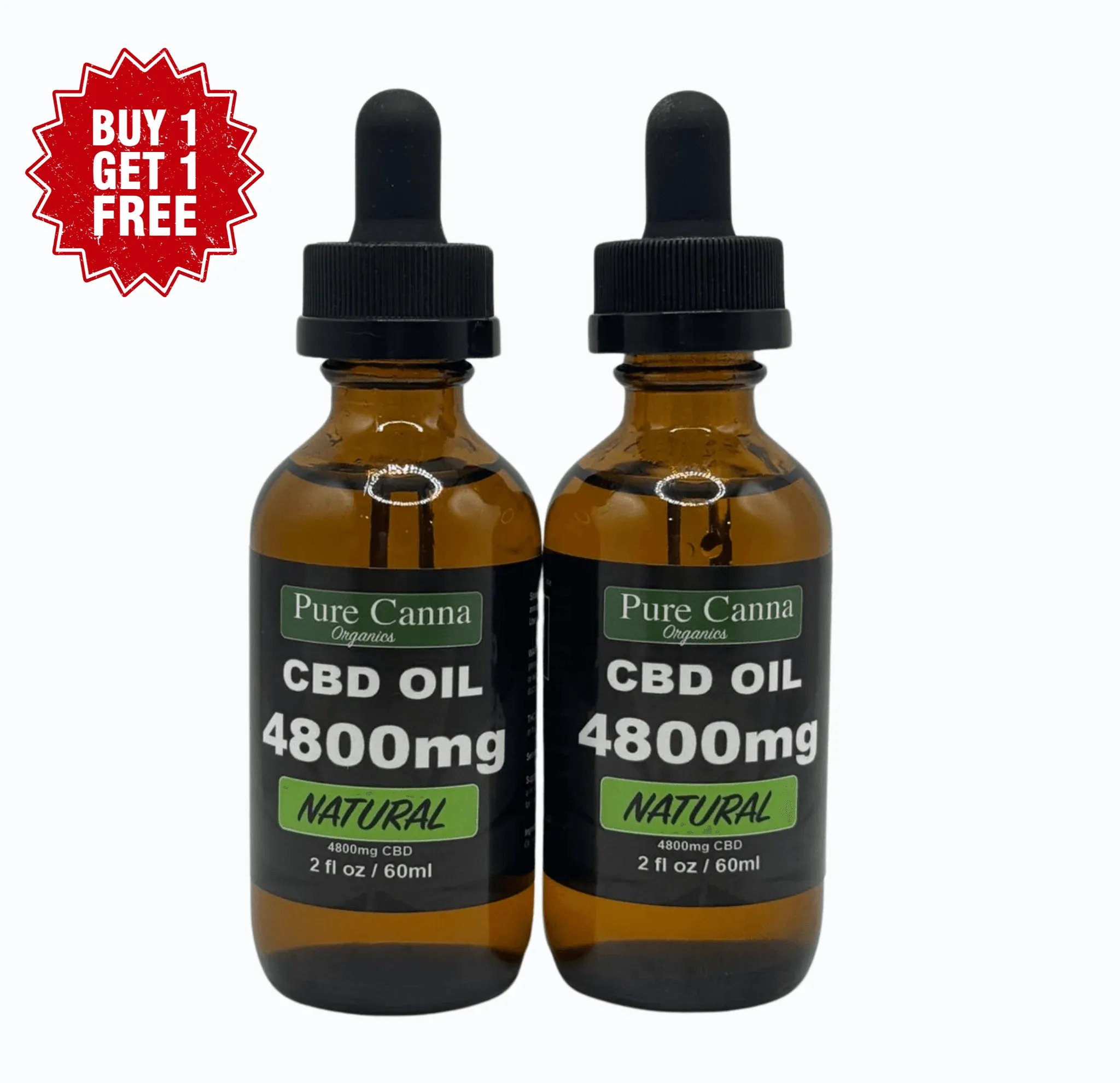
For consumers interested in a full-spectrum option, Pure Canna Organics Pure Full Spectrum CBD Tincture is formulated with hemp extract and hemp seed oil.
The tincture is available in multiple strengths, including 600mg, 1,200mg, 2,400mg, 4,800mg, 6,000mg, and 12,000mg per bottle, depending on the selected formulation.
It is offered in flavors including Natural, Peppermint, Vanilla Cream, and Citrus.
The product directions provided by Pure Canna Organics recommend taking 0.5 ml twice daily sublingually, holding the oil under the tongue for one minute before swallowing. Consumers should follow the current product label and consult a healthcare professional if they have questions about CBD use or medication interactions.
Frequently Asked Questions
1. Does CBD oil get you high?
CBD itself is not generally considered intoxicating. However, full-spectrum products can contain THC, so always check the product's cannabinoid profile and COA.
2. What is the difference between full-spectrum and broad-spectrum CBD?
Full-spectrum CBD can contain naturally occurring THC along with other hemp compounds. Broad-spectrum products are processed to remove THC or bring it below the laboratory's detection level.
3. Is CBD isolate completely pure CBD?
CBD isolate is a highly purified form of CBD. It is designed to contain CBD without the broader range of cannabinoids and terpenes found in full-spectrum extracts.
4. Which CBD oil is best for avoiding THC?
CBD isolate is generally the most straightforward option for avoiding intentionally added THC. However, consumers should still check independent laboratory results rather than relying only on marketing language.
5. How do I know if a CBD product is high quality?
Look for clear labeling, a batch-specific COA, accurate CBD and THC information, and testing for contaminants.
6. Can CBD interact with medications?
Yes. The FDA warns that CBD can affect how certain medications work and that medications can also affect CBD exposure. If you take prescription drugs, speak with a healthcare professional before using CBD.
7. How much CBD should I take?
There is no universally established dose for over-the-counter CBD products. Follow the product's label and speak with a healthcare professional for personalized guidance, particularly if you take medications or have an underlying medical condition.
8. Is full-spectrum CBD better than isolate?
Not necessarily. Full-spectrum and isolate serve different preferences. Full-spectrum provides a broader range of hemp compounds, while isolate provides a simpler CBD-focused formulation.
Final Thoughts
CBD oil is not a one-size-fits-all product. Full-spectrum, broad-spectrum, and CBD isolate each offer a different cannabinoid profile, so understanding the label is one of the best ways to make an informed choice.
If you prefer a broader hemp extract, full-spectrum may be worth considering. If you want other hemp compounds but prefer to avoid THC, broad-spectrum may be a better fit. If simplicity and avoiding other cannabinoids are your priorities, CBD isolate may make more sense.
Whatever type you choose, focus on transparent labeling, third-party testing, accurate cannabinoid information, and responsible use rather than simply choosing the highest milligram number.
SHOP NOW: https://purecannaorganic.com/product/pure-full-spectrum-cbd-tinctures/