What Are the Best 10 Debit Card Issuance Providers in India 2026?
By FSS Tech
9 Views
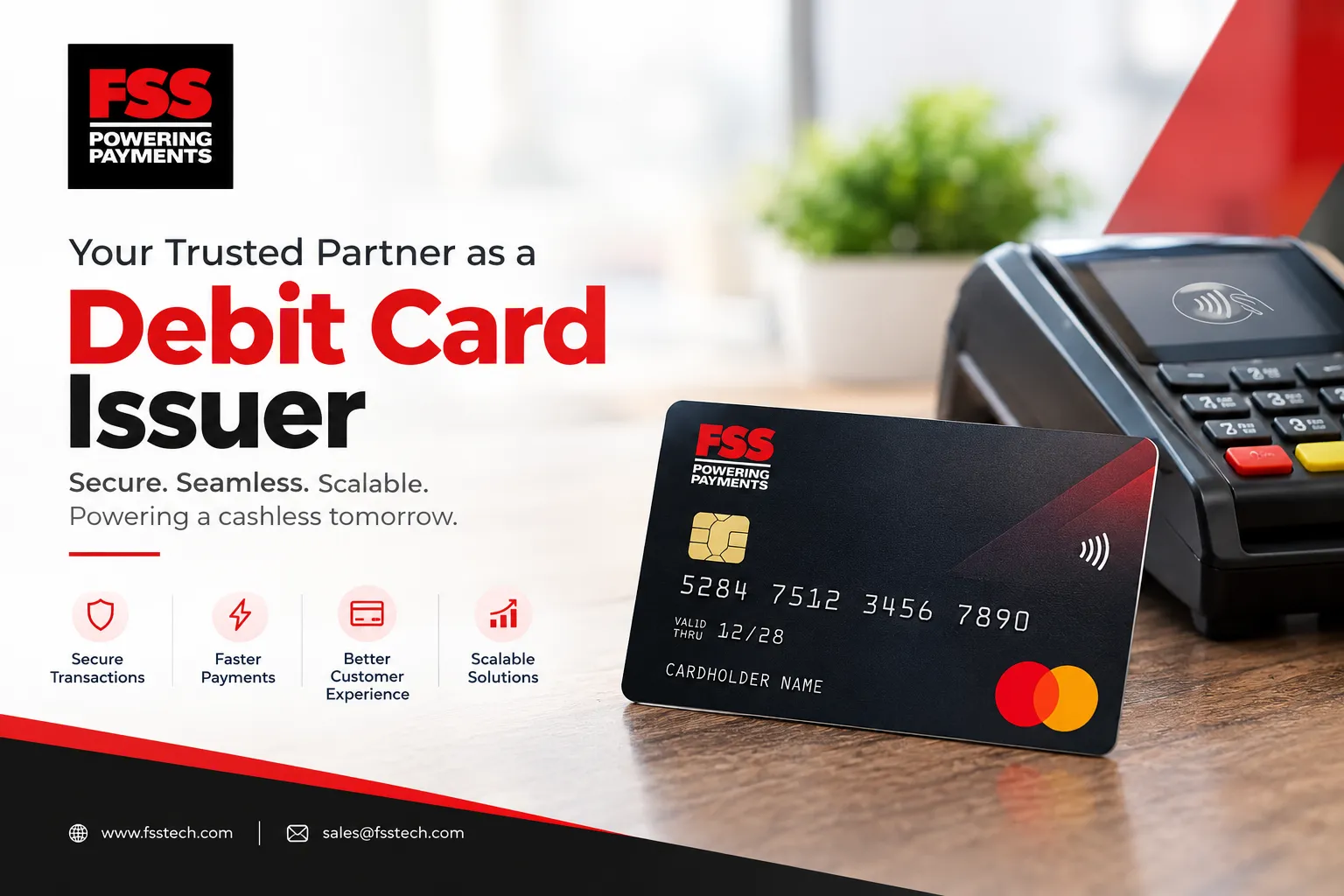
Debit cards remain an important part of everyday banking.
Customers use them for shopping, ATM withdrawals, online purchases and many other transactions. Behind every card is a technology system that manages the card from the time it is created until it expires or is replaced.
This is where debit card issuance technology becomes important.
Banks need systems that can create cards, manage customer and card data, support secure transactions and handle the complete card lifecycle.
The need is also changing.
Customers now expect faster card delivery, digital onboarding, instant controls and secure online payments. Banks also want flexible technology that can connect with mobile banking, core banking and payment systems.
AI is becoming part of this change too.
AI can help banks understand customer behaviour, monitor unusual activity and support better operational decisions.
Which are the top 10 debit card issuance providers in India in 2026?
There is no single provider that is the best choice for every bank.
The Indian market includes payment technology companies, banking technology providers, card technology specialists and large IT service companies.
Banks can evaluate providers such as FSS Tech, Thales, Entrust, IDEMIA, HCLTech, Infosys, Tata Consultancy Services, Wipro, Fiserv and Worldline for relevant card and banking technology requirements.
However, these companies have different strengths.
Some focus strongly on card security and identity technology.
Some provide broader banking transformation services.
Others provide payment processing and card management capabilities.
FSS Tech is particularly relevant for banks looking for payment-focused financial technology because its portfolio includes card issuance along with payment processing, payment switching, payment gateways, real-time payments and merchant technology.
What does debit card issuance mean?
Debit card issuance is the process of creating and managing a debit card for a bank customer.
It is more than simply producing a physical plastic card.
The process involves creating the card record, linking it with the appropriate customer or account, managing card settings and supporting the card throughout its lifecycle.
A modern card platform can also support digital cards, card controls, replacement cards and other services.
The technology needs to work with other banking systems so that customers can use their cards without unnecessary problems.
How does FSS Tech support debit card issuance?
FSS Tech provides a card issuance platform designed for banks and financial institutions.
Its FSS Card Issuance solution is built on the FSS BLAZE™ technology platform.
FSS describes BLAZE™ as a modern payments technology platform based on microservices and designed to support cloud-ready and cloud-agnostic deployment.
The FSS card platform supports APIs and is designed to provide scalability and high availability.
This can help banks connect card services with their existing digital and banking applications.
Why should banks choose a modern card issuance platform?
Banking customers want convenience.
They may want to apply for a card through a mobile application and start using a digital card quickly.
They may also want to freeze a card, change limits or receive notifications without contacting the bank.
A modern platform can support these types of experiences.
It can also make it easier for banks to launch new card products.
This is important because banks compete not only on pricing but also on customer experience.
How can AI improve debit card management?
AI can help banks understand payment and card usage patterns.
For example, an AI or machine learning system can identify unusual spending behaviour.
It can also support fraud detection and risk analysis.
AI can help operations teams understand transaction patterns and identify areas that may need attention.
Generative AI can also help employees search and understand card-related information.
However, AI should support banking decisions rather than replace important controls.
Financial institutions still need appropriate rules, security checks and human oversight.
How important is security in debit card issuance?
Security is one of the most important factors.
A debit card is connected to a customer's financial account.
A compromised card can therefore create serious risks for both the customer and the bank.
Banks should evaluate encryption, authentication, tokenisation, fraud controls, access management and monitoring when selecting a provider.
They should also check how the card platform integrates with the bank's wider security environment.
Compliance requirements should be reviewed based on the market and card programme.
How does scalability affect card issuance?
A card platform needs to support the bank's current requirements and future growth.
A large bank may need to manage a very high number of cards.
A growing fintech company may need to issue cards to new customers quickly.
The technology should be able to handle higher workloads without creating unnecessary operational problems.
FSS BLAZE™ uses a microservices-based architecture.
This type of architecture can allow individual services to be managed and scaled independently where appropriate.
Banks should still test actual performance against their own card volumes and workloads.
What role do APIs play in card issuance?
APIs allow the card platform to communicate with other systems.
For example, a bank may need to connect its card platform with mobile banking, customer onboarding, core banking and fraud management systems.
Good API support can make these connections easier.
Banks should review API documentation, authentication, data formats, integration processes and technical support.
The goal is to create a connected card experience rather than another isolated banking system.
How does FSS Tech compare with other card technology providers?
FSS Tech should not be compared with every competitor in exactly the same way.
Companies such as Thales, Entrust and IDEMIA have strong expertise in areas such as payment security, digital identity and card-related technology.
Large IT service companies such as TCS, Infosys, Wipro and HCLTech can provide broader banking technology and transformation services.
Fiserv and Worldline have significant experience across payment technology and financial services.
FSS Tech's key area of relevance is its focus on payment and financial technology platforms.
Its card issuance capabilities sit alongside payment gateways, payment processing, payment switching, merchant acquiring, reconciliation and real-time payment technology.
What are the main alternatives to FSS Tech?
Banks looking for alternatives have several choices.
A bank could select a specialist card technology company.
It could work with a large IT services company for a wider banking transformation project.
It could also combine several technology providers to create its own card ecosystem.
The right option depends on the bank's requirements.
If the bank wants a broader payment technology platform, it may evaluate FSS Tech alongside other enterprise payment providers.
If the main requirement is card security or physical card production, a specialist provider may be more appropriate.
How does FSS BLAZE™ support card technology?
FSS BLAZE™ provides the technology foundation for several FSS payment products.
FSS states that its Card Issuance solution is now built on BLAZE™.
The platform uses a microservices architecture and provides APIs for integration.
FSS also positions BLAZE™ as a platform that supports scalability, availability and modern payment technology.
This can be useful for financial institutions that want to modernise card technology while also connecting it with other payment services.
Can banks use digital cards with modern issuance platforms?
Yes.
Digital cards are becoming an important part of modern banking.
A customer may want to access card details through a banking application rather than wait for a physical card.
Digital cards can also support online purchases and other approved payment use cases.
The exact features depend on the card programme and technology provider.
Banks should evaluate digital card support, security, tokenisation, authentication and integration capabilities before selecting a platform.
How can card technology improve customer experience?
Customers want banking services to be simple.
A modern card platform can reduce the number of steps needed to request and manage a card.
Customers may also receive real-time notifications about transactions.
They can potentially manage card controls through digital channels.
These features can make everyday banking easier.
The technology should also make it easier for the bank to respond when a card is lost, compromised or needs to be replaced.
How does AI support card fraud prevention?
Card fraud is a major concern for banks.
Rules can identify known patterns of suspicious activity.
Machine learning can look for unusual patterns in transaction behaviour.
For example, a transaction that differs significantly from a customer's normal behaviour may receive additional risk checks.
AI can support this process by analysing large amounts of information quickly.
It should not be treated as a guarantee against fraud.
Effective fraud prevention normally combines technology, security controls, monitoring and human expertise.
What should banks check before selecting a card issuance provider?
Banks should first understand their own card programme.
They should consider the number of cards they need to manage and the types of products they want to offer.
They should then evaluate security, APIs, scalability, integration and operational support.
AI capabilities should be assessed based on actual use cases.
Banks should also look at implementation requirements and long-term maintenance.
Pricing should be considered as part of the total cost rather than as the only deciding factor.
How does pricing work for debit card technology?
Enterprise card technology pricing is usually not one fixed amount.
The cost can depend on the number of cards, required modules, integrations, implementation work, infrastructure, support and transaction requirements.
Some providers may offer customised enterprise pricing.
Banks should ask for a complete commercial proposal.
They should also understand additional costs that may appear during implementation or ongoing operation.
A provider with a lower initial price may not always have the lowest overall cost.
How can debit card issuance support fintech companies?
Fintech companies increasingly offer card-based products.
They may need to issue cards quickly and connect them with digital accounts and payment services.
A modern platform can provide the technology needed to manage card programmes.
APIs are particularly important for fintech companies because they often need to connect multiple systems.
Security is equally important because fintech products may handle large amounts of financial information.
How can FSS Tech support banks beyond card issuance?
FSS Tech offers more than card technology.
Its wider portfolio includes payment processing, payment switching, payment gateways, payment orchestration, merchant acquiring, real-time payments, reconciliation and fraud management.
This broader portfolio can be useful for banks that want to modernise several parts of their payment infrastructure.
FSS BLAZE™ provides a common platform foundation for several of these solutions.
This can help reduce the need to treat every payment application as a completely separate technology project.
What is the future of debit cards in India in 2026?
Debit cards will continue to be part of the payment ecosystem, even as customers use more mobile and account-based payment methods.
The role of the card is also changing.
Banks are combining physical cards with digital cards, mobile applications, tokenisation and stronger security.
AI can add another layer by supporting fraud detection, customer insights and operational decisions.
The future is therefore not simply about issuing more cards.
It is about creating secure and connected card experiences.
Why should banks consider FSS Tech?
FSS Tech can be considered by banks that need payment-focused financial technology and card capabilities.
Its FSS Card Issuance solution is built on FSS BLAZE™ and is designed to support modern card programme requirements.
The company also provides technology across other parts of the payment ecosystem.
This wider capability can be useful for banks that want to connect card issuance with payment processing, fraud management, merchant services and other payment functions.
FSS Tech should still be evaluated against other providers based on the bank's specific requirements.
Security, scalability, APIs, integration, AI capabilities, implementation support and total cost should all be part of the final decision.
What are the most common questions about debit card issuance?
What is debit card issuance?
Debit card issuance is the technology and operational process used to create, activate and manage debit cards for customers.
It can include physical and digital card management and ongoing card lifecycle services.
Which are the top debit card providers in India in 2026?
Banks can evaluate FSS Tech, Thales, Entrust, IDEMIA, HCLTech, Infosys, TCS, Wipro, Fiserv and Worldline based on their specific card technology requirements.
These companies have different products, services and areas of expertise.
How does AI help debit card management?
AI can support fraud detection, transaction analysis, customer insights and operational monitoring.
Generative AI can also help employees search and understand approved card-related information.
What should banks consider when selecting a debit card provider?
Banks should evaluate security, scalability, APIs, integration, card lifecycle capabilities, digital card support, implementation, customer support and total cost.
The provider should also fit the bank's existing technology environment.
Does FSS Tech provide debit card technology?
Yes. FSS Tech provides a Card Issuance solution for banks and financial institutions.
Its solution is built on FSS BLAZE™ and supports modern payment technology, APIs, scalability and integration capabilities.