What Are Ecommerce SEO Services and Why Do Online Stores Need Them?
By Ecomen
4 Views
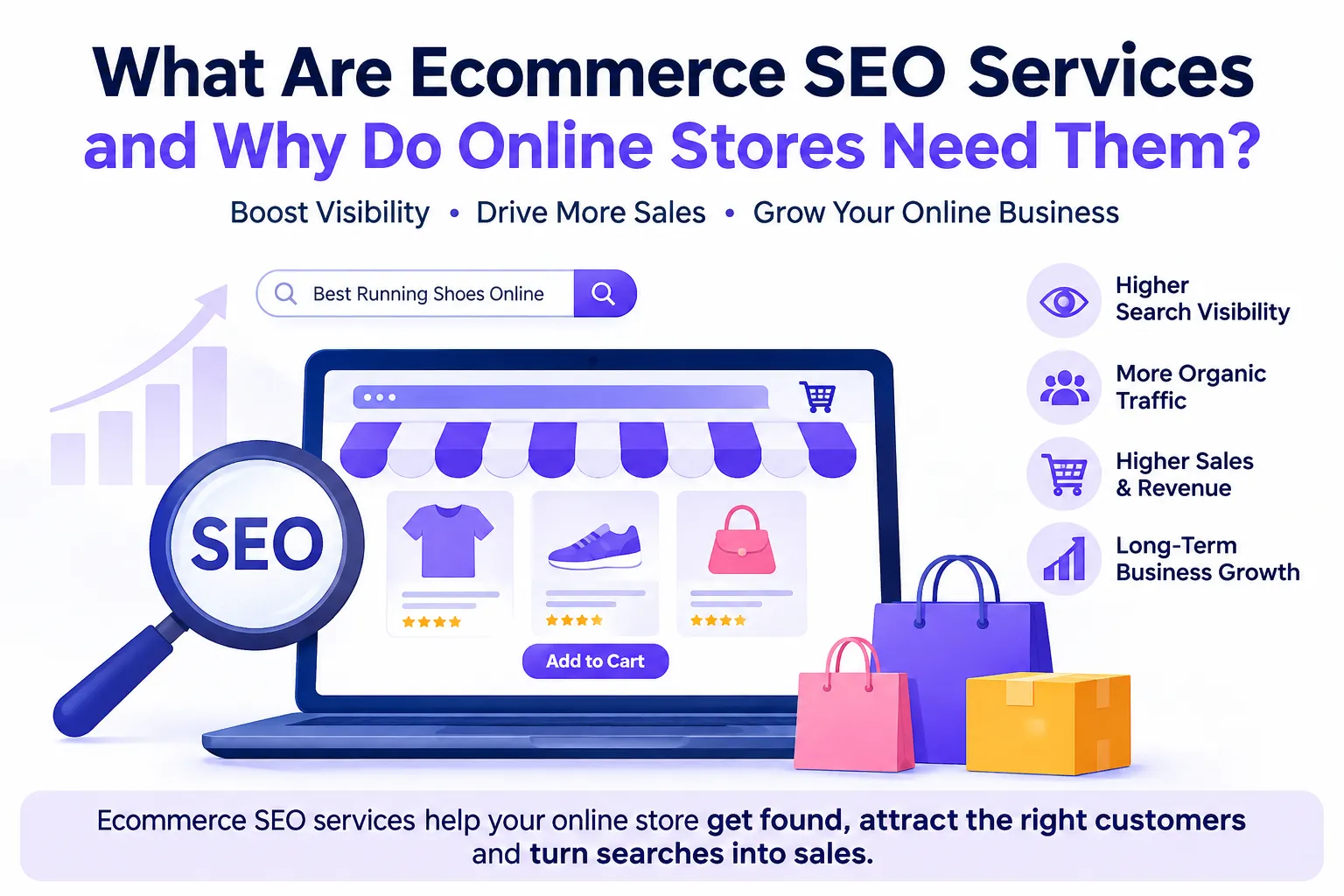
A beautifully designed online store can still feel invisible. The products may be competitively priced, the photography may look professional, and the checkout process may work perfectly. Yet sales remain slow because potential customers simply aren’t finding the website.
That’s the problem ecommerce SEO is designed to solve.
Ecommerce SEO Services help online stores improve their visibility on search engines such as Google. The goal isn’t just to attract more visitors. It’s to bring in people who are actively searching for the products the store sells and are more likely to make a purchase.
For businesses in the UAE, where customers compare products across local websites, marketplaces, social media, and international retailers, strong search visibility can make a noticeable difference to long-term growth.
What Are Ecommerce SEO Services?
Ecommerce SEO is the process of improving an online store so its category pages, product pages, and supporting content appear more prominently in organic search results.
Unlike paid advertising, where traffic stops once the budget runs out, SEO focuses on building visibility that can continue attracting customers over time.
Professional ecommerce SEO usually covers several connected areas, including:
- Keyword and search-intent research
- Product and category page optimisation
- Technical website improvements
- Internal linking and site structure
- Content creation
- Image optimisation
- Structured data and schema markup
- Link building and authority development
- Performance tracking and reporting
Each part plays a different role. A store may have strong written content, for example, but still struggle because its pages load slowly or search engines can’t crawl the website properly.
Ecommerce SEO Starts With How Customers Search
One of the biggest mistakes online stores make is optimising pages around internal product names rather than the words customers actually use.
A supplier may describe an item as a “commercial-grade floor maintenance unit,” while customers search for “industrial floor cleaning machine.” Both phrases may refer to the same product, but only one reflects real buying behaviour.
Good keyword research identifies these differences.
It also separates broad searches from high-intent searches. Someone searching for “coffee machines” may still be researching. A person searching for “buy automatic coffee machine in UAE” is much closer to making a decision.
Ecommerce SEO specialists map these searches to the right pages. Broad commercial keywords usually fit category pages, while specific model names, sizes, materials, and product features belong on individual product pages.
Product and Category Pages Need Different Strategies
Product pages often receive most of the attention, but category pages can attract a much wider range of valuable searches.
A category page for office chairs might target phrases related to ergonomic chairs, executive chairs, mesh chairs, and workplace seating. Individual product pages can then focus on specific colours, sizes, models, or features.
Both page types need clear titles, useful descriptions, relevant headings, optimised images, and sensible internal links. Copying manufacturer descriptions across hundreds of products usually adds little value. Search engines may find the same wording on many competing websites.
Original content gives the store a better opportunity to explain what makes the product useful. It can answer practical questions about specifications, compatibility, delivery, warranty, materials, or intended use.
That information helps search engines, but more importantly, it helps customers feel confident enough to buy.
Technical SEO Keeps the Store Search-Friendly
Ecommerce websites are often more technically complex than standard business websites. Filters, product variations, pagination, discontinued items, duplicate URLs, and large image files can create problems without being immediately visible.
Technical ecommerce SEO may involve:
- Improving website speed
- Fixing broken links and redirect chains
- Managing duplicate product URLs
- Optimising mobile usability
- Creating clean URL structures
- Improving crawlability and indexing
- Adding product, review, and breadcrumb schema
- Handling out-of-stock or discontinued products correctly
Consider a fashion store that allows shoppers to filter products by size, colour, brand, and price. Those filters may generate hundreds of unnecessary URLs. Without proper technical controls, search engines can spend time crawling duplicate pages instead of the store’s most valuable categories and products.
A technical audit helps identify and correct these hidden issues.
Content Supports Buyers Before They Reach the Product Page
Not every customer begins with a product name. Many start with a question.
They might search for the best running shoes for flat feet, how to choose cookware for induction hobs, or which skincare ingredients suit dry weather. Helpful articles, buying guides, comparisons, and FAQs allow a store to meet customers earlier in the decision-making process.
This content can guide readers toward relevant categories and products without sounding like a sales pitch.
For UAE-focused stores, useful content may also address local needs such as climate, delivery expectations, regional sizing, product availability, or suitability for homes and businesses in the Gulf.
The strongest ecommerce content doesn’t chase traffic for its own sake. It answers questions that naturally lead towards a purchase.
Why Online Stores Need Ecommerce SEO
Paid advertising can generate quick traffic, but relying on it alone can become expensive. Competition raises click costs, campaigns require constant management, and sales may fall as soon as spending is reduced.
SEO creates another customer acquisition channel.
Over time, a store with strong organic rankings can attract product searches, comparison queries, and informational traffic without paying for every click. It also builds trust. Customers often see highly ranked websites as more established and credible.
Ecommerce SEO can support:
- More relevant organic traffic
- Higher product and category visibility
- Better website usability
- Improved conversion potential
- Reduced dependence on paid advertising
- Stronger long-term brand authority
SEO is rarely instant, but its value often compounds as more pages gain visibility and authority.
Build Visibility That Supports Real Sales
Ecommerce SEO isn’t about adding keywords to product descriptions and hoping rankings improve. It combines customer research, technical performance, useful content, and thoughtful page optimisation.
Before investing in Ecommerce SEO Services, review where your store is currently losing visibility. Check whether important pages are indexed, whether category content reflects customer searches, and whether technical issues are holding the website back.
The practical takeaway is simple: make your store easier for search engines to understand and easier for customers to trust. When both happen together, organic visibility becomes more than a traffic metric. It becomes a dependable source of sales.
Frequently Asked Questions
How long does ecommerce SEO take to show results?
Some technical improvements may produce early changes, but meaningful ranking and traffic growth usually takes several months. Competition, website condition, product range, and content quality all affect the timeline.
Is ecommerce SEO suitable for small stores?
Yes. Smaller stores can compete by targeting specific product searches, local intent, niche categories, and detailed customer questions rather than chasing only broad, highly competitive keywords.
Can SEO replace paid advertising?
Not completely. Paid advertising and SEO serve different purposes. Advertising can generate immediate visibility, while SEO builds sustainable organic traffic. Many stores achieve better results by using both strategically.