How to Inspect Waterproofing Work Before Project Handover
By CoatEXX Industrial Solutions
9 Views
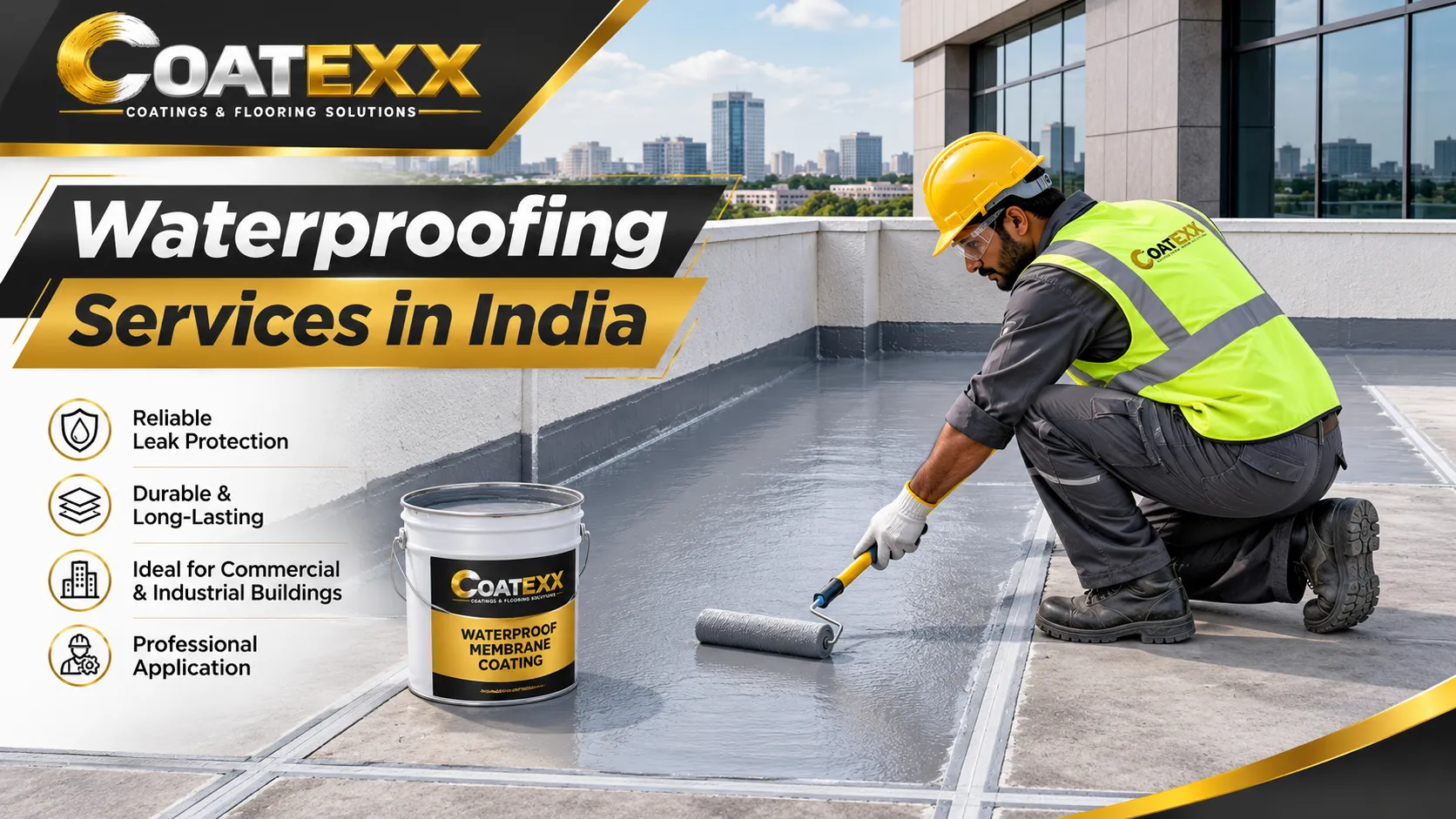
A newly waterproofed terrace may look completely finished, but appearance alone cannot confirm whether the work will prevent leakage. Poor joint treatment, insufficient membrane coverage or incomplete curing can create problems after the contractor leaves.
For facility managers and property owners, final inspection is an important stage of every waterproofing project.
Professional Waterproofing Services in India should include suitable material selection, proper application and quality verification before project handover.
This guide explains what to inspect, which documents to request and how to identify potential issues before accepting completed waterproofing work.
Why Is Waterproofing Inspection Necessary Before Handover?
Waterproofing systems protect building surfaces against moisture penetration. However, their effectiveness depends on several interconnected factors.
A properly selected membrane may still fail if the substrate was poorly prepared or construction joints were incorrectly treated.
Similarly, blocked drainage outlets can create standing water and expose weaknesses in the completed system.
Final inspection helps identify visible defects, confirm the agreed installation scope and establish maintenance responsibilities.
7 Essential Waterproofing Quality Checks Before Handover
1. Verify Surface Preparation Records
The performance of a waterproofing system begins with the condition of the underlying surface.
Ask whether the contractor removed loose concrete, dust, grease and deteriorated existing coatings.
Cracks and damaged areas should receive appropriate treatment before membrane application.
A reliable waterproofing company should explain which preparation methods were used and whether the substrate met the selected product's requirements.
Photographs taken before application can help document completed preparation work.
2. Inspect Membrane Coverage and Thickness
Different waterproofing systems require different application thicknesses and layer arrangements.
For example, liquid-applied membranes may require specific coverage rates and multiple coats.
Inspect accessible areas for missed sections, pinholes, visible bubbles or inconsistent finishes.
Where the specification requires thickness verification, appropriate measurements or documented material consumption may support quality assessment.
A visually thick coating does not automatically indicate correct application.
3. Examine Joints, Corners and Penetrations
Water often enters through vulnerable construction details rather than large uninterrupted surfaces.
Check wall-to-floor junctions, pipe penetrations, drainage outlets and expansion joints.
These areas may require compatible sealants, reinforcement or specially designed detailing.
The correct procedure of waterproofing should account for structural movement and the specific requirements of these locations.
Incomplete treatment around a single pipe can compromise an otherwise properly installed membrane.
4. Check Drainage and Surface Slopes
Waterproofing should work alongside an effective drainage system.
Standing water can increase exposure and create maintenance challenges.
Inspect whether drainage outlets remain accessible and free from construction debris.
Confirm that surface slopes match the approved design.
If ponding is observed, ask the contractor to evaluate whether corrective work is necessary.
5. Confirm Curing and Recoating Requirements
Waterproofing materials require suitable conditions for application and curing.
Temperature, humidity and moisture exposure can influence the process.
Ask for the product data sheets and confirm that the contractor followed the manufacturer's specified intervals.
Premature traffic or water exposure may damage certain systems.
No single curing period applies to every waterproofing product.
6. Review Leakage Testing Requirements
Some projects specify controlled water-retention or flood testing before handover.
However, these tests are not suitable for every roof, structure or waterproofing system.
Testing should follow the approved method and consider structural loading, drainage and material curing requirements.
For industrial facilities requiring related surface protection, Industrial Painting may be assessed separately under its own quality requirements.
A successful test provides useful evidence but cannot guarantee that future damage or leakage will never occur.
7. Collect Project Handover Documentation
Documentation helps facility managers understand what was installed and how it should be maintained.
Request the approved material specification, relevant inspection records and available test reports.
The contractor should also explain cleaning restrictions, maintenance requirements and areas requiring periodic inspection.
These records can support future repairs and maintenance planning.
Waterproofing Handover Inspection Checklist
| Inspection Area | What to Verify |
|---|---|
| Surface preparation | Cleaning, repairs and substrate condition |
| Membrane application | Coverage, specified layers and visible defects |
| Joint treatment | Corners, penetrations and movement joints |
| Drainage | Clear outlets and designed slopes |
| Curing | Manufacturer-approved conditions |
| Testing | Applicable test method and observations |
| Documentation | Material details and maintenance guidance |
What Should You Do If Waterproofing Defects Are Found?
Do not approve the affected work without documenting the problem.
Take photographs, identify the location and request a technical explanation.
The contractor should recommend an appropriate corrective procedure based on the membrane system and defect type.
If surrounding concrete is damaged, related Floor Repair & Recoating requirements may need separate evaluation.
Avoid allowing another coating to be applied before the cause of failure is identified.
How Does CoatEXX Approach Waterproofing Projects?
CoatEXX Industrial Solutions provides waterproofing solutions for industrial and commercial properties.
Its service approach considers leakage sources, substrate conditions, compatible material selection and project-specific application requirements.
The company describes options including PU liquid-applied membranes, acrylic coatings, cementitious systems and protective membrane assemblies.
Customers can contact CoatEXX Industrial Solutions to discuss site inspections, project specifications and suitable treatment options.
Conclusion
Waterproofing quality should be assessed before the project is considered complete.
Membrane coverage, joint treatment, drainage, curing and appropriate testing all contribute to successful installation.
A documented handover helps property owners understand the completed work and identify future maintenance requirements.
Contact CoatEXX Industrial Solutions for waterproofing project assessments and quotations.
Website: www.coatexx.in
Email: info@coatexx.in
Phone: +91-86570-78306
Address: 204, Shreeji Apartment, Bonkonde, Tal. Kalyan, Thane, Maharashtra – 421301
Frequently Asked Questions (FAQs)
1. What should be checked after Waterproofing Services in India are completed?
Inspect membrane coverage, joints, drainage, curing conditions and applicable test results before accepting the project.
2. What is the correct procedure of waterproofing inspection?
It involves reviewing preparation records, checking the completed membrane, inspecting vulnerable details and verifying applicable quality requirements.
3. What documents should a waterproofing company provide?
Request material specifications, available inspection records, relevant test results and maintenance instructions.
4. Is flood testing necessary for every waterproofing project?
No. Testing suitability depends on the structure, membrane system, approved specification and applicable safety requirements.
5. Can waterproofing fail even after passing inspection?
Yes. Structural movement, physical damage, ageing or inadequate maintenance may affect performance after handover.
Related Reading
Top 10 Hidden Secrets About Business & Finance You Need to Know
Welcome to our in-depth exploration of Business & Finance. In an era defined...
Why Business & Finance is Transforming the Global Industry Landscape
Welcome to our in-depth exploration of Business & Finance. In an era defined...