Wall Mounted Stainless Steel Range Hood: A Complete Buyer's Guide
71 Views
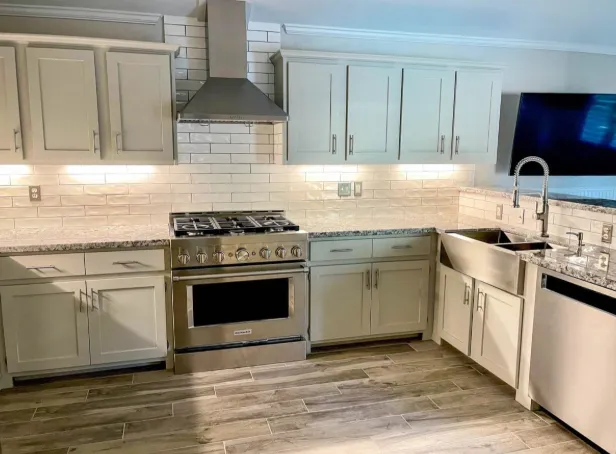
If your cooktop sits against a wall, chances are a wall-mounted hood is the simplest and most effective way to handle smoke, grease, and cooking odors. Among the available options, a wall-mounted stainless steel range hood remains one of the most popular choices, and for good reason — stainless steel holds up well to heat, resists corrosion, and fits comfortably into most kitchen styles without looking out of place. Before buying one, though, it helps to understand how these hoods work, what specs actually matter, and what keeps them performing well for years to come.
Why Wall-Mounted Hoods Are So Common
Wall-mounted range hoods are installed directly above a cooktop positioned against a wall, drawing rising heat, smoke, and steam upward and either venting it outside or filtering and recirculating it back into the kitchen. Because the cooktop only faces open air on one side, these hoods generally don't need to account for the same degree of ambient air disruption that island setups face, which simplifies both sizing and installation in most standard kitchen layouts.
Why Stainless Steel Specifically
Material choice matters more than people often realize. A wall-mounted stainless steel range hood resists rust and heat discoloration far better than painted or laminate alternatives, which matters given how close these units sit to direct heat and grease exposure. Stainless steel is also relatively easy to clean, doesn't hold onto odors the way some materials can, and tends to match well with other stainless kitchen appliances, which is likely why it remains one of the most requested finishes across kitchen renovations.
Getting the Size Right
Hood width should match or slightly exceed cooktop width to ensure full coverage across all burners. A hood that's too narrow leaves the outer burners under-ventilated, allowing smoke and steam to escape into the kitchen rather than being pulled up and filtered or vented. For most standard cooktops, this is a fairly straightforward calculation, though kitchens with high-output ranges may want to size up slightly for better coverage.
CFM Ratings and What They Mean for You
CFM (cubic feet per minute) measures how much air a hood can move, and it's one of the most important specs to check before buying. Gas cooktops generally call for higher CFM ratings than electric or induction ones, since they produce more combustion byproducts that need to be cleared from the air. Households that cook frequently, especially with high-heat methods like frying or searing, will typically benefit from a wall-mounted stainless steel range hood with a stronger CFM rating than one used mainly for light, occasional cooking.
Ducted vs. Ductless Options
Wall-mounted hoods are available in both ducted and ductless configurations. Ducted models vent air outside through ductwork, offering more thorough smoke and odor removal, while ductless models filter and recirculate air back into the kitchen, which simplifies installation but generally offers less complete air clearing. The right choice often comes down to whether external venting is feasible given the kitchen's layout and structure.
Keeping It Looking and Performing Its Best
Stainless steel is fairly low-maintenance, but it does show fingerprints and water spots more easily than some other finishes, so regular wiping with a stainless-appropriate cleaner helps keep it looking sharp. Filters, whether baffle or mesh, should be cleaned regularly to prevent grease buildup, which can reduce suction power and, over time, become a fire hazard if left unaddressed.
Conclusion
A well-chosen wall-mounted hood can make a real difference in kitchen air quality, and getting the sizing, CFM rating, and venting type right upfront saves a lot of hassle down the line. At Proline Range Hoods, we build our stainless steel wall-mounted models to combine durability with strong, reliable ventilation, so homeowners get a hood that performs well and holds up to years of everyday cooking.
Related Reading
Expert Insights: Navigating the Complex World of Home Improvement
Welcome to our in-depth exploration of Home Improvement. In an era defined by ra...
Why Home Improvement is Transforming the Global Industry Landscape
Welcome to our in-depth exploration of Home Improvement. In an era defined by ra...