Tribal Process Service: Navigating Service Requirements Across Tribal Jurisdictions
By Tyler
16 Views
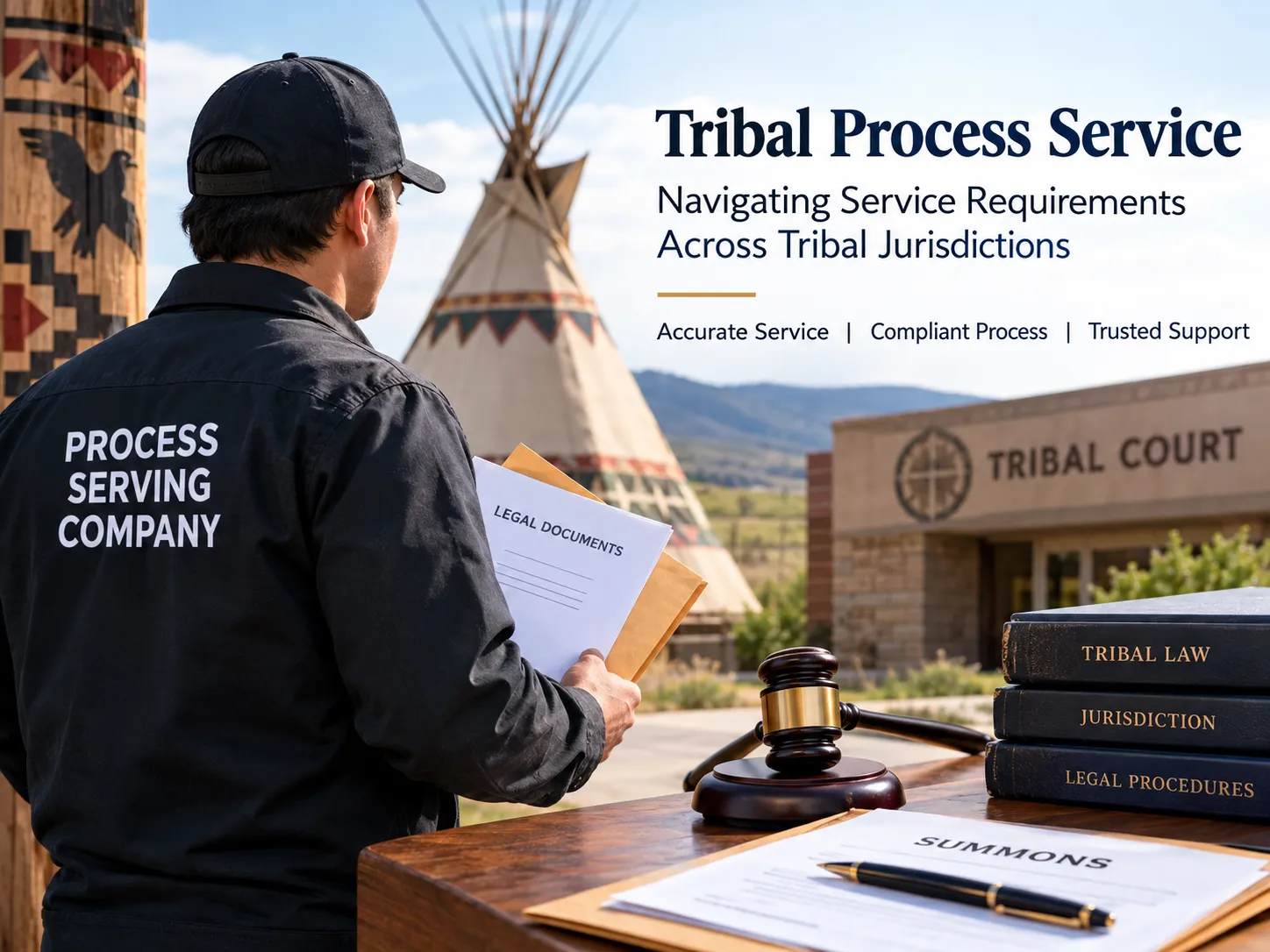
Serving legal documents is an important part of moving a lawsuit or legal proceeding forward. However, the process can become more complicated when documents need to be served within or in connection with a tribal jurisdiction. Tribal courts and federally recognized tribes may have their own rules, procedures, and requirements for accepting legal documents. Understanding these differences can help attorneys, law firms, businesses, and individuals avoid unnecessary delays.
Tribal process service involves delivering legal documents to an individual, business, organization, or other party in connection with a matter involving tribal jurisdiction. Depending on the circumstances, the applicable requirements may involve tribal court rules, tribal law, state law, federal law, or a combination of these frameworks.
Why Tribal Process Service Can Be Different
One of the biggest challenges in serving documents involving tribal jurisdictions is determining which rules apply. Tribal nations are sovereign governments, meaning their courts and legal systems can operate independently from state court systems in many circumstances.
A process server who is familiar only with standard state procedures may not know the specific requirements established by a tribal court. For example, a court may have particular rules regarding who can serve documents, where service may occur, what documents must be provided, or how proof of service should be prepared.
This makes advance research especially important. Before attempting service, legal professionals should identify the appropriate jurisdiction and review the applicable court rules.
What Documents May Require Service?
The documents involved in tribal process service can vary depending on the case. Common examples include:
- Summons and complaints
- Subpoenas
- Notices of hearings
- Court orders
- Petitions
- Civil claims
- Discovery-related documents
- Eviction or property-related notices
- Other legal correspondence requiring formal delivery
The exact requirements depend on the nature of the proceeding and the court handling the matter.
Understanding Tribal Court Jurisdiction
Jurisdiction is one of the most important issues to consider before arranging service. A tribal court may have jurisdiction over certain matters involving tribal members, tribal entities, reservation activities, property, or other legally defined circumstances.
However, jurisdictional questions can be complicated. A case involving a person located on tribal land does not automatically mean every tribal court rule applies to the situation.
Legal professionals should identify the court involved and determine its service requirements before assigning the job. This helps prevent an otherwise completed service attempt from being challenged because the wrong procedure was followed.
Choosing the Right Process Server
Experience matters when legal documents must be served in an unfamiliar jurisdiction. A knowledgeable Process Serving Company can help coordinate service assignments while paying attention to location, court requirements, documentation, and deadlines.
A qualified process server should understand that service is more than simply handing documents to someone. The server may need to follow specific instructions, document the attempt accurately, and prepare a detailed affidavit or proof of service.
For cases involving tribal jurisdictions, it is particularly useful to work with professionals who understand that tribal courts can have distinct procedures.
Common Challenges With Tribal Service
Several practical problems can make these assignments more difficult.
Unclear Service Requirements
The first challenge may be determining exactly how service must be completed. Different courts can establish different procedures, so relying on general assumptions can create problems.
Remote Locations
Some tribal communities are located in rural or remote areas. Distance can increase travel time and make multiple service attempts more difficult.
Locating the Defendant
A defendant's current address may not always be available or accurate. A professional service provider may need to conduct lawful address research or coordinate additional location information before attempting service.
Strict Deadlines
Legal documents are often connected to court deadlines. Delays in locating a recipient or completing service can create additional pressure for a legal team.
Proof of Service
Proper documentation is essential. Courts may require specific information showing when, where, and how documents were served. An incomplete or inaccurate return can create avoidable complications.
How to Prepare for a Tribal Service Assignment
Good preparation can make the process more efficient. Before sending documents to a process server, the requesting party should provide as much accurate information as possible.
Useful information may include the recipient's full legal name, physical address, known workplace, phone number where appropriate, case information, documents to be served, applicable deadlines, and any specific instructions from the court.
It is also helpful to identify the court handling the matter and verify whether it has special requirements for service. If the court provides official rules or instructions, those materials should be reviewed before service begins.
Why Documentation Matters
A successful service attempt should be supported by clear documentation. The process server may record the date, time, location, identity of the recipient, method of delivery, and other relevant details.
The final proof of service should accurately reflect what happened. Legal teams can then use the documentation when demonstrating compliance with applicable service requirements.
Careful recordkeeping is especially valuable when service is questioned later. A detailed report provides a clearer record of the steps taken.
How a Professional Service Provider Can Help
Legal professionals often have multiple deadlines and cases to manage at the same time. Outsourcing specialized service assignments can reduce administrative work and provide a structured way to coordinate difficult deliveries.
A professional service provider can assist with assignment intake, address information, field attempts, status updates, and documentation. For cases involving tribal jurisdictions, experience with specialized service requirements can also help identify potential issues before an attempt is made.
This does not replace legal advice. Attorneys and parties should determine the legal requirements applicable to their specific case, while the process server focuses on carrying out the service assignment according to the provided instructions and applicable rules.
Questions to Ask Before Hiring a Process Serving Company
Before assigning a tribal service matter, consider asking:
- Does the company handle service involving tribal jurisdictions?
- Does it have experience with difficult or remote service locations?
- How are service attempts documented?
- How are updates communicated to the requesting party?
- Can the company provide an affidavit or proof of service?
- How are urgent or deadline-sensitive assignments handled?
- Does the company explain potential service issues before proceeding?
These questions can help clarify expectations and reduce communication problems during the assignment.
Final Thoughts
Tribal process service requires careful attention to jurisdiction, court procedures, location, documentation, and deadlines. Because tribal courts may have their own rules and legal procedures, a standard approach used for state-level service may not always be appropriate.
Researching the applicable requirements before service begins is an important first step. Working with an experienced Process Serving Company can also make the logistical side of the assignment easier to manage, particularly when the recipient is difficult to locate or the service location presents unique challenges.
For legal professionals, careful preparation and accurate documentation can help create a clearer service record and reduce avoidable delays in cases involving tribal jurisdictions.
Related Reading
Top 10 Hidden Secrets About Business & Finance You Need to Know
Welcome to our in-depth exploration of Business & Finance. In an era defined...
Why Business & Finance is Transforming the Global Industry Landscape
Welcome to our in-depth exploration of Business & Finance. In an era defined...