Thermal Till Rolls: What Irish Retailers Should Know Before Reordering
10 Views
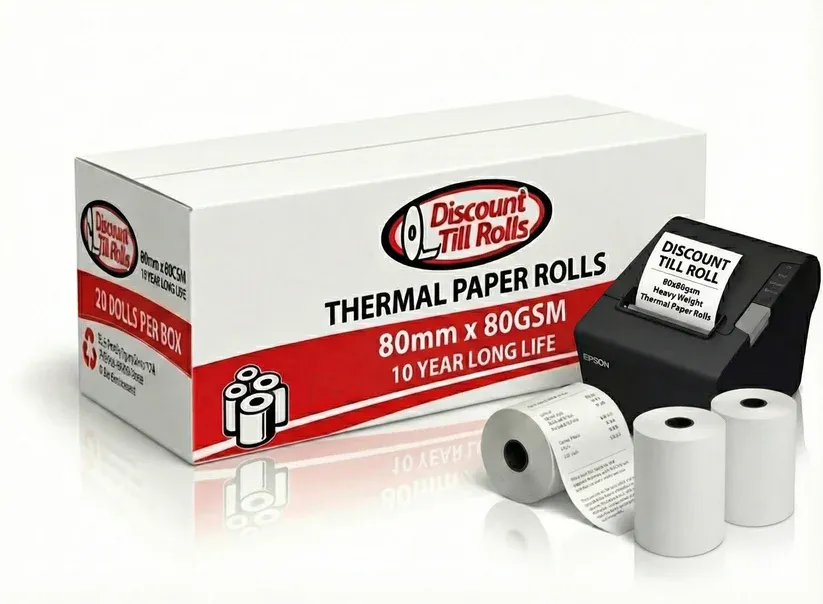
Quick answer: Thermal till rolls are the coated paper rolls used in receipt printers, cash registers and card machines no ink or ribbon needed, since heat from the printer head creates the print. Getting the right thickness, width and coating (especially BPA-free) matters more than most retailers realise, and buying cheap till rolls without checking these details often costs more in jammed printers and faded receipts than it saves.
Every till in Ireland gets one working day, five days a week, sometimes seven. Nobody notices the roll of paper feeding through it until it runs out mid-queue, or the receipt comes out so faded a customer can't read the price they just paid.
Thermal till rolls are one of those small, unglamorous purchases that quietly keep a shop, café or pharmacy running. This post covers how they actually work, what separates a decent roll from a poor one, and a few things worth checking before the next bulk order goes in.
How Thermal Till Rolls Actually Work
Unlike older till rolls that needed an ink ribbon, thermal paper has a special heat-sensitive coating built into the sheet itself. The printer head heats specific points on the paper as it passes through, and that heat darkens the coating to form the text and numbers on your receipt.
That's why thermal printers run quieter and faster than old dot-matrix machines, and why there's no ribbon to replace. It's also why thermal receipts fade over time heat and sunlight both affect that coating, which matters if you're keeping copies for accounts or warranty claims.
Why the Coating Matters More Than People Think
Not every thermal roll is made the same way, and the coating is usually where the difference shows up first.
Some rolls use a coating containing BPA (Bisphenol A), a chemical that's faced increasing scrutiny over health concerns from repeated skin contact relevant for staff handling receipts dozens of times a shift. BPA-free thermal rolls have become the standard choice for most Irish retailers, and many suppliers now stock little else.
A few things worth checking on the box before ordering in bulk:
- BPA-free labelling — most reputable suppliers state this clearly; if it's not mentioned, ask.
- Fade resistance — some rolls are rated for longer-lasting print, useful for businesses that need receipts readable months later.
- Roll diameter — a roll that's slightly too large simply won't fit the printer housing, which sounds obvious until it happens at 8am on a Monday.
Till Rolls Ireland: Common Sizes and What They're For
Ask ten different Irish businesses what size till roll they use and you'll likely get four or five different answers, because the right size depends entirely on the machine.
The most common widths seen across Irish retail, hospitality and catering include:
- 57mm and 80mm — the two most widely used sizes for standard retail tills and card machines.
- 44x70mm and 76x70mm — often used in specific POS systems and older cash registers.
- Credit card rolls — narrower rolls designed specifically for PDQ machines like Ingenico, Verifone or SumUp terminals.
Ordering the wrong width for a machine is a surprisingly common mistake, particularly when a business switches POS providers and assumes the old roll size still applies. Checking the printer manual, or simply measuring an existing roll, avoids an awkward returns process.
Cheap Till Rolls: Where the Savings Are Real (and Where They Aren't)
There's nothing wrong with looking for cheap till rolls most retailers run on tight margins, and packaging costs add up across a year. But "cheap" and "poor value" aren't always the same thing.
A roll priced noticeably below the market rate sometimes uses:
- A thinner paper stock that jams more often in busy printers.
- A weaker thermal coating that fades within weeks rather than months.
- Loosely wound rolls that unspool unevenly, wasting paper during printing.
Worth remembering: the real cost of a till roll isn't the price on the box it's the price per receipt printed without a jam, a fade, or a wasted reprint. A slightly pricier roll that runs cleanly through a busy till often works out cheaper across a month than one that needs constant attention.
That said, genuinely competitive pricing on till rolls Ireland-wide does exist, particularly when buying in bulk from suppliers who deal in volume rather than small retail packs.
Bulk Buying: What Retailers Should Check First
Most businesses don't buy a single box of till rolls they buy a case, or several, depending on footfall. A few practical points before committing to a large order:
- Storage conditions — thermal paper is sensitive to heat and direct sunlight, so a stockroom near a radiator or window isn't ideal for long-term storage.
- Order frequency — smaller, more regular deliveries tend to suit seasonal businesses better than one enormous order sitting untouched for months.
- Printer compatibility — always double-check width and diameter against your actual printer model, not just the till roll type it replaced.
Businesses working with a dedicated Irish supplier for till rolls Ireland-wide Discount Till Rolls among them, a Dublin-based company supplying retail, hospitality and catering sites across the country often find it easier to match roll sizes correctly, since a supplier familiar with common POS systems can flag compatibility issues before an order ships rather than after it arrives.
The Bottom Line
Thermal till rolls rarely get a second thought until something goes wrong a jam during a queue, a receipt too faded to read, or a size that simply doesn't fit. Getting the basics right, from BPA-free coating to correct width, keeps a till running smoothly without adding unnecessary cost. For most Irish retailers, spending a little time confirming these details before a bulk order pays off far more than chasing the cheapest price alone.
A Short FAQ
Do thermal till rolls need to be BPA-free by law in Ireland?
There's no blanket legal requirement, but BPA-free rolls have become the standard due to health guidance and supplier practice, and most businesses now default to them.
Why does my receipt fade so quickly?
Heat, sunlight and friction all affect the thermal coating over time storing receipts away from direct light and heat slows this down.
Can I use a wider till roll if my printer takes a narrower one?
No, the roll needs to match your printer's specified width and diameter exactly, or it won't feed correctly and may jam the printer.
Are cheap till rolls always lower quality?
Not always but it's worth checking coating quality and paper thickness rather than assuming price alone reflects performance.
Related Reading
Top 10 Hidden Secrets About Business & Finance You Need to Know
Welcome to our in-depth exploration of Business & Finance. In an era defined...
Why Business & Finance is Transforming the Global Industry Landscape
Welcome to our in-depth exploration of Business & Finance. In an era defined...