The Role of Push Pull Brackets in Modern Video Wall Installations
By Almoeqatar
46 Views
Video walls have become a popular way to present information on a large scale. They can be found in corporate offices, control rooms, retail stores, conference venues, airports, hospitality spaces, and many other environments. A video wall usually consists of multiple displays arranged closely together to create one large visual surface.
While much of the attention goes to the screens themselves, the mounting system is equally important. A video wall needs to be securely installed, properly aligned, and easy to access when maintenance is required. This is where a push pull bracket can play an important role.
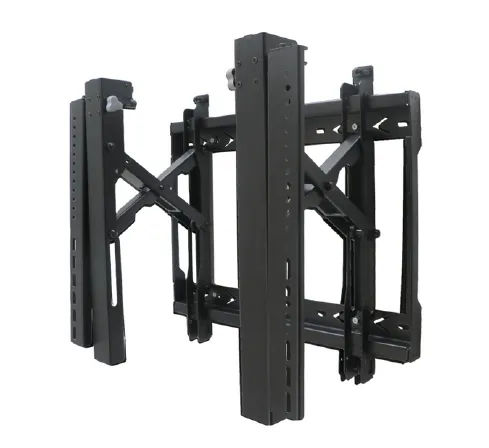
A push pull bracket is designed to make the installation and servicing of video wall displays more practical. It allows displays to be moved forward and backward from their mounted position, providing technicians with easier access to the rear of the screens.
What Is a Push Pull Bracket?
A push pull bracket is a specialized mounting system used for video wall displays. Unlike a fixed wall mount, it provides additional movement that allows the screen to be pushed toward the wall or pulled forward when access is needed.
This simple movement can be particularly useful when several displays are installed side by side. In a traditional fixed mounting setup, reaching the cables and connections behind the screen can be difficult. A push pull mechanism can provide more working space without requiring the entire display to be removed.
The exact movement, adjustment range, and supported screen size depend on the particular bracket model.
Why Is the Mounting System Important?
A video wall is more than a collection of screens. The displays need to be positioned accurately so that the overall wall looks clean and uniform.
Even a small difference in the position of one screen can affect the appearance of the complete video wall. Therefore, the mounting system needs to provide stability as well as adjustment.
A suitable bracket can help installers achieve better positioning and make future maintenance easier.
1. Makes Installation More Convenient
Installing multiple displays can be a detailed process. Each screen needs to be positioned correctly in relation to the others.
A push pull bracket can give installers greater flexibility during the installation process. The ability to move the display forward can provide easier access while connecting cables and making adjustments.
This can make the installation process more manageable, particularly when working with larger video wall configurations.
2. Provides Easier Access for Maintenance
One of the biggest advantages of a push pull bracket is accessibility.
Video walls may need maintenance from time to time. Technicians might need to check power connections, replace cables, troubleshoot a display, or inspect equipment behind the screens.
With a fixed mount, technicians may have limited access to the rear of the display. A push pull bracket allows the screen to be pulled forward, creating additional space to work.
Once the work is completed, the display can be pushed back into position.
3. Helps With Display Alignment
Alignment is one of the most important aspects of a professional-looking video wall.
Multiple screens need to sit at the correct height and distance from one another. If one display is slightly out of position, the lines between screens may appear uneven.
Depending on the bracket design, adjustment features can help installers fine-tune the position of individual displays. This can make it easier to create a consistent and well-aligned video wall.
4. Reduces the Need to Remove Displays
Removing a display every time maintenance is required can take additional time and effort. It may also increase the risk of accidentally damaging the display or connected cables.
A push pull mechanism can reduce the need for complete removal in situations where rear access is required.
This is particularly useful for larger installations where many displays are mounted together.
5. Supports Cleaner Installations
Cable management is another important part of video wall installation. Multiple screens can involve several power and signal cables, making the area behind the displays difficult to manage.
A suitable mounting system can provide enough working space for installers to organize and connect cables properly.
Good cable management not only improves the appearance of the installation but can also make future troubleshooting easier.
Where Are Push Pull Brackets Commonly Used?
Push pull brackets can be useful in many environments where video walls are installed.
Corporate Offices
Businesses use video walls for presentations, dashboards, communication, and collaboration. A reliable mounting system can help keep these installations organized and accessible.
Control Rooms
Control rooms often operate video walls continuously. Since technicians may need to access displays and connections, easy rear access can be especially useful.
Retail Environments
Retailers can use video walls to display advertisements, product information, promotions, and digital content. A secure and adjustable mounting solution can help maintain the appearance of the installation.
Conference and Event Spaces
Large displays are commonly used for presentations, live feeds, and event information. Push pull brackets can make installation and maintenance more convenient.
Hospitality Venues
Hotels, conference centres, and other hospitality spaces may use video walls in reception areas, meeting rooms, and event spaces. A clean and properly aligned display installation can complement the overall environment.
What Should You Consider When Choosing a Push Pull Bracket?
Not every bracket is suitable for every video wall. Before selecting a mounting system, several factors should be considered.
Display Size and Weight
Always check whether the bracket can safely support the size and weight of the displays being installed. Using a suitable mounting solution is essential for stability and safety.
Adjustment Options
Consider what type of adjustment is required. Depending on the installation, you may need options for horizontal, vertical, depth, or tilt adjustment.
Accessibility
Think about how technicians will access the displays after installation. If regular maintenance is expected, a bracket with convenient access can save time.
Wall Type
The structure of the wall is also important. The mounting system needs to be installed on a suitable surface using the correct hardware and installation method.
Installation Environment
Consider where the video wall will be installed and how frequently it will be used. A control room with continuously operating displays may have different requirements from a temporary event installation.
Push Pull Brackets and Long-Term Video Wall Management
A video wall is often a long-term investment. While choosing high-quality displays is important, the mounting infrastructure should not be overlooked.
Over time, cables may need to be replaced, displays may require servicing, and adjustments may become necessary. A mounting system that provides easier access can make these tasks more straightforward.
This is why push pull brackets are increasingly considered an important part of professional video wall installations rather than simply an accessory.
Final Thoughts
A video wall needs more than high-quality displays to deliver a professional result. The mounting system plays an important role in installation, alignment, accessibility, cable management, and ongoing maintenance.
Push pull brackets provide a practical solution by allowing displays to move forward and backward when access is required. This can make installation easier and reduce the effort involved in servicing individual screens.
When planning a video wall, it is therefore worth considering the mounting system alongside the displays, content system, cables, and other equipment. Choosing the right bracket can help create an installation that is not only visually neat but also easier to maintain over time.
For professional video wall projects, understanding the role of mounting hardware can help installers and businesses make better decisions and build more practical display environments.