The Role of Bag Inserter Machines in Automated Packaging Systems
By Irobolution
7 Views
Quick Summary
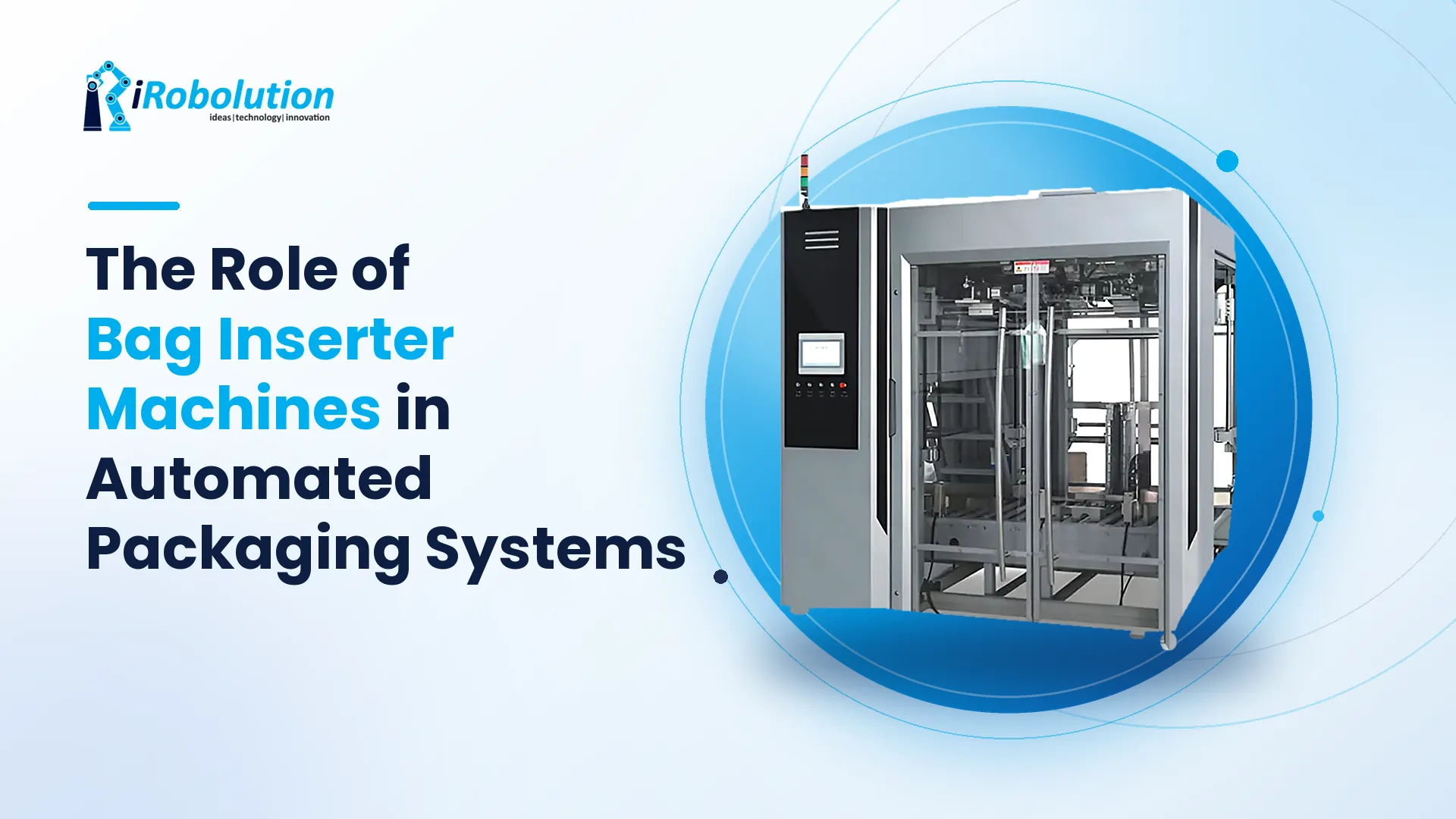
A bag inserter machine places a clean plastic bag or liner inside a carton, jar or container, automatically and at a steady speed. It removes one of the slowest manual steps on a packing line and protects products from moisture, dust and leakage. This guide explains how it works, where it fits in an automated line, its benefits, what to check before buying and how to look after it.
Table of Contents
-
What Is a Bag Inserter Machine?
-
How Does It Work?
-
Where It Fits in an Automated Packing Line
-
Key Roles and Benefits
-
Problems It Solves
-
Configurations to Know About
-
Where Is It Used?
-
Features and Checks Before Buying
-
Common Mistakes to Avoid
-
Basic Maintenance Tips
-
Conclusion
-
Frequently Asked Questions
What Is a Bag Inserter Machine?
A bag inserter machine is an automatic machine that prepares a bag and places it inside a carton, case, jar or container, so that the package is ready for filling. Depending on the design, it either makes the bag from a roll of film or picks up a pre-made bag. It then opens the bag and positions it neatly in the container.
You may also hear it called a poly bag inserter, a bag liner inserter or a bag-in-carton inserter. It is used wherever an inner bag is needed to protect the product, such as edible oil, margarine, chemicals, frozen food and bulk goods.
How Does It Work?
The working follows a clear sequence.
-
Empty cartons or containers arrive on a conveyor, often from a case erector.
-
The machine forms the bag from film, or picks up a ready-made bag.
-
The bag is opened with air or mechanical grippers.
-
The bag is carefully inserted into the carton or container.
-
The top of the bag is folded, or held open, so the product can go in cleanly.
-
The container moves on to the filling station.
Sensors and a touchscreen control make sure each step happens at the right time, and let the operator change settings for different sizes.
Where It Fits in an Automated Packing Line
A bag inserter is one link in a longer chain. A typical line for bag-in-carton products looks like this.
-
Case erector: forms the carton from a flat blank.
-
Bag inserter machine: places the liner inside.
-
Filling machine: fills the bag with liquid, paste or powder.
-
Bag closing or tying machine: seals or ties the bag.
-
Carton sealing machine: closes the box.
-
Labelling and inspection: adds labels and checks weight or quality.
-
Palletiser: stacks the finished cartons.
Because the inserter sits at the start of this chain, a slow or unreliable one holds up every machine after it. A good machine keeps the whole line moving smoothly.
Key Roles and Benefits
-
Keeps the line at full speed: it feeds the filling station steadily, so the filler does not wait.
-
Reduces labour: one machine does the work of several people, and workers can move to higher-value tasks.
-
Gives consistent bag placement: every liner sits correctly, which avoids spills and filling errors.
-
Cuts damage and waste: gentle handling prevents torn, twisted or creased bags.
-
Improves hygiene: less human handling means less contamination.
-
Protects the product: a well-placed inner bag guards against moisture, dust and leaks.
-
Works across shifts: output does not drop when staff are tired or absent.
-
Supports full automation: it connects with case erectors, fillers and sealers, so the line acts as one system.
-
Easy changeovers: adjustable settings allow quick switching between sizes.
-
Lower long-term cost: savings in labour, waste and rework add up quickly.
Problems a Bag Inserter Machine Solves
-
Slow manual insertion: the step is often the slowest on the line.
-
Uneven bag placement: creases and misaligned bags cause leaks and spills.
-
Torn liners: rough handling damages thin film.
-
Contamination risk: hands touching the inside of a bag can add dirt.
-
Dependence on workers: output drops with absence, fatigue or turnover.
-
Inconsistent pack quality: customers notice messy or leaking cartons.
Configurations to Know About
-
Film-fed bag makers with inserters: the machine forms the bag from a roll, which can lower material cost.
-
Pre-made bag inserters: use ready-made bags from a magazine.
-
Carton, jar and tin versions: designed for different container shapes.
-
Inline and standalone units: inline units connect directly to other machines, while standalone ones can be loaded by hand.
-
Customised versions: built around specific bag sizes, materials and speeds.
Where Is a Bag Inserter Machine Used?
-
Edible oil and ghee packing
-
Margarine and butter products
-
Chemical and lubricant products
-
Frozen food packaging
-
Dairy and beverage concentrates
-
Electronics and spare parts, where an inner bag protects the parts
-
Consumer goods and wholesale packing units
It is especially useful for greasy or sticky products, where a clean, well-folded bag matters.
Features and Checks Before Buying a Bag Inserter Machine
-
Bag and container sizes: check the range the machine can handle.
-
Bag material and thickness: confirm it works with your film type.
-
Rated speed: ask for output in pieces per minute, and check it matches your filler. Some machines run at about 15 bags per minute, while others are faster or slower.
-
Gentle handling: features that avoid tears and creases.
-
Quick changeover: tool-free or simple adjustments for new sizes.
-
Controls: a clear touchscreen with stored recipes.
-
Build quality: a sturdy, easy-to-clean frame, with food-safe materials where needed.
-
Integration: it should connect with your case erector, filler and sealer.
-
Customisation: special bag fold, carton or jar formats.
-
Training and spare parts: installation help, operator training and quick supply of parts.
-
Trial: ask to see the machine working with your own cartons and bags.
Common Mistakes to Avoid
-
Choosing by price alone: a low-cost unit may tear liners or jam often.
-
Ignoring bag material: thin or slippery film needs careful handling.
-
Mismatched speed: if the inserter is slower than the filler, it becomes a bottleneck.
-
Skipping integration planning: machines from different sources may not work well together.
-
Forgetting changeovers: frequent size changes need quick adjustment features.
-
No operator training: poor use reduces machine life.
Basic Maintenance Tips
-
Clean the machine daily, and remove dust and film scraps.
-
Check suction cups, grippers and nozzles for wear.
-
Inspect sensors and keep their lenses clean.
-
Lubricate moving parts as advised in the manual.
-
Check the air supply for moisture and leaks.
-
Keep spare grippers and sensors in stock.
-
Maintain a simple service log.
Conclusion
A bag inserter machine may look like a small part of a packing line, but it keeps everything after it running smoothly. It saves labour, protects products, improves hygiene and helps the line work as one connected system. The best choice depends on your containers, bag material and speed target, so share these details and ask for a trial before you decide.
If you are looking for packaging automation, including case erectors and filling lines, you can explore the range offered by Irobolution, a packaging automation company that has been in business since 2004.
Frequently Asked Questions
1. What is a bag inserter machine?
It is an automatic machine that places a plastic bag or liner inside a carton, jar or container so that it is ready for filling.
2. How does a bag inserter machine work?
It forms or picks up a bag, opens it, inserts it into the container and folds or positions the bag opening. The container then moves on to the filling station.
3. What is a bag inserter used for?
It is used in packing lines for edible oil, margarine, chemicals, frozen food, consumer goods and other products that need an inner bag.
4. What is the difference between a bag inserter and a bag-in-box filling machine?
A bag inserter places the bag inside the carton. A bag-in-box filling machine fills the bag with product. They are often used one after the other.
5. Can it handle greasy or sticky products?
Yes, if the bag is placed and folded cleanly. A well-designed machine keeps the bag opening clean, which matters for oily products.
6. Does it work with different bag and container sizes?
Most can handle a range of sizes with adjustments. Check the supported ranges and the changeover method before buying.
7. How fast is a bag inserter machine?
Speed depends on the model, bag size and container type. Ask the manufacturer for the rated speed, and match it to your filler.
8. How do I choose the right bag inserter machine?
Consider container types, bag material, target speed, changeover needs, integration with other machines and the supplier’s training and service support.
Related Reading
Top 10 Hidden Secrets About Business & Finance You Need to Know
Welcome to our in-depth exploration of Business & Finance. In an era defined...
Why Business & Finance is Transforming the Global Industry Landscape
Welcome to our in-depth exploration of Business & Finance. In an era defined...