The Rise of Single Origin Coffee: Why Coffee Lovers Are Searching for Authentic Flavors
By Mark Denard
26 Views
Introduction: A New Era of Coffee Appreciation
For many people, coffee has always been a daily ritual. However, modern coffee culture has evolved beyond simply choosing a dark or light roast. Today’s coffee enthusiasts are interested in understanding where their coffee comes from, how it is produced, and what makes each cup unique.
This growing curiosity has contributed to the rise of Single Origin Coffee, a category that focuses on transparency, quality, and the story behind every bean.
Unlike traditional coffee blends that combine beans from multiple regions, single-origin coffee highlights beans sourced from a specific geographical location. This allows coffee drinkers to experience the unique characteristics created by the region’s climate, soil, altitude, and farming traditions.
As consumers become more conscious about quality and sustainability, single-origin coffee has become a symbol of authenticity in the specialty coffee industry.
What Is Single Origin Coffee?
Single-origin coffee refers to coffee from one particular region, farm, estate, or growing area. Instead of mixing beans from different countries or regions to create a consistent flavor, single-origin coffee preserves its origin's natural identity.
Every coffee-growing region has its own environmental conditions that influence the final taste. Factors such as rainfall, temperature, elevation, and soil composition can create noticeable flavor differences.
For example:
- High-altitude regions often produce coffee with bright acidity and complex flavors.
- Volcanic soils can contribute to unique mineral characteristics.
- Traditional processing methods can create distinctive sweetness and body.
Because of these differences, single-origin coffee allows drinkers to explore coffee the same way wine enthusiasts explore different vineyards.
Each cup represents a specific place and the people who cultivated it.
Why Coffee Lovers Prefer Authentic Coffee Experiences
The popularity of single-origin coffee is connected to a larger shift in consumer preferences. People increasingly want products with a story, transparency, and a meaningful connection to their source.
Coffee lovers are no longer satisfied with generic descriptions such as “premium coffee.” They want to know:
- Where was the coffee grown?
- Who produced it?
- What farming methods were used?
- Why does it taste different?
This demand for knowledge has transformed the specialty coffee industry.
A cup of coffee is no longer viewed only as a beverage. It has become an experience connected to culture, craftsmanship, and tradition.
For those looking to explore different origins and flavor profiles, collections such as the Single Origin Coffee selections from Beanquisite provide an opportunity to discover carefully sourced coffees from unique growing regions.
The Importance of Coffee Traceability
One of the biggest advantages of single-origin coffee is traceability.
Traceability means knowing the journey of coffee from the farm where it was grown to the final cup. This information helps consumers understand the quality and care involved in coffee production.
In traditional coffee supply chains, beans often pass through multiple stages before reaching consumers, making it difficult to identify their exact origin.
Single-origin coffee changes this by highlighting:
Farming Communities
Behind every coffee bean are farmers and communities who dedicate time and expertise to cultivation. Understanding the origin of coffee helps recognize their contribution.
Production Methods
Coffee processing plays an important role in flavor development. Natural, washed, and honey processing methods can create completely different tasting experiences.
Quality Standards
Single-origin coffee is often associated with specialty-grade standards because producers focus on preserving the unique qualities of their beans.
This transparency creates a stronger relationship between coffee producers, roasters, and consumers.
How Geography Shapes Coffee Flavor
The environment where coffee grows has a significant impact on taste. This concept is often referred to as terroir, a term commonly used in agriculture to describe how location influences agricultural products.
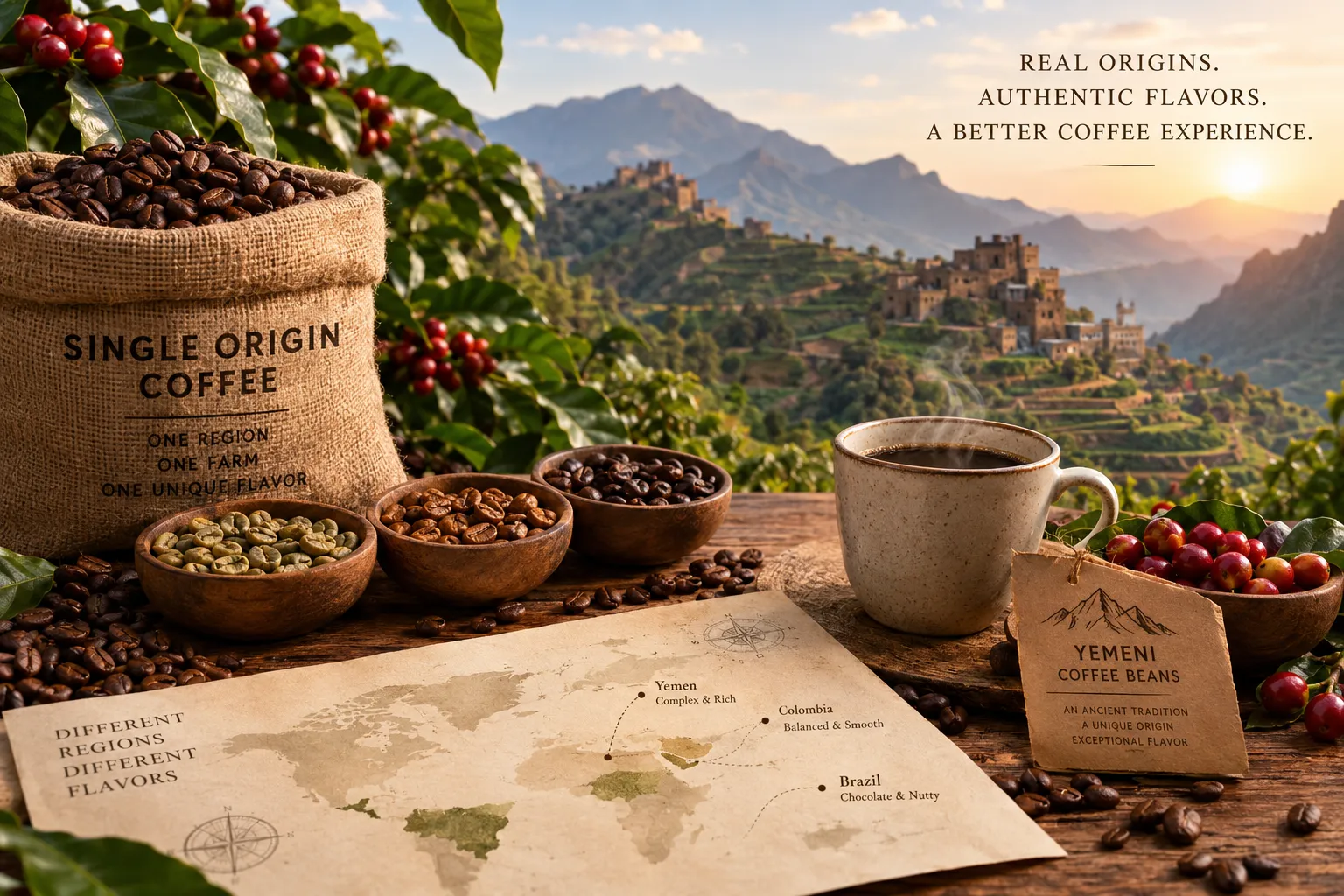
Coffee-growing regions around the world produce distinct flavor profiles.
For example:
- Ethiopian coffees are often known for floral and fruity characteristics.
- Colombian coffees are recognized for balanced sweetness and smooth body.
- Brazilian coffees commonly feature chocolate and nutty notes.
- Yemeni coffees are appreciated for their complexity, traditional processing, and distinctive flavors.
This diversity is what makes exploring coffee origins exciting. Every region provides a different expression of the coffee plant.
Yemeni Coffee: A Historic Example of Single Origin Excellence
Among the world’s historic coffee-producing regions, Yemen holds a special place.
Coffee cultivation in Yemen dates back centuries, and the country played an important role in introducing coffee to global markets. Traditional farming practices continue today, with many farmers growing coffee in mountainous areas using methods passed through generations.
Yemeni Coffee Beans are recognized among specialty coffee enthusiasts for their rarity, unique character, and connection to ancient coffee traditions.
Many Yemeni coffee farms are located in challenging mountain environments where coffee plants grow slowly at higher elevations. These conditions can contribute to complex flavors, natural sweetness, and distinctive profiles.
For coffee drinkers interested in discovering authentic origins, exploring Yemeni Coffee Beans offers a chance to experience one of the world’s most historically significant coffee cultures.
Single Origin Coffee and the Future of Specialty Coffee
The growth of single-origin coffee represents a larger movement toward quality, sustainability, and conscious consumption.
Consumers are becoming more interested in products that provide:
- Greater transparency
- Better quality
- Ethical sourcing
- Unique flavor experiences
- Strong connections with producers
This trend is expected to continue as more people move away from mass-produced coffee and explore specialty varieties.
Coffee is becoming more personalized. Instead of choosing only based on roast level or brand name, people are learning to appreciate origin, processing, and craftsmanship.
How to Start Exploring Single Origin Coffee
For those new to specialty coffee, exploring single-origin varieties does not have to be complicated.
A good starting approach is:
1. Try Different Origins
Experience coffees from different countries and regions to understand how geography affects flavor.
2. Pay Attention to Flavor Notes
Look for descriptions such as chocolate, fruit, spice, caramel, or floral notes.
3. Experiment With Brewing Methods
Different brewing techniques can highlight different characteristics of the same coffee.
4. Learn the Story Behind the Coffee
Understanding the farmers, region, and traditions behind your coffee creates a deeper appreciation.
Conclusion: Coffee With a Story
The rise of Single-Origin Coffee reflects a shift in how people experience coffee. Today’s coffee lovers are searching for authenticity, quality, and meaningful connections behind the products they consume.
Every origin has a story. Every farm has a tradition. Every cup carries the characteristics of the land where it was grown.
From the mountains of Yemen to specialty coffee farms worldwide, single-origin coffee lets people experience coffee in its purest, most authentic form.
For those seeking unique flavors and carefully sourced beans, exploring premium origins such as Yemeni Coffee Beans provides an opportunity to discover the history, craftsmanship, and culture that make specialty coffee truly remarkable.
Related Reading
Top 10 Hidden Secrets About Business & Finance You Need to Know
Welcome to our in-depth exploration of Business & Finance. In an era defined...
Why Business & Finance is Transforming the Global Industry Landscape
Welcome to our in-depth exploration of Business & Finance. In an era defined...