The Reason Your Dishes Never Quite Come Out Clean
20 Views
You’ve probably noticed it without really registering it as a problem — a faint white ring around the base of the faucet, glasses that look spotty no matter how new the dishwasher is, shampoo that just won’t foam up the way it does when you’re staying somewhere else. None of it seems urgent on its own. Together, though, it usually points to one thing: hard water.
So What’s Actually Going On With Your Water
Hard water isn’t dangerous. It’s just water carrying more dissolved calcium and magnesium than it probably should. Those minerals don’t do anything harmful to you, but they leave their mark on pretty much everything they touch.
A few tells are hard to miss once you know what you’re looking for. Chalky residue around showerheads. Soap that seems to just sit on your skin instead of lathering. Coffee makers and kettles that need descaling far more often than the manual suggests. And if you’ve ever noticed water pressure creeping down over the years, mineral scale building up inside your pipes is often the quiet culprit.
Why This Tends to Hit Harder Locally
Groundwater across Southern Alberta runs harder than in a lot of other parts of Canada, largely thanks to the geology underneath us. It’s just how the water arrives before it ever reaches your tap.
Older homes tend to feel it the most, since decades of mineral buildup inside original plumbing adds up. It’s a big part of why water softener installation Lethbridge homeowners look into so often turns out to be worth the upfront cost — the payoff shows up in appliance lifespan and daily comfort long before it shows up on paper.
What a Softener Is Actually Doing Behind the Scenes
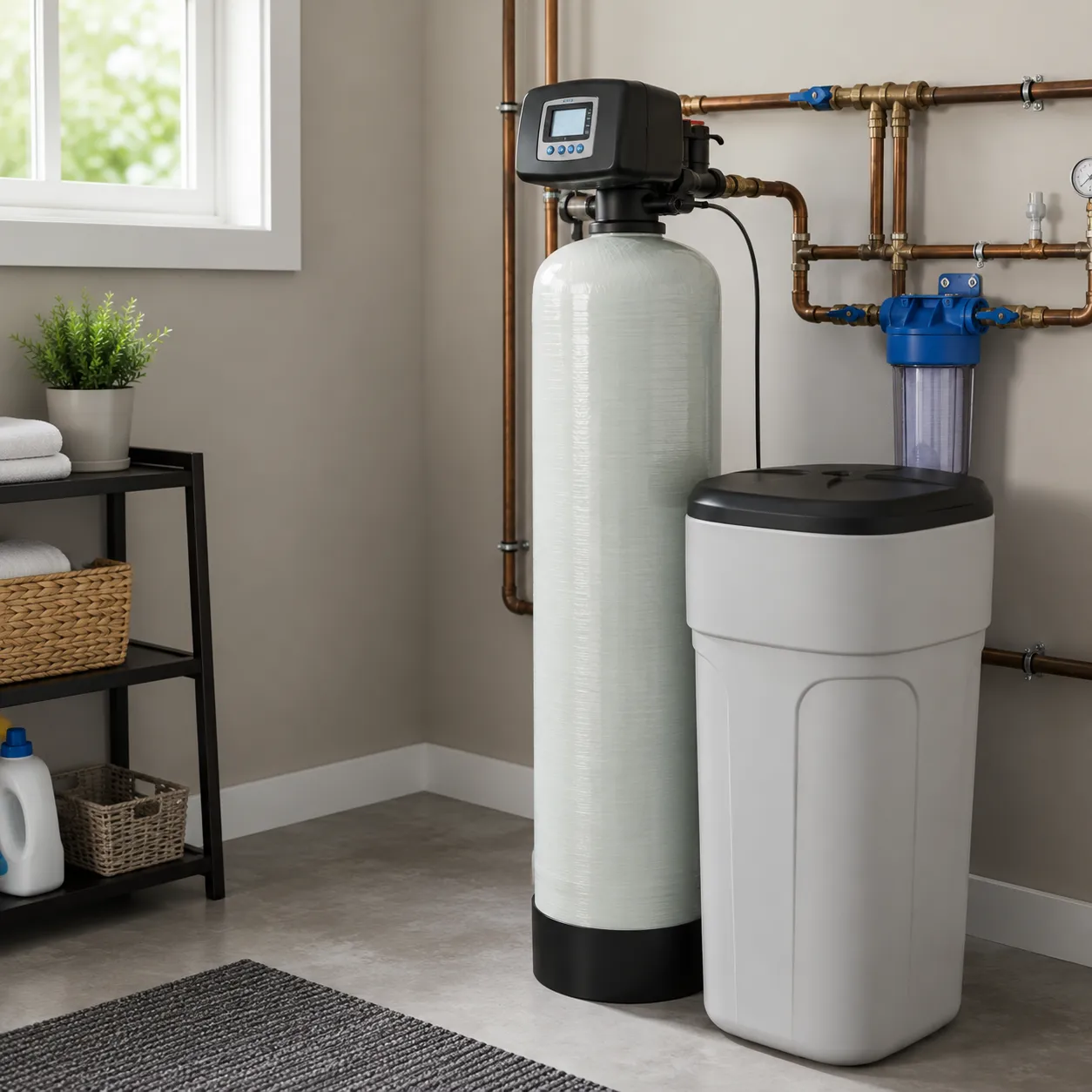
The process itself isn’t complicated, even if the name sounds technical. A softener uses ion exchange to swap out calcium and magnesium for sodium or potassium, which don’t leave the same scaly residue behind.
Once that swap happens, water moves through your home differently — gentler on pipes, gentler on appliances, gentler on you.
What People Actually Notice Day to Day
Appliances stop wearing out ahead of schedule. Water heaters especially tend to last longer once scale isn’t quietly coating the internal elements.
Cleaning takes less effort, honestly. Soap and detergent do what they’re supposed to do, so you end up using less of both.
Skin and hair feel noticeably different, often within the first week or two. A lot of people describe it as the difference between showering at home and showering at a hotel with good water pressure — except now it’s just your normal.
And pipes stay clearer over time, which means fewer surprise plumbing calls down the road.
Finding the Right Fit, Not Just Any Unit
There isn’t a one-size-fits-all answer here. A single person living alone doesn’t need the same setup as a family of five running two bathrooms and a laundry load daily.
Before landing on a system, it’s worth thinking through how many people are actually using water in the house, how hard your specific water tests out at (this varies more than people expect, even within the same neighbourhood), how much space you’ve got for the unit, and whether a salt-based or salt-free system fits your household better.
Why the Install Itself Isn’t a DIY Weekend Project
It’s easy to assume a water softener is something you just connect and forget. In practice, tying into the main water line correctly, setting up drainage for the regeneration cycle, and calibrating the system to your actual water hardness all matter more than people expect.
Get any of that wrong and you end up with a system that’s technically installed but not really working — wasted salt, uneven softening, sometimes pressure issues that take weeks to trace back to the source.
A proper job usually starts with testing the water to know exactly what you’re dealing with, then sizing the unit correctly, connecting it with the right bypass valves, setting up drainage properly, and calibrating it so it’s doing its job from day one rather than needing adjustments later.
A Story We Hear More Than You’d Think
One family we worked with had a water heater that kept underperforming despite regular maintenance — replacing parts, flushing the tank, doing everything “right” on paper. Turned out hard water was the actual problem the whole time. Once a softener went in, the water heater started performing the way it should have from the start, and the chalky buildup around their fixtures disappeared within weeks.
It’s a more common story than people realize. Usually it’s the first clue that hard water has been quietly costing money for years without anyone connecting the dots.
Is It Worth It for Your Home?
That depends on your water’s hardness and how long you’re planning to stay put. But for most households considering water softener installation Lethbridge conditions tend to make, the math works out in their favour within a few years, just from appliances alone.
If any of this sounds familiar — the spots, the dry skin, the water heater acting older than it is — it might be worth getting your water tested. Reach out to Kodiak Plumbing and we’ll help you sort out what your home actually needs, installed properly from the start.
Kodiak Plumbing & Gasfitting Ltd.
Phone: (403) 327-5604
Address: 614 36 St N, Lethbridge, Alberta T1H 5H7 Canada
Website: www.kodiakplumbing.ca
Related Reading
Expert Insights: Navigating the Complex World of Home Improvement
Welcome to our in-depth exploration of Home Improvement. In an era defined by ra...
Why Home Improvement is Transforming the Global Industry Landscape
Welcome to our in-depth exploration of Home Improvement. In an era defined by ra...