The Hidden Costs of Your Outdated Phone System (And How to Fix It)
By OmniCaaS
50 Views
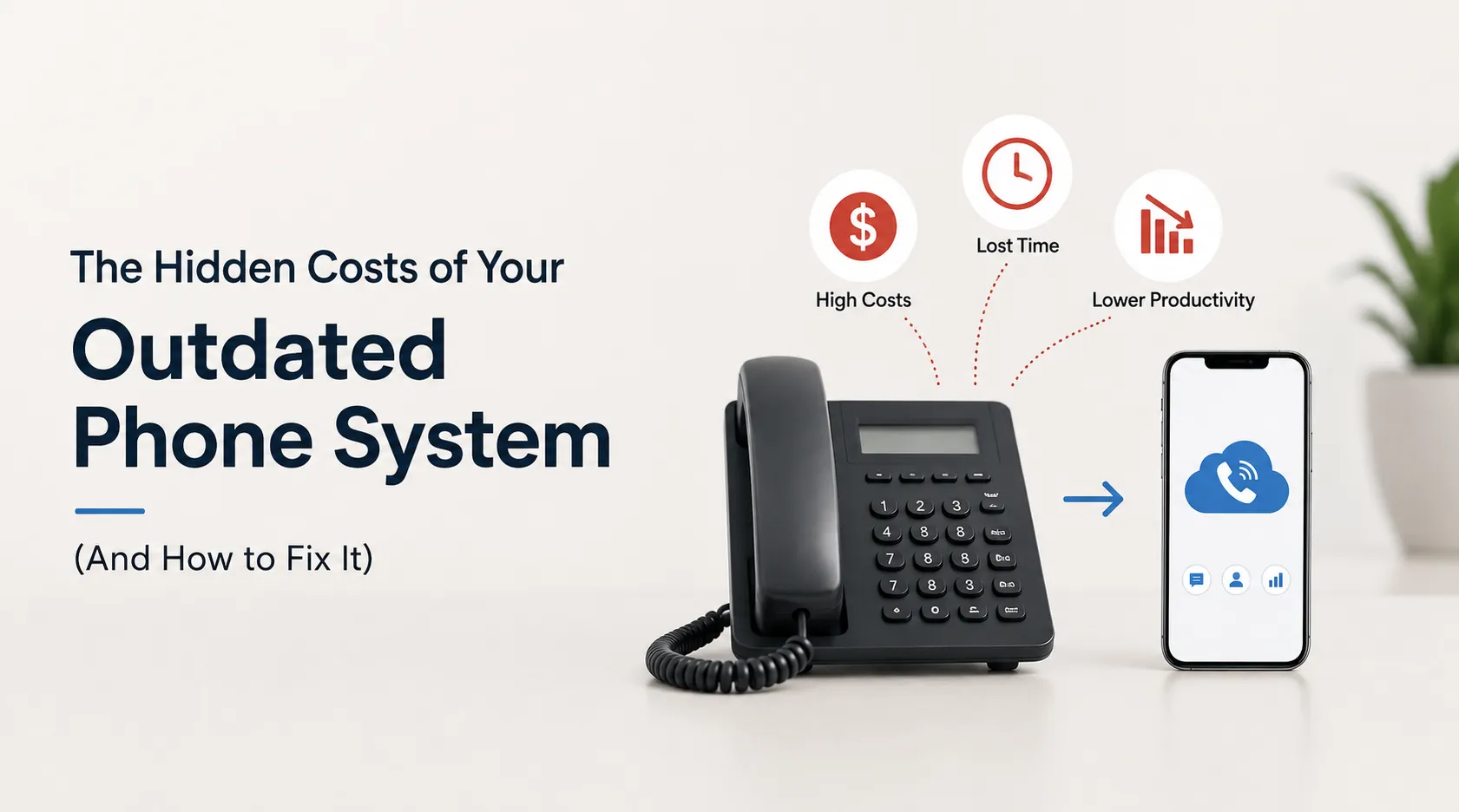
Most business owners glance at their phone bill once a month, see a familiar number, and move on. That's the problem. The invoice tells you what the phone line costs. It doesn't tell you what the phone line is costing you.
Outdated phone systems rarely announce their damage. There's no line item for "missed opportunity" or "customer frustration." Instead, the costs show up quietly, in lost sales, wasted staff time, and a customer experience that feels a step behind competitors who've already modernized. Add it all up, and an old phone system often costs far more than the upgrade it's avoiding.
Here's where that money actually goes, and what fixing it looks like.
Maintenance and Repair Costs Add Up Fast
Traditional phone systems depend on physical hardware: PBX boxes, wiring, handsets, and often a service contract with a technician on call. None of this lasts forever. Equipment fails, parts become harder to source, and every repair call adds another invoice to the pile.
Many businesses don't notice this cost because it's spread out over the year instead of arriving as one big bill. A service visit here, a replacement handset there, an annual maintenance fee buried in the contract. On their own, small. Together, they often exceed what a modern cloud subscription would cost for the same period, minus the downtime while the technician is en route.
Downtime Is More Expensive Than It Looks
When a legacy phone system goes down, the fix usually isn't quick. It might mean waiting for a technician, ordering a replacement part, or troubleshooting wiring issues that nobody fully understands anymore because the person who installed it left the company years ago.
During that downtime, calls don't just pause. They disappear. Customers trying to reach the business hear a busy signal, dead air, or nothing at all, and most don't call back. They call the next business on the list instead. For a business generating even a modest number of leads by phone, a single day of downtime can translate into real, measurable revenue loss. It rarely gets tracked that way, but it should.
Scaling Costs More Than It Should
Adding a new hire to an old phone system usually means adding a new line, and adding a new line usually means a call to the carrier, a wiring job, and a wait time measured in days or weeks. Growing businesses feel this friction constantly. What should be a quick onboarding step becomes a mini-project with its own timeline and cost.
Cloud-based systems remove this bottleneck entirely. Provisioning a new user takes minutes, not days, and there's no wiring to schedule. This is a big part of why Voice & UCaaS solutions Tampa have become popular among growing teams. Bundling voice, video, and messaging into one flexible platform means scaling up (or down) doesn't require a service call every time headcount changes.
Missed Calls Are the Costliest Hidden Expense
This is the big one, and it's the one most businesses underestimate. Legacy phone systems have no intelligence built in. If nobody picks up, the call goes to voicemail, and a large share of callers who hit voicemail simply hang up and try a competitor. They don't leave a message. They don't wait for a callback. They move on.
For service businesses especially, this adds up to real money left on the table every single month. Think about how many calls come in after hours, during lunch, or while your team is already on another line. Every one of those is a chance for a customer to reach a competitor instead.
This is exactly the gap an AI phone answering service is built to close. Instead of a call disappearing into voicemail, an AI agent answers immediately, handles common questions, books appointments, and flags anything urgent for a human to follow up on. No missed opportunities, no hold music, no dead ends. For many businesses, this single fix recovers more revenue than any other change to the phone system.
The Employee Productivity Drain
Outdated phone systems don't just cost money in obvious ways. They cost time. Employees juggling separate tools for calls, messaging, and video end up switching between apps constantly, losing focus and context with every switch. A receptionist manually transferring calls between departments, or a sales rep dialing numbers by hand instead of clicking through a CRM, is spending time on tasks that modern systems automate.
Multiply those small inefficiencies across a team, across a year, and the productivity loss is significant. It's rarely visible in a single day, but it shows up clearly when compared against teams using integrated, modern communication tools.
Security and Compliance Risk
Older phone systems, especially analog ones, often lack the security features built into modern platforms: encrypted calls, secure data handling, and audit trails for compliance-sensitive industries. Businesses in healthcare, legal, or financial services carry real risk here, and it's a risk that grows every year the system stays unpatched or unsupported by the manufacturer.
Cloud providers handle security updates automatically, as part of the service, without requiring an internal IT team to manage it manually. That's one less thing for a small business owner to worry about breaking.
How to Actually Fix This
The good news: none of these hidden costs require a massive overhaul or a long transition period. Modern cloud phone systems are designed for fast setup, often taking days rather than months, with number porting and configuration handled by the provider.
Start by auditing what the current system actually costs, including maintenance, downtime, missed calls, and staff time spent working around its limitations. Compare that honestly against a modern platform's monthly subscription cost. Most businesses find the math isn't close.
Providers like Omnicaas specialize in helping small and mid-sized businesses make this switch without disruption, bundling voice, AI-powered call handling, and unified communications into one system built for how businesses actually operate today.
The Bottom Line
An outdated phone system rarely feels expensive month to month, which is exactly why it's so easy to keep putting off. But between maintenance costs, downtime, scaling friction, missed calls, and lost productivity, the real price tag is almost always higher than business owners realize.
The fix isn't complicated. It's a modern, cloud-based system that scales with the business, answers every call, and removes the hidden costs that have been quietly draining revenue for years. The only real cost of switching is the discomfort of doing something new. And that's a lot cheaper than the alternative.