Taking Your Yacht Offshore? 8 Insurance Details to Check Before Departure
12 Views
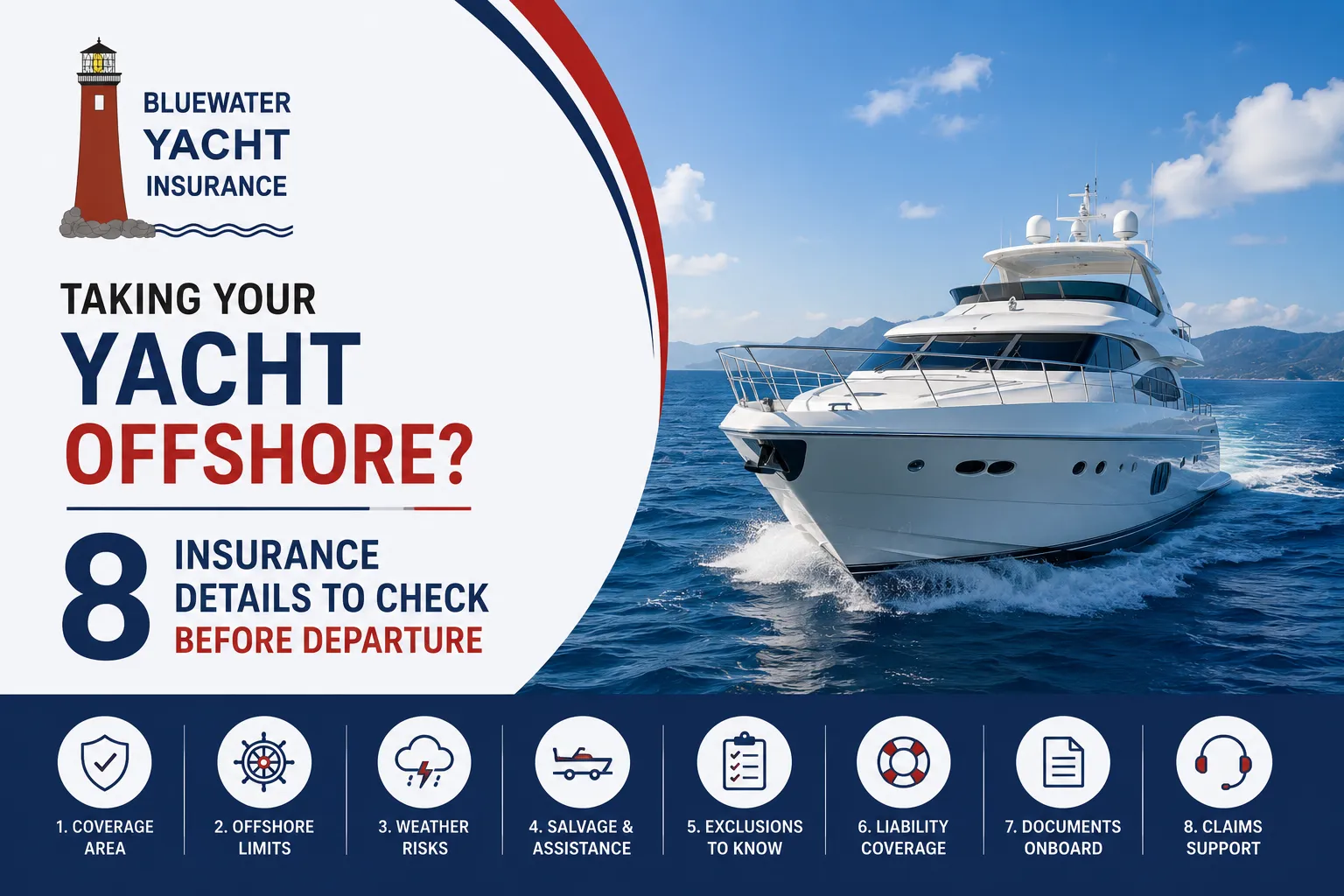
Taking your yacht offshore can feel exciting. The open water, longer routes, and freedom to explore new destinations are hard to resist. But before you leave the marina behind, your insurance policy deserves the same attention as your fuel, navigation system, and safety gear.
Offshore trips can expose a yacht to different waters, weather conditions, ports, and risks. A policy that works well for local cruising may not provide the same protection once you travel farther from home. Before departure, take a few minutes to review these eight insurance details.
1. Check Your Navigation Limits
Start by looking at the navigation area listed in your policy. It may define where your yacht is covered and when coverage applies.
For example, your policy may have different terms for coastal waters, international waters, or specific regions. If your planned route goes beyond the stated navigation limits, contact your insurer before leaving.
Do not assume that being covered at home automatically means you are covered everywhere.
2. Confirm the Policy Dates
Offshore trips do not always follow a perfect schedule. A weather delay, mechanical problem, or change in your itinerary can keep you away longer than expected.
Check whether your Offshore Yacht Insurance remains active throughout your planned trip. If your coverage expires during the voyage, ask about your options before departure.
A simple date check can prevent a major coverage problem later.
3. Review Storm and Hurricane Coverage
Weather can change quickly offshore, especially during hurricane season. Review exactly how your policy handles storm-related damage.
Pay attention to:
● Hurricane or named-storm coverage
● Storm-related deductibles
● Requirements for securing or moving the yacht
● Restricted areas during certain months
● Any storm preparation rules
These details matter because failing to follow a policy requirement could affect a future claim.
4. Understand Your Deductibles
Knowing your deductible is just as important as knowing your coverage limit.
Your policy may have different deductibles for different types of damage. Storm damage, for example, may have a separate deductible from other physical damage.
Before departure, make sure you understand what you would need to pay if something goes wrong offshore.
5. Check Liability Coverage
A collision, property damage, or injury involving another vessel can create serious financial consequences.
Review your liability coverage and understand what it protects you against. If you plan to visit foreign ports, also ask whether your liability protection applies in those locations.
Your insurer can explain whether your current limits are suitable for the trip you have planned.
6. Look at Salvage and Wreck Removal
Mechanical trouble offshore can quickly become more complicated than a simple repair at the marina.
Check how your policy handles salvage, towing, wreck removal, and related expenses. These services can become costly when a yacht is far from shore or located in an area with limited marine support.
Understanding this part of your coverage before departure can give you greater confidence while planning your route.
7. Review Crew and Guest Requirements
Who is operating your yacht can affect your insurance coverage.
Some policies may have requirements related to the operator's experience, qualifications, age, or boating history. If you plan to take additional crew members or allow someone else to operate the yacht, check your policy first.
It is better to clarify these details at the dock than discover a restriction after an incident offshore.
8. Ask About International and Port Requirements
Your destination may have its own insurance or documentation requirements. Some marinas, ports, lenders, or authorities may ask for proof of insurance before allowing your yacht to enter or stay.
Before departure, confirm that you have the documents you may need, including your policy information and proof of liability coverage.
It is also wise to keep digital and physical copies in separate locations in case one becomes unavailable.
Summary:
Offshore travel requires more planning than a short local cruise. Your insurance should match the route, season, yacht, operators, and risks involved.
A careful review of Offshore Yacht Insurance can help you spot limits or conditions before they become problems. If your journey includes Caribbean waters, Caribbean Yacht Insurance Inc can be part of the conversation when reviewing your coverage needs.
The goal is simple: understand your protection before departure so you can focus more on the journey and less on worrying about what might happen along the way.