Professional Supplement & Nutraceutical Label Design for Product Branding
By 10turtle
4 Views
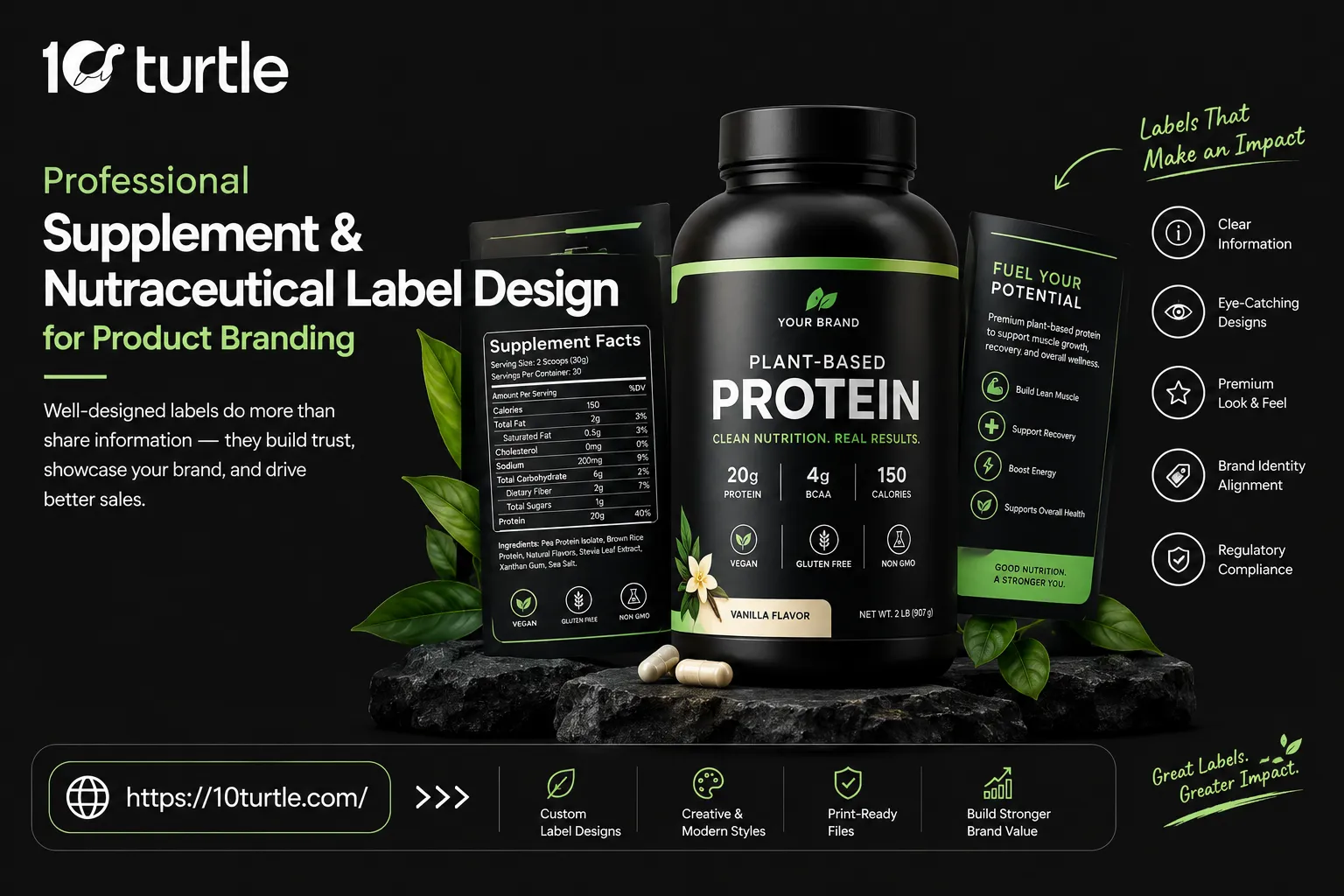
A supplement bottle has about two seconds to earn a second look on a crowded shelf or scroll-heavy product page. Before a customer reads a single ingredient, they've already formed an opinion about quality, safety, and trustworthiness and that opinion comes almost entirely from the label. That's the real job of supplement label design: it's not decoration, it's the first conversion event in the customer journey.
For brands selling dietary supplements, vitamins, protein blends, or functional nutraceuticals, the label has to do several jobs at once. It needs to look premium enough to compete with established brands, communicate the product's benefit in a glance, and satisfy a strict set of federal labeling rules all on a few square inches of bottle or pouch. Getting this balance right is where nutraceutical label design becomes a specialized discipline rather than a simple graphic-design task.
Why Label Design Matters for Supplement Businesses
Consumers increasingly research supplements before buying, comparing ingredient panels, dosage claims, and third-party certifications across multiple brands in the same session. A label that looks generic, cluttered, or inconsistent with the brand's website signals a smaller, less credible operation even if the formulation inside is excellent.
Good supplement packaging design closes that credibility gap. It reassures a first-time buyer that the product has been through a professional process, reduces returns caused by confusing dosage information, and gives retail buyers a reason to stock the product alongside established competitors.
Key Benefits
- Builds instant trust with health-conscious shoppers who scan labels quickly
- Differentiates a product on a shelf or Amazon listing dominated by similar bottles
- Reduces customer confusion around dosage, usage, and warnings
- Supports premium pricing by signaling quality before the first use
- Makes a brand retail-ready for pharmacies, gyms, and specialty health stores
Common Business Use Cases
Brands typically invest in professional label design at a few key moments: launching a new supplement line, rebranding an existing product that's underperforming on shelf, expanding from direct-to-consumer into retail, or reformulating a product and needing updated claims and Supplement Facts information. Contract manufacturers and private-label supplement companies also rely on outside label designers to give white-label formulations a distinct identity for each client brand.
Important Factors to Consider
Not every design decision on a supplement label is purely aesthetic several factors shape both the look and the legal footing of the final artwork.
Cost and Implementation
Pricing for professional label design varies with scope: a single SKU with a straightforward Supplement Facts panel costs far less than a full product line with variant packaging, claims substantiation review, and print-file preparation for multiple bottle or pouch sizes. Most designers price by deliverable (a finished, print-ready label) rather than by hour, and factor in revision rounds, die-line setup, and file formatting for the printer or co-packer being used.
Technology and Integration
A supplement label rarely exists in isolation. The finished artwork needs to integrate with the brand's existing visual identity, work across bottle, pouch, and box formats, and be delivered in the file types a printer or co-packer actually requires typically vector formats with correct bleed, die-lines, and color profiles (CMYK or Pantone) rather than a web-ready JPEG. Designers experienced in custom supplement label design build files that translate cleanly from screen to physical print run, avoiding costly reprints from color shifts or misaligned barcodes.
How to Choose the Right Service Provider
When evaluating a nutraceutical label design company USA brands can rely on, look past the portfolio's visual polish and ask a few practical questions. Does the designer understand FDA labeling structure Supplement Facts placement, required statements, and allowed claim language well enough to flag obvious compliance issues, even though final regulatory sign-off should always come from a qualified regulatory consultant or attorney? Have they worked with the packaging formats relevant to the product (bottles, blister packs, stick packs, pouches)? Can they deliver production-ready files a co-packer can use without rework?
A provider who asks about the target retail channel, competitor shelf presence, and brand positioning before opening a design file is usually a better long-term partner than one who jumps straight to concepts. Label design for supplements benefits from designers who treat compliance and brand strategy as part of the creative process, not an afterthought handled separately.
Frequently Asked Questions
What makes supplement label design different from regular product label design?
Supplement labels carry more mandatory information than most consumer products a Supplement Facts panel, specific claim language, and manufacturer disclosures all of which must be legible and correctly formatted alongside the brand's visual identity. Designers working on nutraceutical label design need to balance strict layout requirements with the same shelf-appeal goals as any other packaging project.
How long does a professional supplement label design project usually take?
Timelines depend on scope, but a single-SKU label with existing brand guidelines typically moves through concept, revisions, and print-ready files faster than a full new product line built from scratch. Building in time for internal compliance review before the files go to print is worth the extra days.
Can label design help a supplement brand get into retail stores?
Yes many retail buyers evaluate shelf presence as part of their decision, and a label that looks inconsistent, low-budget, or hard to read at a glance can work against an otherwise strong product. Professional supplement packaging design is often one of the factors that helps a brand move from direct-to-consumer sales into physical retail placement.