Speech Therapy for Children Dubai: A Complete Guide for Parents
26 Views
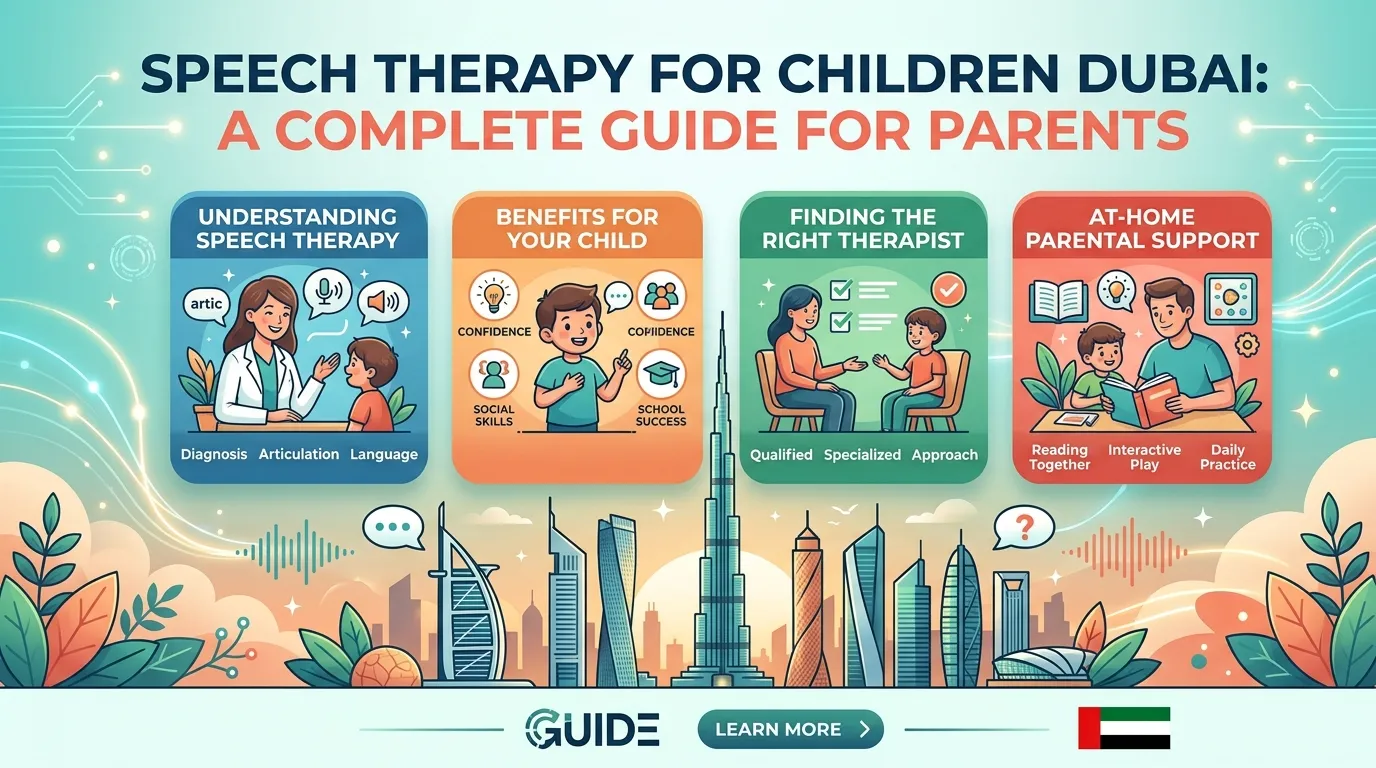
Every child develops communication skills at their own pace. Some children start speaking early, while others take longer to use words, form sentences, pronounce sounds clearly, or participate in conversations. When communication difficulties continue or begin affecting everyday life, professional support can make a meaningful difference.
Speech Therapy for Children Dubai provides specialized support for children experiencing speech, language, communication, fluency, or related difficulties. Therapy can focus on areas such as pronunciation, vocabulary, understanding language, expressing thoughts, social communication, and other individual needs.
For families, one of the biggest advantages of home-based therapy is convenience. Instead of taking a child to a clinic for every appointment, a qualified therapist can provide therapy within the child's familiar home environment. TrueLife Home Health offers speech therapy at home in Dubai, with services designed for both pediatric and adult needs.
What Is Speech Therapy for Children?
Speech therapy is a professional healthcare service designed to support children who have difficulties with speech, language, communication, voice, fluency, or related skills.
It is important to understand that speech and language are not exactly the same thing.
Speech generally relates to how a child produces sounds and words, while language involves understanding and using words, sentences, and communication to express ideas.
A child may therefore have clear pronunciation but struggle to understand instructions, or they may understand everything but have difficulty expressing themselves.
A speech and language therapist assesses the child's individual communication needs and develops therapy activities based on those needs.
Depending on the assessment, therapy may support:
- Speech sound production
- Pronunciation and articulation
- Vocabulary development
- Understanding spoken language
- Sentence formation
- Expressive language
- Social communication
- Fluency and stuttering
- Voice-related difficulties
- Alternative and augmentative communication
- Communication associated with developmental conditions
The goal is not simply to make a child "talk more." Effective therapy aims to help children communicate more clearly, confidently, and functionally in everyday situations.
Signs Your Child May Need Speech Therapy
Parents are often unsure whether their child's communication development is simply progressing at a different pace or whether professional assessment would be helpful.
There is no single sign that automatically means a child needs therapy. However, certain communication difficulties can indicate that an evaluation may be appropriate.
You may consider speaking with a qualified speech and language therapist if your child:
- Has difficulty being understood by family members or other people
- Uses significantly fewer words than expected for their developmental stage
- Has difficulty combining words into sentences
- Struggles to understand age-appropriate instructions
- Frequently substitutes or leaves out speech sounds
- Repeats sounds, words, or phrases excessively
- Has noticeable stuttering or disruptions in speech
- Finds it difficult to communicate wants, needs, thoughts, or feelings
- Has difficulty participating in conversations
- Struggles with social communication
- Relies heavily on gestures instead of spoken communication
- Has communication difficulties associated with a developmental condition
The important point is to look at the child's overall communication rather than focusing on one isolated behavior.
A professional assessment can help parents understand what is happening and whether therapy would be useful.
Common Speech and Language Difficulties in Children
Children can experience many different types of communication challenges. Some are relatively straightforward, while others require more comprehensive assessment and ongoing support.
Speech Sound and Articulation Difficulties
Some children know exactly what they want to say but cannot produce certain sounds clearly.
They may substitute one sound for another, leave sounds out, or pronounce words differently from what is expected. Therapy can help children practice specific sounds and gradually use them more accurately in words and everyday communication.
Language Delay
A child may understand some language but have difficulty expressing themselves using words and sentences.
Therapy may focus on building vocabulary, combining words, answering questions, describing objects, and communicating ideas.
Receptive Language Difficulties
Receptive language refers to understanding what other people communicate.
A child with receptive language difficulties may struggle with instructions, questions, concepts, or conversations. Therapy can target language comprehension in ways appropriate to the child's needs.
Expressive Language Difficulties
Expressive language involves communicating thoughts and ideas through words and sentences.
Children with expressive language difficulties may use limited vocabulary, short sentences, or have trouble explaining what they want to say.
Stuttering and Fluency Difficulties
Some children experience repetitions, prolongations, or pauses while speaking.
A speech-language professional can evaluate fluency and determine an appropriate approach based on the child's age, communication patterns, and individual circumstances.
Social Communication Difficulties
Communication involves more than speaking.
Children also need to learn skills such as taking turns, maintaining conversations, understanding social cues, responding appropriately, and communicating with different people in different situations.
Speech therapy can address these areas when they are part of a child's communication needs. Dubai Health Authority clinical guidance also recognizes speech and language interventions tailored to children's individual communication and social needs.
How Speech Therapy Helps Children
The benefits of speech therapy depend on the child's specific difficulty and the goals established after assessment.
For one child, the main objective may be clearer pronunciation. For another, therapy may focus on understanding language, building sentences, improving social communication, or developing alternative ways to communicate.
Potential areas of improvement include:
Clearer Speech
Children can work on producing specific speech sounds and improving their overall intelligibility.
Stronger Language Skills
Therapy can support vocabulary, sentence development, comprehension, and the ability to express ideas.
Better Everyday Communication
The purpose of therapy is to make communication useful outside the therapy session. Children can practice skills that support interactions with parents, siblings, teachers, and peers.
Greater Communication Confidence
When children are better able to communicate their needs and ideas, they may become more comfortable participating in everyday interactions.
Reduced Communication Frustration
A child who cannot communicate effectively may become frustrated when others do not understand them. Improving functional communication can help make everyday interactions easier.
It's important to remember that outcomes vary. A therapist should establish realistic goals based on the child's assessment, abilities, environment, and consistency of practice.
Why Choose Speech Therapy at Home in Dubai?
For children, the environment in which therapy takes place can matter.
A clinic may be appropriate for many families, but home-based therapy offers another option, particularly when traveling to appointments is difficult or when parents want therapy integrated into the child's everyday routine.
TrueLife Home Health provides speech therapy at home in Dubai and states that its therapists support both children and adults. The company also describes its home healthcare services as being delivered by DHA-licensed clinicians.
Home-based therapy can offer several practical advantages:
- No regular travel to a clinic
- A familiar environment for the child
- Greater convenience for parents
- Opportunities to practice communication in everyday situations
- Easier involvement of parents or caregivers
- Therapy activities that can be connected to the child's normal routine
For example, a therapist may be able to incorporate toys, books, household activities, mealtimes, or everyday conversations into appropriate therapy activities.
What Happens During a Children's Speech Therapy Assessment?
An assessment is usually the starting point for understanding a child's communication needs.
The therapist may gather information about the child's developmental and communication history and observe how the child communicates.
Depending on the child's age and needs, the assessment may consider:
- Speech sound production
- Understanding of language
- Expressive language
- Vocabulary
- Sentence development
- Fluency
- Social communication
- Functional communication
- Use of gestures or alternative communication
- Other relevant communication behaviors
The therapist then uses the findings to determine appropriate therapy goals.
Parents should feel comfortable asking questions about what the assessment found, what the therapy goals are, how progress will be measured, and what they can do at home to support the child.
What Does a Speech Therapy Session Look Like?
There isn't one standard session that works for every child.
A therapist may use age-appropriate activities designed around the child's communication goals. Younger children may respond particularly well to engaging activities, while older children may benefit from structured exercises, conversation activities, reading, storytelling, or other targeted tasks.
A session may involve:
- Interactive communication activities
- Picture-based activities
- Storytelling
- Naming and vocabulary exercises
- Sound-production practice
- Conversation practice
- Following instructions
- Turn-taking activities
- Language-building games
- Parent or caregiver guidance
The exact activities should be selected according to the child's assessment rather than simply following a generic program.
The Role of Parents in Speech Therapy
Parents are an important part of a child's communication development.
Therapy doesn't have to stop when the session ends. Everyday routines provide many opportunities for communication practice.
Parents can support therapy by:
- Giving the child enough time to respond
- Using simple and clear language when appropriate
- Reading books together
- Talking about everyday activities
- Encouraging the child to communicate wants and needs
- Expanding on what the child says
- Practicing therapist-recommended activities
- Celebrating communication attempts
- Following the therapist's recommendations consistently
For example, if a child says "car," a parent might naturally expand the conversation by saying, "Yes, a red car is going fast."
These small interactions can create additional opportunities for language learning without making communication feel like a formal lesson.
Speech Therapy for Children With Developmental Conditions
Some children experience communication difficulties alongside developmental or neurological conditions.
Speech and language therapy may form part of a broader care plan when communication is affected.
For example, children with autism may have individual communication needs involving speech, language, social interaction, or alternative communication. Dubai Health Authority guidance notes that speech and language interventions for children with autism should be tailored to the individual child, and it recognizes augmentative and alternative communication options for children with limited or no speech.
This is why an individualized assessment is important.
The purpose is not to make every child communicate in exactly the same way. Instead, therapy should help the child develop practical communication skills that are meaningful for their own daily life.
Speech Therapy and Multilingual Children in Dubai
Dubai is a multilingual environment, and many children grow up hearing more than one language.
Parents sometimes worry that learning two languages automatically causes speech or language delays. However, multilingualism itself should not automatically be treated as a communication disorder.
If you are concerned about your child's communication, discuss the child's complete language environment with a qualified speech and language therapist.
Tell the therapist:
- Which languages the child hears
- Which languages the child understands
- Which languages the child speaks
- Who uses each language with the child
- Whether communication difficulties occur across languages
This information can help the therapist understand the child's communication more accurately.
How Often Does a Child Need Speech Therapy?
There is no universal number of sessions that applies to every child.
Frequency depends on factors such as:
- The child's communication needs
- Age and developmental level
- Therapy goals
- Severity of the difficulty
- Response to intervention
- Home practice
- Recommendations following assessment
Some children may benefit from more frequent sessions, while others may have a different schedule.
A qualified therapist should recommend a plan based on assessment rather than simply assigning the same frequency to every child.
When Should Parents Seek Professional Advice?
If you are concerned about your child's speech or language development, you don't necessarily need to wait until the problem becomes severe.
A professional assessment can provide useful information about whether the child's communication is developing appropriately and whether additional support could help.
Consider seeking professional advice when communication difficulties are persistent, interfere with everyday interactions, or are causing noticeable frustration for the child or family.
Early support can also help parents understand what they can do at home and what type of intervention may be appropriate.
Why TrueLife Home Health for Speech Therapy in Dubai?
TrueLife Home Health provides home healthcare services in Dubai and the UAE, including speech therapy at home. Its website states that its speech therapy service addresses speech, language, voice, and swallowing needs across pediatric and adult populations.
The company's broader home healthcare service includes DHA-licensed clinicians and therapy delivered in the comfort of the patient's home.
For parents looking for Speech Therapy for Children Dubai, home-based care can provide a practical option when they prefer therapy within a familiar environment.
The best starting point is an assessment. This allows the therapist to understand the child's current communication abilities and recommend goals based on individual needs.
Frequently Asked Questions
What is speech therapy for children?
Speech therapy helps children develop communication skills related to speech, language, fluency, voice, and other communication needs. The exact therapy approach depends on the child's assessment.
At what age can a child start speech therapy?
There isn't one universal age for starting speech therapy. If parents have concerns about a child's communication development, they can discuss those concerns with a qualified speech and language therapist for appropriate assessment.
Can speech therapy be provided at home in Dubai?
Yes. TrueLife Home Health provides speech therapy at home in Dubai for children and adults.
What problems can children's speech therapy address?
Depending on the child's individual needs, therapy may address speech sound difficulties, language delays, expressive or receptive language difficulties, fluency, social communication, and other communication challenges.
Can speech therapy help a child with unclear pronunciation?
Speech therapy can assess difficulties with speech sound production and develop exercises targeting appropriate sounds and communication skills.
Is home speech therapy suitable for children?
Home therapy can be a convenient option for families and allows therapy to take place in a familiar environment. Whether it is appropriate depends on the child's individual needs and the therapist's assessment.
How can parents support speech therapy at home?
Parents can support therapy through everyday conversations, reading, play, following therapist recommendations, giving children opportunities to communicate, and practicing appropriate activities between sessions.
How do I choose speech therapy for my child in Dubai?
Look for a qualified provider, ask about the therapist's pediatric experience, understand the assessment process, discuss therapy goals, and choose an approach that matches your child's individual communication needs.
Conclusion
Communication plays an important role in a child's ability to express needs, understand others, participate in school, build relationships, and become more independent.
When a child is experiencing ongoing speech or language difficulties, professional assessment can help parents understand the situation and identify appropriate support.
Speech Therapy for Children Dubai can be provided in a home environment, giving families a convenient way to access professional therapy while allowing children to practice communication skills within familiar surroundings.
With individualized goals, consistent therapy, and support from parents and caregivers, children can work toward more functional and confident communication.
Related Reading
Top 10 Hidden Secrets About Business & Finance You Need to Know
Welcome to our in-depth exploration of Business & Finance. In an era defined...
Why Business & Finance is Transforming the Global Industry Landscape
Welcome to our in-depth exploration of Business & Finance. In an era defined...