How to Choose the Right Social Media Strategy for a Dubai Business
By Ahmed Shah
76 Views
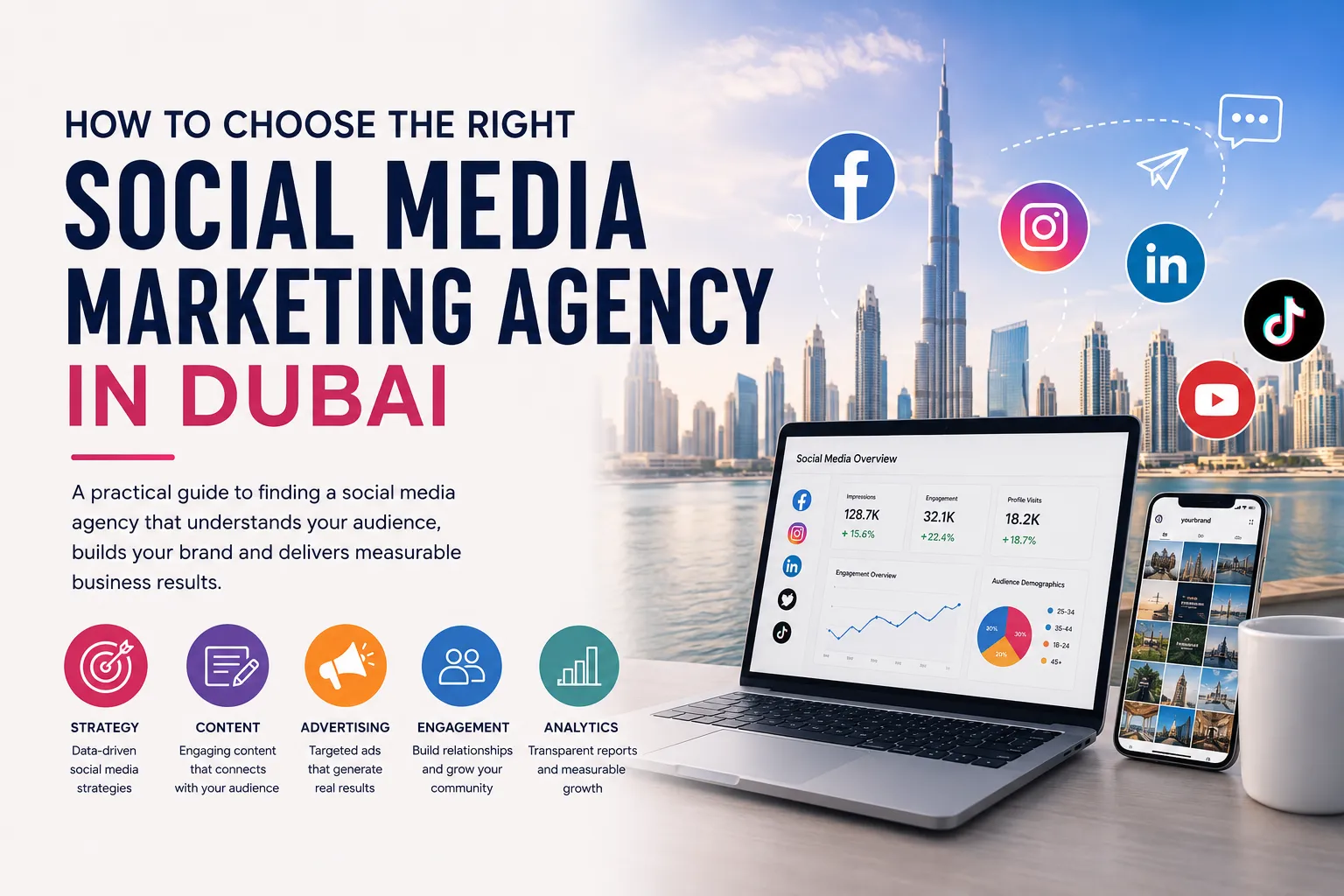
Social media has become an important part of the customer journey for many businesses in Dubai. People often discover a company through social platforms, look at its content, visit its website and compare it with other businesses before making an enquiry.
For business owners, this creates an opportunity, but it also creates a challenge. Simply posting regularly does not guarantee that the right people will see the content or take action.
A useful social media strategy starts with the business itself. The goal should be to understand the target customer, create content that answers genuine questions and use the right channels to support measurable business objectives.
Start With a Clear Business Objective
Before deciding what to post, define what social media needs to achieve.
A business may want to:
- Generate qualified enquiries
- Increase brand awareness
- Drive traffic to its website
- Promote a product or service
- Build customer relationships
- Support sales
- Introduce a new service
- Establish expertise within an industry
These objectives require different approaches.
For example, a restaurant may focus on bookings and local awareness, while a B2B consultancy may use LinkedIn content to demonstrate expertise and generate professional enquiries.
Without a clear objective, social media can easily become a routine of publishing posts without knowing whether the activity is producing useful results.
Understand the People You Want to Reach
Dubai has a diverse customer base, so businesses should avoid treating the entire market as one audience.
Think about the people who are most likely to become customers.
What do they need? What questions do they ask? What problems are they trying to solve? What information do they look for before contacting a company?
These questions can provide better content ideas than simply looking at what competitors are posting.
For instance, an interior design company might discover that potential customers frequently want to know about project timelines, budgets, material selection and the design process. These subjects can become useful social media content.
When content addresses real customer concerns, it has a clear reason to exist.
Choose Platforms Based on Your Audience
There is no requirement for every business to maintain an active account on every social media platform.
The right platforms depend on the audience, industry and type of content the business can realistically produce.
Instagram can be useful for visually driven businesses such as restaurants, fashion brands, interior designers and hospitality companies. LinkedIn may be more relevant for professional services, B2B companies and industry experts.
Video-focused platforms can be useful when a business has products, services or expertise that can be communicated effectively through short videos.
The important thing is to choose platforms based on business needs rather than following trends.
Build Content Around Real Questions
One of the simplest ways to improve social media content is to use questions that customers already ask.
Sales teams, customer service staff and business owners often hear these questions every day.
For example:
How long does the service take?
What is included in the package?
Which product is suitable for my needs?
What happens after I submit an enquiry?
What should I consider before buying?
These questions can become short videos, carousel posts, articles or detailed explanations.
This approach also supports trust because the business is demonstrating that it understands the concerns of its customers.
Use Different Types of Content
A business should not expect every post to perform the same function.
Educational content can help people understand a subject. Product or service content can explain what the business offers. Case studies can demonstrate previous work, while customer stories can provide social proof.
Behind-the-scenes content can also make a company more approachable by showing the people and processes behind the brand.
Promotional content is useful when there is a genuine offer, launch or reason to take action, but a feed consisting entirely of sales messages can quickly become repetitive.
A balanced content plan gives customers several reasons to follow the business.
Show Experience Instead of Making Empty Claims
Trust is easier to build when businesses demonstrate what they know and what they have done.
Instead of repeatedly saying that a company is "the best," show evidence.
Examples include:
- Completed projects
- Case studies
- Customer experiences
- Product demonstrations
- Industry explanations
- Team expertise
- Practical advice
- Original research or observations
This type of content provides context that potential customers can evaluate for themselves.
For businesses offering professional services, demonstrating experience can be particularly important because customers are often choosing a company based on confidence and credibility.
Make Short Videos Useful
Short-form video can be an effective format, but businesses should focus on usefulness rather than simply chasing views.
A service company could explain a common customer problem in 30 seconds. A property business could show a quick tour of a property. A restaurant could demonstrate how a popular dish is prepared.
The video does not need expensive production to be useful.
Clear audio, good lighting, a focused topic and straightforward communication can be more valuable than complicated effects.
Treat Engagement as Customer Communication
Comments and messages should not be treated as minor activities that happen after content is published.
They can be part of the customer experience.
A quick and helpful response can answer an important question and move a potential customer closer to making an enquiry.
Businesses should also pay attention to repeated questions and common concerns. These interactions can reveal what customers need to understand before they make a purchase.
Over time, this creates a useful source of information for improving both content and customer communication.
Use Paid Advertising With a Specific Goal
Paid social advertising can help businesses reach audiences beyond their existing followers.
However, advertising should begin with a specific objective.
A campaign might be designed to generate leads, promote a service, increase website traffic or support a product launch.
The advertisement itself is only one part of the process. The audience, message, creative, offer and landing page all affect the result.
If a campaign receives many clicks but very few enquiries, the problem may not be the advertisement. The landing page, offer or targeting may need to be reviewed.
This is why paid social campaigns should be tested and measured rather than simply given a larger budget.
Connect Social Media With Your Website
Social media is often the beginning of the customer's journey rather than the end.
Someone might discover a company through Instagram, visit its website later and then return after comparing several businesses.
The website should therefore support the message communicated on social media.
If a post promotes a particular service, linking visitors to a relevant service page is generally more useful than sending everyone to a generic homepage.
The landing page should clearly explain the service and provide an easy next step, such as an enquiry form, phone number, booking option or other appropriate contact method.
Measure What Contributes to Business Growth
Follower growth can be useful, but it should not be treated as the only measure of success.
Depending on the objective, businesses can monitor:
- Reach
- Engagement rate
- Website traffic
- Link clicks
- Enquiries
- Qualified leads
- Conversion rate
- Cost per lead
- Sales
A post with 1,000 views that generates several qualified enquiries may be more valuable than a post with 50,000 views that generates no meaningful business activity.
The right metric depends on the purpose of the campaign.
When to Consider Professional Social Media Support
Managing social media requires planning, content production, community management, advertising and regular analysis. Businesses without an internal marketing team may decide to work with a specialist.
When comparing a social media marketing agency in Dubai, look beyond the number of followers or the size of a monthly package.
Ask how the agency develops strategy, researches the audience, creates content and measures performance.
It is also useful to review previous work and understand whether the agency has experience with businesses similar to yours.
A professional social media marketing agency in Dubai can support areas such as social media management, content creation, paid campaigns and broader digital marketing activities.
The right agency should be able to explain why particular platforms and content formats are suitable for the business rather than offering the same strategy to every client.
Avoid Copying Competitors
Competitor research can be useful, but copying another company's content rarely creates a strong brand.
Instead, study competitors to understand:
- What topics they cover
- Which questions they answer
- How they communicate
- Which formats they use
- Where there may be gaps
Then find opportunities to provide something more useful or approach the subject differently.
A company can learn from competitors without becoming a copy of them.
Keep Improving Based on Evidence
Social media marketing is not a fixed formula.
Audience behaviour changes, platforms introduce new features and different content formats perform differently over time.
Businesses should review their results regularly.
If educational videos consistently generate strong engagement, more resources can be allocated to that format. If case studies produce enquiries, they can become a larger part of the content strategy.
The goal is continuous improvement based on actual results and customer feedback.
Final Thoughts
A strong social media presence is built around people, not simply platforms.
Dubai businesses can improve their results by understanding their audience, choosing relevant channels, answering genuine customer questions and creating content that demonstrates experience and provides useful information.
Paid advertising can extend reach when used with a clear objective, while a well-structured website can help convert social media visitors into enquiries.
Most importantly, businesses should measure meaningful outcomes rather than focusing only on followers and likes.
Social media works best when it becomes part of a wider marketing system. With a clear strategy, useful content, genuine communication and regular measurement, it can help a business build recognition, trust and long-term customer relationships.