Social Media Marketing for Jewelry Brands
84 Views
Social Media Marketing for Jewelry Brands: A Complete Growth Strategy
Social Media Marketing for Jewelry Brands attract customers, display craftsmanship, and generate online sales. A beautiful product is no longer enough. Brands must also create a recognizable online identity, publish engaging content, and build trust with potential buyers.
Jewelry is naturally suited to visual platforms because customers want to examine its details, shine, size, styling, and appearance when worn. High-quality photographs, short videos, customer stories, and behind-the-scenes content can help buyers understand the value of a piece even when they cannot see it in person.
This guide explains how jewelry businesses can build a practical social media strategy that increases awareness, engagement, website traffic, and sales.
Why Social Media Matters for Jewelry Brands
Jewelry purchases are often connected to emotions and important moments. Customers may be looking for an engagement ring, an anniversary gift, a birthday present, or a piece that represents personal achievement.
Social media allows jewelry brands to communicate those emotions through images, videos, captions, and customer stories. Instead of presenting only a product and its price, a brand can show the inspiration behind the design, how it was created, and what the piece may represent to its owner.
Social platforms also allow businesses to communicate directly with customers through comments, messages, polls, live videos, and question-and-answer sessions. This interaction can make a brand feel more trustworthy and approachable.
Define Your Target Audience
Before creating content, determine exactly who you want to reach. A brand selling affordable fashion jewelry will need a different strategy from one selling luxury diamonds or custom engagement rings.
Consider your ideal customer's:
- Age range
- Location
- Interests and lifestyle
- Income level
- Preferred jewelry styles
- Buying occasions
- Average spending amount
- Most-used social platforms
For example, a bridal jewelry brand might target engaged couples and wedding planners. A handmade jewelry business may focus on customers who value creativity, sustainability, and small businesses.
The more clearly you understand your audience, the easier it becomes to select the right platforms, visuals, messages, and advertising campaigns.
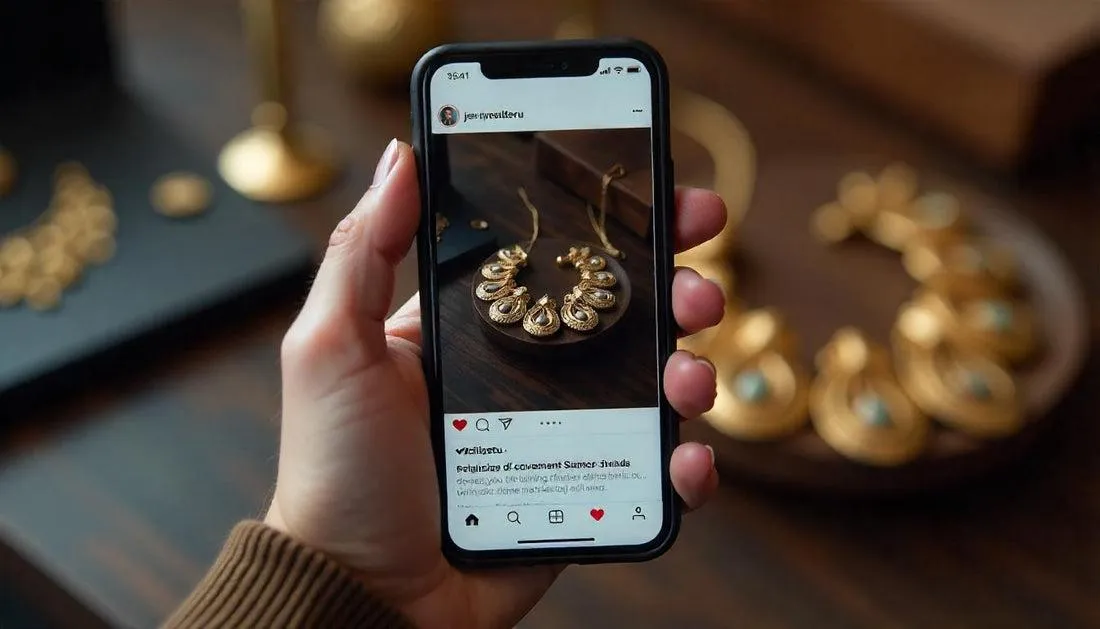
Image placement: Add a lifestyle image of a customer wearing elegant jewelry while browsing a brand's social media page.
Choose the Right Social Media Platforms
A jewelry business does not need to publish on every available platform. It is usually better to manage two or three channels properly than to maintain several inactive profiles.
Instagram remains highly suitable for jewelry marketing because it supports photographs, Stories, Reels, carousels, direct messages, product tags, and shopping features.
Useful Instagram content includes:
- Close-up product photographs
- Jewelry styling videos
- New collection announcements
- Customer testimonials
- Packaging and unboxing clips
- Design and manufacturing footage
- Before-and-after jewelry restoration
- Educational carousels
Shoppable posts can reduce the number of steps between product discovery and purchase by allowing brands to tag individual pieces in lifestyle content.
Pinterest works as both a social platform and a visual search engine. People use it to search for wedding inspiration, gift ideas, fashion combinations, engagement rings, and seasonal trends.
Create organized boards such as:
- Engagement-ring inspiration
- Wedding jewelry ideas
- Everyday necklace styling
- Personalized jewelry gifts
- Birthstone jewelry collections
- Luxury jewelry trends
- Jewelry care guides
Use descriptive titles and relevant keywords in every pin so potential customers can discover your content through search.
TikTok
TikTok is useful for reaching audiences through short, natural, and entertaining videos. Content does not always need to look like a polished advertisement. Authentic videos showing real people and real processes can perform well.
Jewelry brands can publish:
- A piece being made from beginning to end
- Gemstone comparisons
- Ring-stacking ideas
- Packing customer orders
- Jewelry-cleaning demonstrations
- Common jewelry mistakes
- New-design reveals
- Customer reactions
Facebook can support customer communities, targeted advertising, live product demonstrations, and remarketing campaigns. Its organic visibility may be limited, but it remains valuable for businesses that already have an established audience or want to use precise advertising options.
Build a Recognizable Visual Identity
Your social media profile should look like it belongs to one brand. Consistent presentation makes your content easier to recognize and creates a more professional impression.
Choose a clear visual system that includes:
- Two or three primary brand colors
- Consistent fonts
- Similar lighting and backgrounds
- A recognizable editing style
- Standard logo placement
- Repeated product-photography formats
A clean grid using similar backgrounds and compositions can help a jewelry profile appear polished and premium.
However, consistency does not mean every post must look identical. Alternate between product shots, lifestyle photographs, videos, educational graphics, testimonials, and behind-the-scenes content while keeping the overall style connected.
Invest in Strong Jewelry Photography
Jewelry is difficult to photograph because reflective metals and gemstones can create glare, unwanted shadows, and distracting reflections. Clear photography is essential because online buyers cannot physically inspect the item.
For better photographs:
- Clean the jewelry before shooting.
- Use soft, diffused lighting.
- Stabilize the camera with a tripod.
- Use neutral or brand-appropriate backgrounds.
- Capture several angles.
- Include close-ups of important details.
- Show the jewelry being worn.
- Include an image that demonstrates its size.
Lifestyle photographs help customers imagine wearing the piece, while clean product photographs clearly present the design. Packaging images can also set expectations for gifting and delivery.
Avoid excessive editing. Customers should receive a product that matches what they saw online.
Image placement: Add a comparison image showing a clean product photograph, a close-up detail shot, and a lifestyle image of the same jewelry piece.
Create Content That Educates and Sells
Constantly posting direct sales messages can make an account repetitive. Use a balanced content strategy that informs, entertains, inspires, and promotes.
Educational content
Answer questions customers regularly ask:
- How should gold jewelry be cleaned?
- What is the difference between natural and lab-created gemstones?
- How do ring sizes work?
- Which necklace length suits each neckline?
- How can customers protect silver from tarnishing?
- What do different birthstones represent?
Educational posts establish expertise and may attract people searching for answers.
Product-focused content
Show each piece from multiple perspectives. Explain its materials, dimensions, inspiration, craftsmanship, availability, and suitable occasions.
Instead of writing, “Gold necklace now available,” create a more useful caption:
Designed for effortless everyday layering, this delicate necklace can be worn alone for a minimal look or paired with longer chains for added depth.
Behind-the-scenes content
Customers often appreciate seeing how jewelry is designed, polished, inspected, packaged, and delivered. This content demonstrates the effort behind the finished product and helps justify its value.
Customer-generated content
Encourage buyers to share photographs or videos wearing their purchases. With permission, repost this content and tag the customer.
Real customer images provide social proof and show how the jewelry looks outside a professional studio.
Use Storytelling to Build Emotional Value
People rarely purchase jewelry based only on metal weight or stone size. They also purchase meaning.
Tell the story behind:
- The inspiration for a collection
- The origin of a gemstone
- The designer or craftsperson
- The symbolism of a piece
- The time required to produce it
- The occasion it celebrates
- A customer's engagement or anniversary story
A product description communicates what an item is. A strong story explains why it matters.
For example, instead of presenting a pendant only as a gold accessory, explain that its design was inspired by family bonds, personal strength, or a meaningful cultural pattern.
Storytelling can turn a product into something customers want to keep, gift, and remember.
Work with Relevant Creators and Influencers
Influencer marketing can introduce a jewelry brand to a trusted and established audience. The most suitable creator is not always the one with the largest following.
Look for creators whose:
- Audience matches your ideal customer
- Content style fits your branding
- Engagement appears genuine
- Previous partnerships feel natural
- Values align with your business
Smaller creators may produce stronger results when their audience is highly focused and engaged.
Possible collaborations include product styling videos, collection launches, unboxings, honest reviews, giveaways, affiliate partnerships, and limited-edition designs.
Provide clear campaign guidelines, but allow the creator enough freedom to communicate naturally with their audience.
Convert Followers into Customers
Likes and followers are useful, but a business ultimately needs customers. Make the buying process simple.
Every profile should contain:
- A clear description of the brand
- A working website or shop link
- Contact information
- Delivery information
- Return or exchange details
- Highlights for frequently asked questions
- Clear calls to action
Use calls to action such as:
- Explore the complete collection
- View available sizes
- Save this styling idea
- Send us a message for customization
- Tap the product tag for details
- Join the waiting list
- Order before the seasonal deadline
Do not add several competing instructions to one post. Select the single action that best matches the content.
Use Paid Advertising Strategically
Organic content can build trust, but paid advertising can help a jewelry brand reach new customers faster.
Useful campaign types include:
- Bestselling-product campaigns
- New-collection launches
- Seasonal gift promotions
- Retargeting website visitors
- Abandoned-cart campaigns
- Engagement-ring inquiries
- Custom-design lead generation
Begin with a limited budget and test different photographs, videos, headlines, and audiences. Do not increase spending simply because an advertisement receives likes. Measure whether it generates website visits, inquiries, or purchases.
Retargeting can be particularly useful because customers may need time to consider jewelry purchases before placing an order.
Create a Practical Posting Schedule
Consistency matters more than publishing a large amount of low-quality content. The source article recommends approximately three to five posts per week, although the best schedule depends on your resources and audience.
A simple weekly schedule could include:
DayContentMondayEducational jewelry tipTuesdayProduct photograph or carouselWednesdayBehind-the-scenes ReelThursdayCustomer review or storyFridayStyling video or collection promotionWeekendStories, polls, questions, or live content
Create content in batches. Photograph several products and record multiple videos during one session, then schedule them across the week.
Track the Right Performance Metrics
Do not judge success only by follower count. A smaller audience that regularly purchases can be more valuable than a large but inactive following.
Monitor:
- Reach and impressions
- Engagement rate
- Saves and shares
- Profile visits
- Website clicks
- Product-page visits
- Messages and inquiries
- Conversion rate
- Cost per purchase
- Revenue generated from social media
Review the results regularly and identify patterns. Determine which products, topics, formats, and publishing times produce the strongest response.
Use those findings to improve future content and advertising decisions.
Common Social Media Mistakes to Avoid
Posting only sales content
Create value between promotions by educating and inspiring your audience.
Using poor-quality images
Blurry, dark, or heavily filtered photographs can reduce trust and make premium jewelry appear inexpensive.
Ignoring comments and messages
Slow or unhelpful communication can cause potential customers to choose another brand.
Buying followers
Artificial followers rarely produce meaningful engagement or sales and may damage the account's credibility.
Copying competitors
Use competitors for research, but build a style and message that reflect your own products and audience.
Failing to include clear purchasing information
Customers should not have to search repeatedly for prices, sizes, delivery details, or ordering instructions.
Frequently Asked Questions
Which social platform is best for jewelry brands?
Instagram is often the most practical starting point because jewelry performs well in photographs, videos, Reels, Stories, and shoppable posts. Pinterest can generate search-based traffic, while TikTok is useful for short educational and behind-the-scenes videos.
What content performs well for jewelry businesses?
Strong formats include close-up product photographs, styling demonstrations, customer testimonials, educational posts, manufacturing videos, user-generated content, packaging clips, and collection launches.
How often should a jewelry brand post?
Three to five quality posts per week can provide a reasonable starting point. The brand should also remain active through Stories, comments, and direct messages.
Is paid social media advertising worthwhile?
It can be effective when the campaign uses accurate targeting, strong visuals, clear product information, and measurable goals. Begin with small tests before increasing the budget.
Do jewelry brands need professional photography?
Professional photography is useful, but a modern smartphone, stable setup, soft lighting, clean jewelry, and thoughtful editing can also create effective social content.
Final Thoughts
Successful social media marketing for jewelry brands combines strong visuals, useful information, emotional storytelling, responsive customer service, and simple purchasing paths.
Begin by understanding your audience and selecting the platforms they already use. Create a recognizable visual identity, publish a balanced mix of educational and promotional content, and demonstrate the craftsmanship behind your products.
Track the actions that contribute to inquiries and sales rather than concentrating only on likes. With consistent execution and regular improvement, social media can become a dependable growth channel for almost any jewelry business.