Ship a Non Running Car Without the Stress: Winch-Equipped Carriers, All 50 States
By Aijaz
18 Views
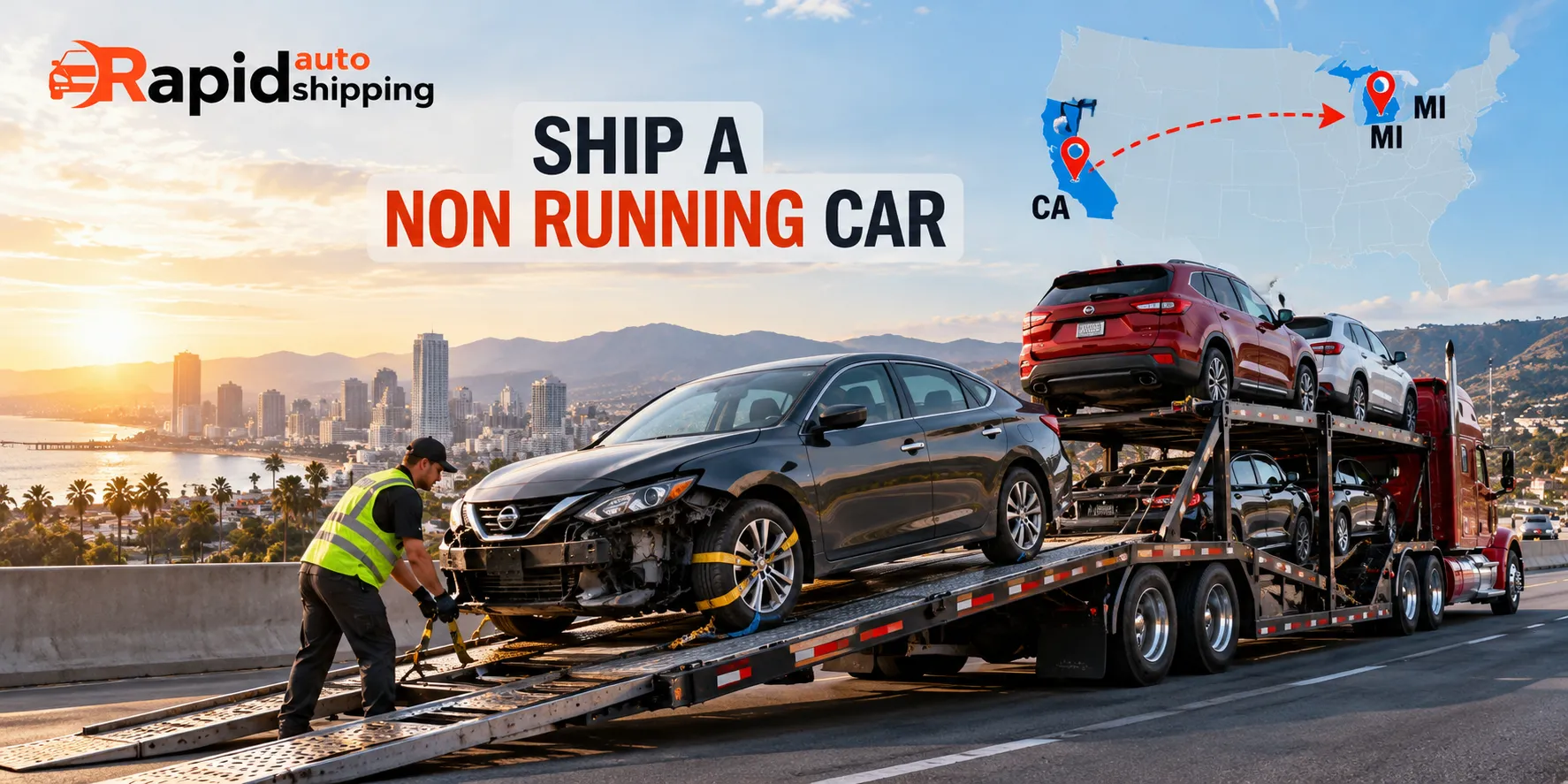
Shipping a vehicle that will not start can feel complicated, especially when it cannot be driven onto a transport trailer. Whether you have purchased a project car, need to move a damaged vehicle, are relocating across the country, or want to transport a classic automobile that has been sitting in storage, professional auto transport can help simplify the process.
With the right equipment and an experienced shipping provider, you can ship a non running car without arranging a costly repair before transportation. Winch-equipped carriers, specialized loading equipment, and coordinated pickup and delivery make it possible to move many inoperable vehicles safely.
Rapid Auto Shipping helps customers explore vehicle shipping options for routes throughout the United States, including long-distance moves and interstate transportation. Understanding your vehicle's condition, the equipment required, and the factors that influence shipping costs can help you arrange transportation with fewer surprises.
This guide explains how non-running car shipping works, what to expect from winch-equipped carriers, how to prepare your vehicle, and how to choose a dependable auto transport provider.
What Does It Mean to Ship a Non-Running Car?
A non-running car is a vehicle that cannot be driven under its own power. It might have a dead battery, engine failure, transmission problems, damaged wheels, or another mechanical issue that prevents normal operation.
Unlike standard auto transport, which generally assumes a vehicle can be driven onto and off a trailer, inoperable vehicle shipping may require specialized loading equipment and additional coordination.
Common vehicles transported as non-running include:
-
Cars with engine or transmission failure
-
Vehicles with dead batteries or electrical problems
-
Accident-damaged cars that cannot be driven
-
Classic and vintage cars awaiting restoration
-
Salvage vehicles and project cars
-
Vehicles purchased from auctions or private sellers
-
Cars stored for extended periods that no longer start
-
Estate vehicles that need to be moved to another location
Not every inoperable vehicle presents the same loading requirements. A car that will not start but rolls, steers, and brakes is generally easier to load than one with locked wheels, missing tires, or extensive collision damage.
When requesting a quote, explain the vehicle's exact condition. This helps the shipping coordinator determine which carrier and loading method may be appropriate.
How Winch-Equipped Carriers Make Non-Running Car Shipping Possible
A winch-equipped carrier is designed to help load vehicles that cannot move under their own power. A winch uses a cable or strap and a powered pulling mechanism to move a vehicle toward or onto a trailer.
For many inoperable cars, this equipment reduces the need for the vehicle to drive up the loading ramps. However, a winch alone does not solve every loading challenge. The vehicle must also be accessible, and its wheels, steering, ground clearance, and structural condition must be considered.
How the Winch Loading Process Works
Although the exact procedure depends on the carrier and vehicle, the general process often includes the following steps.
1. Vehicle inspection
The carrier or loading team assesses the car's condition, including its tires, wheels, steering, brakes, ground clearance, and visible damage. They also confirm whether the vehicle can roll freely.
2. Positioning the transport equipment
The carrier is positioned on suitable, reasonably level ground with adequate room for loading. A safe loading area is especially important when transporting a vehicle from a residential driveway, storage facility, or auction yard.
3. Connecting the winch
The operator uses suitable attachment points and equipment to secure the winch line. Proper attachment helps reduce the risk of damage during loading.
4. Pulling the vehicle onto the trailer
The winch gradually pulls the vehicle up the loading ramps or onto the trailer. The operator controls the movement and checks alignment as the vehicle is loaded.
5. Securing the vehicle
Once loaded, the car is secured using appropriate tie-down equipment. The carrier confirms that the vehicle is stable and properly positioned for transportation.
6. Delivery and unloading
At the destination, the vehicle is unloaded using suitable equipment and procedures. If it cannot roll or steer, additional arrangements may be necessary.
The important point is that winch-assisted loading is not automatically suitable for every disabled vehicle. A professional assessment helps identify the right equipment before pickup day.
Can You Ship a Car That Does Not Start?
Yes. In many cases, you can ship a car that does not start without repairing the engine or battery first.
The key question is whether the vehicle can roll, steer, and brake.
Car Does Not Start but Rolls and Steers
This is often the simplest type of inoperable vehicle to transport. If the car has a dead battery or engine trouble but its wheels move freely, it may be loaded using a winch-equipped carrier.
Inform the shipping provider that the vehicle cannot start but remains movable.
Car Has a Dead Battery
A dead battery does not necessarily prevent transportation. If the car can be safely placed in neutral and rolled, the carrier may be able to load it without starting the engine.
Do not assume that every vehicle can be shifted into neutral without electrical power. Some modern vehicles have electronic shift locks or other systems that require a specific procedure.
Car Has Transmission Problems
Transmission failure can create additional challenges. A vehicle may not shift into neutral or roll as expected. Explain the issue before booking so the provider can determine whether specialized loading equipment is needed.
Car Has Locked Wheels or Damaged Tires
Locked wheels, seized brakes, missing tires, or suspension damage may prevent ordinary winch loading. Depending on the vehicle, the carrier may need wheel dollies, skates, a forklift, or other specialized equipment.
These requirements can affect both the cost and the availability of transportation.
Car Has Accident Damage
An accident-damaged vehicle may be transportable even when it cannot be driven. However, damage to the steering, suspension, frame, or wheels can make loading more complicated.
Provide clear information about the damage and disclose any fluid leaks or parts that could come loose during transportation.
How Much Does It Cost to Ship a Non-Running Car?
The cost to ship a non-running car depends on several factors. Inoperable vehicles generally require more loading time and specialized handling than running vehicles, so transportation may cost more than a comparable standard shipment.
There is no single price that applies to every vehicle or route. The most accurate approach is to request a quote based on your vehicle's condition, pickup location, and destination.
Factors That Influence the Shipping Price
Distance and route: Longer trips generally involve higher total transportation costs, although the price per mile may decrease on some longer routes. Popular interstate corridors may have different pricing from remote locations.
Vehicle size and weight: Larger or heavier vehicles can take up more trailer space and may require additional handling.
Mechanical condition: A vehicle that rolls and steers is typically easier to load than one with locked wheels, missing tires, or severe structural damage.
Loading equipment: Winches, dollies, skates, forklifts, and other specialized equipment may affect the total quote.
Pickup and delivery access: Narrow streets, low-clearance areas, steep driveways, or restricted commercial locations may require an alternative meeting point.
Transport type: Open auto transport is commonly used for standard vehicle shipping. Enclosed transport may be suitable for classic, collectible, or high-value vehicles, subject to the carrier's equipment and loading capabilities.
Season and demand: Shipping demand can fluctuate with the time of year, weather, and the popularity of a route.
Scheduling requirements: Expedited pickup or limited pickup windows may affect pricing and carrier availability.
How to Get an Accurate Quote
When contacting Rapid Auto Shipping, be prepared to provide:
-
Your vehicle's year, make, and model
-
Pickup city and state
-
Delivery city and state
-
Whether the vehicle starts
-
Whether it rolls, steers, and brakes
-
Any locked wheels, missing tires, or suspension damage
-
Whether the vehicle has ground-clearance or access issues
-
Your preferred pickup timeframe
-
Whether you need open or enclosed transportation
Accurate details help the shipping team evaluate your requirements and explain the available options before you commit.
Open vs. Enclosed Transport for a Non-Running Car
Choosing between open and enclosed transport depends on your vehicle, budget, and protection requirements.
Open Auto Transport
Open carriers transport vehicles on trailers exposed to normal outdoor conditions. This is a common option for everyday cars, used vehicles, project cars, and many inoperable vehicles.
Potential advantages include broad use across common routes and often lower cost than enclosed transportation.
However, not every open carrier is equipped to handle non-running vehicles. Confirm that the assigned carrier has the necessary winch and loading equipment.
Enclosed Auto Transport
Enclosed carriers provide a covered transportation environment and are often considered for classic cars, collector vehicles, restored automobiles, and high-value vehicles.
Enclosed shipping may offer additional protection from weather and road debris during transit. Nevertheless, availability and suitability depend on the carrier's equipment, the vehicle's condition, and how the vehicle can be loaded.
Enclosed transportation usually costs more than open transport. If your vehicle is inoperable, verify that the enclosed carrier can accommodate winch loading or other required equipment.
Which option is best? For a standard project car, open transport may be a practical choice. For a valuable classic or restored vehicle, enclosed transport may be worth considering. In either case, confirm the loading requirements before booking.
How to Ship a Non-Running Car Across the United States
Whether you are moving a car a few hundred miles or arranging cross-country vehicle transport, the process becomes easier when you prepare in advance.
Step 1: Request a Specialized Shipping Quote
Start by explaining that you need to ship a non-running car. Do not request a standard running-vehicle quote and assume the carrier will accommodate an inoperable vehicle later.
Provide the route, vehicle details, condition, and preferred dates. Ask whether the quote includes the equipment and handling required for loading and unloading.
Step 2: Confirm Carrier Equipment
Ask whether the assigned carrier has a working winch and whether additional equipment is needed.
If the wheels are locked, the tires are missing, or the vehicle cannot steer, disclose those details early. Confirm any additional charges or special arrangements before pickup.
Step 3: Arrange Pickup Access
Make sure the vehicle is accessible to the carrier. A large transport truck may not be able to enter every residential street, parking garage, auction yard, or driveway.
If direct pickup is not practical, arrange a nearby location with sufficient space and safe access.
Step 4: Prepare the Vehicle
Remove personal belongings and loose items unless the shipping agreement specifically permits them. Secure or remove detachable accessories where appropriate.
Tell the provider about fluid leaks, broken glass, exposed components, or other conditions that may affect loading.
Do not attempt repairs or move a damaged vehicle yourself if doing so could create a safety risk.
Step 5: Document the Vehicle's Condition
Take photographs of the exterior, interior, wheels, and any existing damage before loading. Review the inspection report or bill of lading and make sure the recorded condition is accurate.
Keep a copy of the relevant shipping documents.
Step 6: Coordinate Delivery
Confirm the delivery location, contact details, and access requirements. If the vehicle cannot roll or steer, verify that unloading equipment will be available.
At delivery, inspect the vehicle and document any concerns before completing the applicable delivery paperwork.
Can You Ship a Non-Running Car to All 50 States?
Interstate vehicle transportation is available across many major U.S. routes, but shipping a non-running car to every state is not identical to shipping a running vehicle on a popular corridor.
Alaska and Hawaii involve different logistics from mainland routes. Depending on the origin and destination, transportation may require a combination of road transport and ocean shipping. Remote areas, islands, rural addresses, and locations with restricted truck access may also require special arrangements.
For this reason, nationwide service should not be interpreted as a guarantee that every address has the same equipment, schedule, or price.
When arranging transportation across the 50 states, consider the following:
-
Mainland interstate routes: Many vehicles can be moved between cities and states using suitable auto transport carriers.
-
Remote destinations: Additional coordination may be necessary when a location is far from a common transport corridor.
-
Alaska and Hawaii: Confirm the full transportation plan, including any required port handling and vessel arrangements.
-
Auction and storage facilities: Verify operating hours, release requirements, and whether the facility can accommodate the carrier's equipment.
-
Non-running vehicle restrictions: Some pickup or delivery locations may require specialized loading arrangements.
Rapid Auto Shipping can help customers explore transportation options for their specific route. Confirm service availability, carrier capability, estimated timing, and total charges for your individual shipment before booking.
How to Choose a Reliable Non-Running Car Shipping Company
The cheapest quote is not always the best choice when your vehicle cannot be driven. A low price may not reflect the specialized equipment, handling time, or access requirements your shipment needs.
Use these criteria when comparing auto transport providers.
1. Experience With Inoperable Vehicles
Ask whether the provider regularly arranges transportation for vehicles that do not start. Find out how it evaluates cars with locked wheels, steering problems, or extensive damage.
2. Clear Equipment Requirements
A dependable provider should ask about the vehicle's condition rather than assume a winch alone will solve every loading issue.
3. Transparent Pricing
Request an explanation of the quote, including any charges related to specialized loading, difficult access, or additional equipment. Confirm whether the quote is an estimate or a confirmed arrangement and ask how changes are handled.
4. Communication and Scheduling
Ask how pickup updates are provided, whom to contact if the schedule changes, and what happens if the assigned carrier cannot safely load the vehicle.
5. Insurance and Carrier Verification
Before booking, ask about the motor carrier's cargo insurance and request relevant documentation. Verify the carrier's identity and applicable registration or operating authority through official U.S. transportation resources when appropriate.
Understand the limits and exclusions of any coverage. Existing damage, mechanical issues, and certain personal property may be treated differently under a policy.
6. Written Terms and Condition Reports
Review the shipping agreement, cancellation terms, payment requirements, and inspection process. Keep copies of the quote and shipping documents.
With these checks, you can make a more informed decision and reduce the risk of misunderstandings on pickup day.
Why Consider Rapid Auto Shipping?
When you need to ship a non-running car, choosing a provider that understands the extra coordination involved can make the process more manageable.
Rapid Auto Shipping can help customers evaluate vehicle transportation options based on their route, vehicle condition, and scheduling needs.
When requesting assistance, provide accurate information about whether the car starts, rolls, steers, and brakes. This allows the shipping team to identify potential loading requirements and discuss suitable transportation arrangements.
Customers can also ask about open and enclosed shipping options, pickup and delivery logistics, estimated transit times, and the factors that influence their quote.
The goal is to make the shipping process easier to understand before the vehicle is collected—not to promise a one-size-fits-all price or schedule.
If you are moving, purchasing a project car, transporting an accident-damaged vehicle, or relocating a classic automobile, request a quote and explain the vehicle's condition in detail.
Tips to Make Non-Running Car Shipping Easier
A little preparation can help prevent delays and unexpected complications.
-
Be honest about the condition. Explain every known mechanical or structural issue that may affect loading.
-
Confirm whether the vehicle rolls. A car that cannot start is different from one with locked wheels or a seized drivetrain.
-
Share photographs when possible. Images can help the shipping team understand the vehicle's condition and ground clearance.
-
Remove personal belongings. Personal property may not be covered by the carrier's cargo insurance and may be prohibited by the shipping agreement.
-
Check facility requirements. Auction yards, repair shops, and storage facilities may have release procedures, operating hours, or loading restrictions.
-
Keep the pickup area accessible. Make sure there is adequate space for the carrier and loading equipment.
-
Get the terms in writing. Confirm pricing, equipment requirements, timing, and any additional fees.
-
Document existing damage. Take photographs and review the condition report before the vehicle leaves.
These practical steps can help you prepare your shipment and communicate clearly with your transportation provider.
FAQs About Shipping a Non-Running Car
1. Can I ship a car that does not start?
Yes. Many non-running vehicles can be transported using a winch-equipped carrier or other suitable loading equipment. The provider will need to know whether the vehicle rolls, steers, and brakes.
2. Do I need to repair my car before shipping it?
Not necessarily. A car may be transported without repairing its engine or battery if it can be loaded and secured safely. However, certain mechanical problems, locked wheels, or structural damage may require additional equipment or arrangements.
3. How much does it cost to ship a non-running car?
Pricing depends on the route, vehicle size, mechanical condition, loading equipment, transport type, and pickup accessibility. Non-running vehicles may cost more to ship than comparable running vehicles because of the additional handling involved. Request a quote using accurate vehicle details.
4. What is a winch-equipped car carrier?
It is a transport carrier fitted with a winch that can pull a vehicle onto a trailer when the vehicle cannot drive under its own power. Additional equipment may be required for cars with locked wheels, missing tires, or steering problems.
5. Can a car with locked wheels be shipped?
Possibly. Locked wheels can make loading more difficult and may require wheel dollies, skates, a forklift, or other specialized equipment. Disclose the problem before booking so the provider can assess whether transportation is feasible.
6. Can I ship a damaged car after an accident?
Many accident-damaged vehicles can be transported, but suitability depends on the extent of the damage. Steering, suspension, wheel, frame, and fluid-leak issues can affect loading and transport safety. Provide an accurate description and photographs when possible.
7. Can I use enclosed transport for a non-running car?
Yes, in some cases. The enclosed carrier must have suitable loading equipment and enough space to accommodate the vehicle. Confirm that the carrier can handle the specific mechanical and access requirements before booking.
8. How long does it take to ship a non-running car?
Transit time depends on distance, route, carrier availability, weather, and pickup and delivery arrangements. Specialized loading requirements may also affect scheduling. Ask for an estimated pickup window and transit time rather than assuming a fixed delivery date.
9. Can I ship a non-running car from an auction?
Often, yes, provided the auction facility permits the pickup and the assigned carrier meets its requirements. Confirm release authorization, operating hours, loading access, storage deadlines, and whether the vehicle can roll or steer.
10. Can I ship a non-running car across state lines?
Yes, interstate transportation is possible for many inoperable vehicles. The carrier must be equipped to handle the vehicle, and the pickup and delivery locations must be accessible. Confirm route availability and any specialized requirements before booking.
11. Should I choose open or enclosed transport?
Open transport is often a practical option for everyday vehicles and project cars. Enclosed transport may be preferable for valuable classic or collector vehicles. The right choice depends on your budget, vehicle value, route, and the carrier's loading capabilities.
12. What information do I need for a shipping quote?
Provide the year, make, model, pickup and delivery locations, preferred dates, and a clear description of the vehicle's condition. Explain whether it starts, rolls, steers, and brakes, and disclose any missing tires, locked wheels, fluid leaks, or unusual ground-clearance issues.
Final Thoughts: Ship Your Non-Running Car With Confidence
You do not necessarily need to repair a vehicle before moving it to another city or state. With suitable equipment and careful planning, many non-running cars can be transported without being driven onto the trailer.
The most important step is choosing a transportation provider that understands inoperable vehicle shipping and receives accurate information about your car's condition. Winch-equipped carriers can handle many common loading situations, while vehicles with locked wheels or extensive damage may need specialized equipment.
Rapid Auto Shipping can help you explore options for shipping a non-running car on eligible routes throughout the United States. Before booking, confirm carrier availability, loading requirements, pricing, insurance details, and delivery arrangements for your specific vehicle.
Ready to move your non-running vehicle? Request an auto transport quote and share your pickup location, destination, and vehicle condition to help determine the right shipping solution.