Shaped Puzzles Explained: Features, Benefits, and How to Choose
20 Views
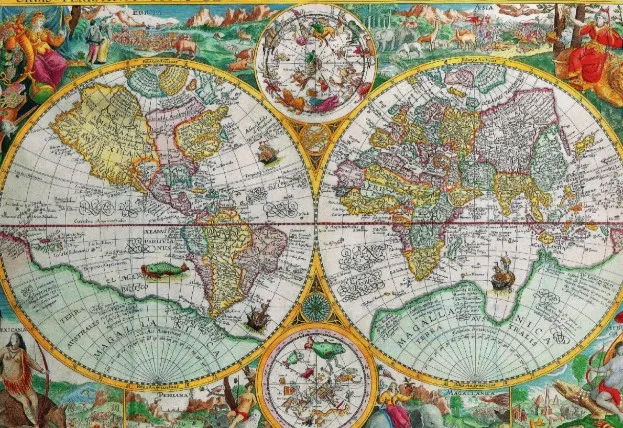
Jigsaw puzzles have entertained people for generations, and most of us picture a neat rectangle with a straight-edged border. Yet puzzle makers have long experimented with unusual outlines, and today shaped puzzles appeal to hobbyists who want something different from the standard box. Instead of a rectangle, the finished picture may take the form of an animal, a landscape silhouette, or a decorative outline. This guide explains how these puzzles work, what makes them distinct, and what to consider before picking one.
What Makes an Irregular Outline Different
A standard jigsaw has four straight sides, which gives solvers an easy starting point. Most people begin by sorting out the edge pieces, building the frame, and then filling in the middle. Puzzles with irregular edges change that habit. Because the boundary curves, zigzags, or follows the contour of a subject, edge pieces are harder to identify by shape alone. Solvers rely more on color, pattern, and the way the outline flows. Some designs also include pieces that are cut into recognizable figures, which adds a playful layer to the search. The result is a slower, more observational experience that rewards patience and a careful eye.
A Brief Look at Jigsaw Puzzle History
The jigsaw puzzle is generally traced to the 1760s, when London mapmaker John Spilsbury mounted a map on wood and cut it along the borders of countries so that it could be reassembled for teaching geography. Early puzzles were cut by hand, which limited detail. Over time, the tools improved. Fine saws, and later machine and laser cutting, allowed makers to produce more intricate pieces and more creative outlines. That progress is why modern shaped puzzles can include curved borders and detailed figures that would have been very difficult to produce in earlier centuries.
Why People Enjoy Puzzling
Puzzles offer a quiet way to slow down. Many people like them because they are screen-free, easy to pause, and simple to share with family or friends. Working on one encourages focus, pattern recognition, and problem solving, since the solver must compare shapes, colors, and small details repeatedly. Puzzles can also be a relaxing routine after a busy day, and a finished piece can be displayed or taken apart and enjoyed again. Because the difficulty depends on piece count and design, there is usually an option for beginners, experienced solvers, and mixed-age groups.
How to Choose the Right Puzzle
Start with piece count. Fewer pieces suit beginners and short sessions, while higher counts suit those who enjoy long projects. Next, consider the image. Bold colors and clear contrasts are easier to sort, while soft gradients and repeating textures raise the challenge. Piece cut also matters, since tightly interlocking pieces stay together better than loosely cut ones. Finally, think about workspace. Irregular outlines can take up more room on a table than the piece count suggests, so a flat, stable surface is helpful. When you compare shaped puzzles, look for clean cutting, sturdy material, and a design that matches your skill level.
Material and Craftsmanship
Puzzles are commonly made from cardboard or wood. Cardboard is lightweight and widely available, while wood is valued for its thickness, durability, and tactile feel. Wooden pieces are usually cut with lasers or saws, which allows precise curves and thin, clean lines.
Conclusion
Puzzles with unconventional outlines offer a fresh twist on a classic pastime. They ask solvers to look beyond the border-first approach and pay closer attention to color, pattern, and form. Anyone curious about a more tactile option may want to explore wooden shaped puzzles, which are often appreciated for their durability and precise cutting. Whatever the material, choosing the right piece count, image, and outline makes the experience more enjoyable, and a little patience turns a scattered pile of pieces into a finished picture worth displaying.
Related Reading
Top 10 Hidden Secrets About Business & Finance You Need to Know
Welcome to our in-depth exploration of Business & Finance. In an era defined...
Why Business & Finance is Transforming the Global Industry Landscape
Welcome to our in-depth exploration of Business & Finance. In an era defined...