SEO vs SEM: Key Differences, Benefits, and Which Strategy Is Better for Your Business?
By Ask Rizwana
11 Views
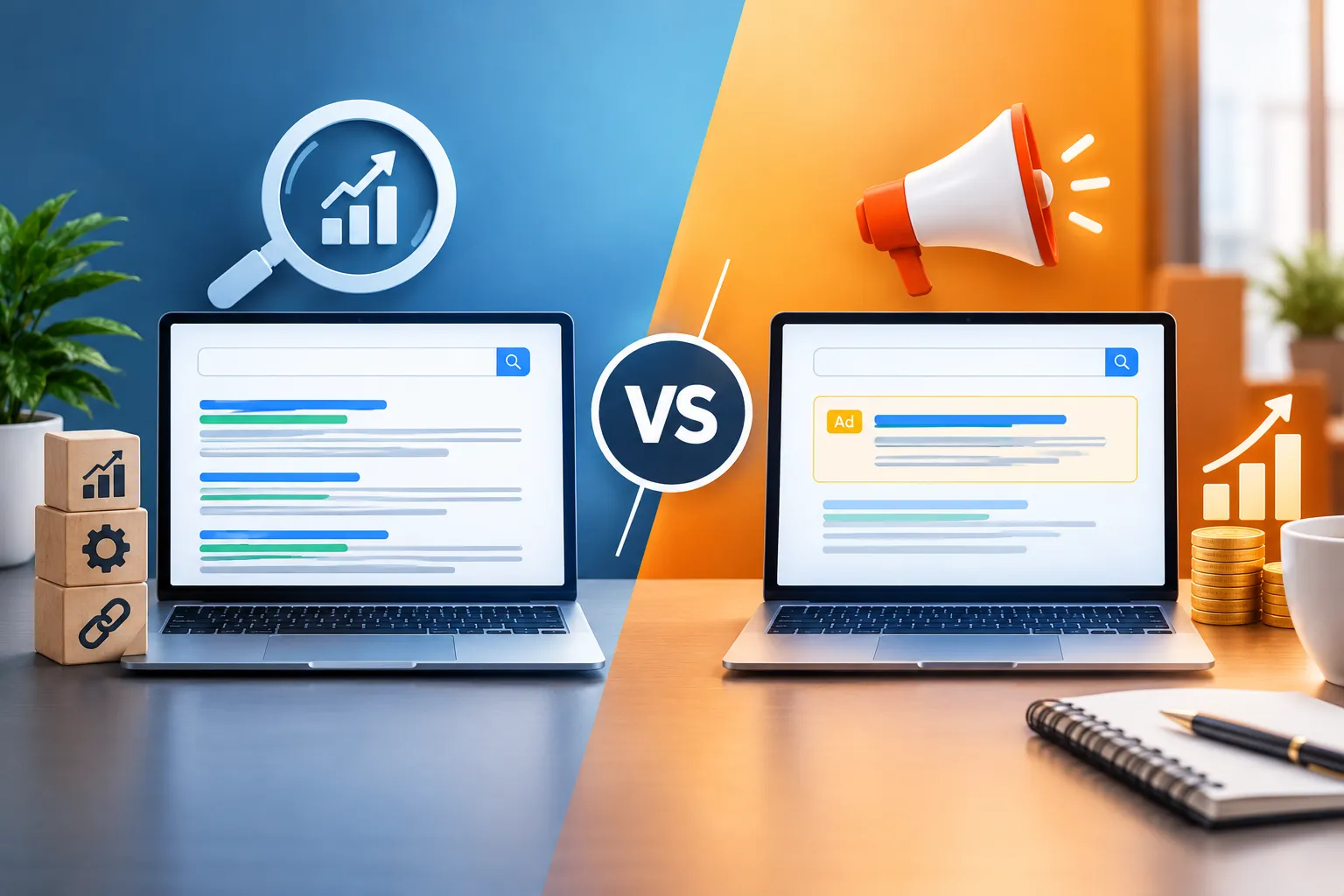
Digital marketing plays an important role in helping businesses increase their online visibility, attract potential customers, and generate leads. Understanding SEO vs SEM is essential for choosing the right marketing strategy to grow your business. Search Engine Optimization (SEO) focuses on improving organic search rankings, while Search Engine Marketing (SEM) commonly refers to using paid search advertising to reach potential customers. Both strategies help businesses connect with their target audience, but they differ in cost, approach, and the time required to achieve results.
What Is SEO (Search Engine Optimization)?
Search Engine Optimization, commonly known as SEO, is the process of improving a website's visibility in unpaid search engine results. The primary goal of SEO is to help websites appear higher in relevant searches on Google and other search engines.
SEO involves optimizing website content, improving technical performance, and building a strong online reputation. Unlike paid advertising, SEO does not require businesses to pay search engines for every click they receive.
Main Components of SEO
1. On-Page SEO
On-page SEO focuses on optimizing individual web pages to improve search visibility. Important elements include keyword placement, title tags, meta descriptions, heading structure, internal linking, and high-quality content.
2. Off-Page SEO
Off-page SEO involves activities outside your website that support its authority and reputation. Earning relevant backlinks, gaining brand mentions, and building industry relationships can strengthen a website's online presence.
3. Technical SEO
Technical SEO ensures search engines can access, crawl, and understand a website efficiently. It includes improving page speed, mobile usability, indexing, website architecture, and structured data implementation.
4. Local SEO
Local SEO helps businesses appear in location-based searches. Optimizing Google Business Profile, maintaining accurate business information, and earning customer reviews can improve local search visibility.
What Is SEM (Search Engine Marketing)?
Search Engine Marketing, or SEM, is a digital marketing strategy that uses search engines to attract potential customers. Although SEM has historically been used as a broader term that includes SEO, modern marketing discussions frequently use SEM to describe paid search advertising.
Businesses use platforms such as Google Ads to display advertisements when users search for relevant products or services.
One of the most common SEM models is pay-per-click (PPC) advertising, where advertisers typically pay when someone clicks their advertisement.
Main Components of SEM
1. Paid Search Advertising
Businesses create advertisements that appear in sponsored positions on search engine results pages.
2. Keyword Targeting
Advertisers select keywords relevant to their products or services to reach people actively searching for those solutions.
3. Ad Copy Optimization
Well-written headlines and descriptions encourage users to click advertisements and visit landing pages.
4. Landing Page Optimization
An effective landing page improves user experience and encourages visitors to complete actions such as submitting forms, making purchases, or contacting a business.
5. Campaign Performance Tracking
SEM platforms allow advertisers to monitor impressions, clicks, conversions, advertising costs, and return on investment.
SEO vs SEM: Key Differences
While SEO and SEM both aim to improve search visibility, their methods and outcomes differ significantly.
|
Feature |
SEO |
SEM (Paid Search) |
|---|---|---|
|
Primary approach |
Organic search optimization |
Paid search advertising |
|
Cost |
Content, tools, and optimization expenses |
Advertising spend and management expenses |
|
Time to visibility |
Usually gradual |
Can begin shortly after campaign approval |
|
Search placement |
Organic search results |
Sponsored search placements |
|
Traffic duration |
Can continue without ongoing ad spend |
Generally stops when advertising stops |
|
Keyword targeting |
Content and search intent |
Campaign keywords and targeting settings |
|
Performance tracking |
Rankings, organic clicks, conversions |
Clicks, ad spend, conversions, ROAS |
|
Best suited for |
Long-term organic growth |
Immediate campaigns and targeted acquisition |
Benefits of SEO for Businesses
1. Supports Long-Term Organic Traffic
SEO helps businesses develop a lasting presence in search results. Well-optimized content can continue attracting relevant visitors over time, although rankings and traffic are never guaranteed.
2. Builds Brand Credibility
Appearing prominently in organic search results can help businesses establish familiarity and credibility with their audience.
3. Attracts Relevant Visitors
SEO allows businesses to target informational, commercial, and transactional keywords based on user search intent.
4. Improves Website Experience
Technical SEO improvements, clear navigation, helpful content, and mobile-friendly design can make websites easier to use.
5. Reduces Dependence on Paid Advertising
As organic traffic grows, businesses may become less dependent on advertising for some customer acquisition channels.
Benefits of SEM for Businesses
1. Generates Faster Search Visibility
Paid search campaigns can begin attracting visitors shortly after advertisements are approved and become eligible to appear.
2. Offers Targeted Advertising
SEM allows businesses to focus on relevant keywords, locations, devices, and audiences through available campaign targeting options.
3. Provides Budget Control
Businesses can establish advertising budgets, adjust bids, and monitor campaign spending according to their marketing objectives.
4. Supports Product Launches and Promotions
Paid search advertising is particularly useful for promoting new products, seasonal offers, and time-sensitive services.
5. Enables Detailed Performance Measurement
Advertising platforms provide measurable campaign data, helping businesses evaluate conversions, cost per acquisition, and advertising return.
SEO vs SEM: Which Strategy Is Better for Your Business?
Choosing between SEO and SEM depends on your business goals, marketing budget, competition, and growth timeline.
If your primary goal is to build long-term website traffic and establish a sustainable online presence, SEO is generally a suitable investment. It helps businesses attract visitors through relevant content and ongoing website optimization.
However, if your business needs immediate visibility for a product launch, promotion, or lead generation campaign, SEM can be an effective option. Paid search advertisements allow businesses to reach potential customers without waiting for organic rankings to improve.
For many businesses, combining SEO and SEM provides a more balanced digital marketing strategy.
How SEO and SEM Work Together
SEO and SEM do not have to compete with each other. When implemented strategically, they can support different stages of customer acquisition.
Use SEM Data to Improve SEO
Paid advertising campaigns can reveal which search queries generate qualified leads and conversions. Businesses can use these insights to prioritize relevant topics and improve their organic content strategy.
Increase Visibility Across Search Results
A business may appear in both paid advertisements and organic listings for relevant searches. This creates additional opportunities for potential customers to discover its products or services.
Improve Landing Page Performance
Both SEO and SEM benefit from helpful, relevant landing pages. Clear messaging, strong calls to action, mobile usability, and fast page loading can improve user experience and conversion opportunities.
Support Short-Term and Long-Term Goals
SEM can support immediate marketing campaigns, while SEO develops organic visibility over time. Combining both methods helps businesses balance immediate opportunities with sustainable growth.
Common SEO and SEM Mistakes to Avoid
Businesses often struggle with search marketing because they focus on traffic without considering the quality of visitors or their likelihood of converting.
Common mistakes include:
-
Targeting highly competitive keywords without understanding search intent.
-
Publishing low-quality or duplicate website content.
-
Ignoring technical SEO and mobile usability.
-
Running paid advertisements without conversion tracking.
-
Sending paid traffic to irrelevant landing pages.
-
Failing to monitor organic and paid search performance.
-
Depending exclusively on one marketing channel.
Avoiding these mistakes can improve campaign efficiency and help businesses make better marketing decisions.
Frequently Asked Questions About SEO vs SEM
Is SEO Better Than SEM?
Neither strategy is universally better. SEO is often more suitable for long-term organic visibility, while SEM can provide faster exposure through paid advertising. The right choice depends on business objectives and available resources.
Is SEO Free or Paid?
Organic search clicks do not require payment to the search engine. However, SEO usually involves costs related to content creation, technical optimization, tools, and professional services.
How Long Does SEO Take to Show Results?
SEO results vary depending on website history, competition, content quality, and technical performance. Meaningful improvements may take several months, especially for competitive keywords.
Can SEO and SEM Be Used Together?
Yes. Businesses can use SEO to increase organic traffic while running SEM campaigns to reach users through paid search advertisements. Both strategies can complement each other.
Does SEM Improve Organic Google Rankings?
No. Paying for Google Ads does not directly improve a website's organic search rankings. Paid and organic search results operate through separate systems.
Conclusion
Understanding the differences between SEO vs SEM helps businesses select the right strategy for attracting customers through search engines. SEO focuses on developing long-term organic visibility through content, technical improvements, and website optimization. SEM uses paid advertising to provide targeted search visibility and support immediate marketing goals.
Rather than choosing only one approach, businesses should evaluate their budget, competition, target audience, and growth objectives. A well-planned combination of SEO and SEM can create more opportunities to attract relevant traffic, generate leads, and improve overall digital marketing performance.