Self-Guided Munich Walking Tour: Top Attractions to Visit
By bowop
41 Views
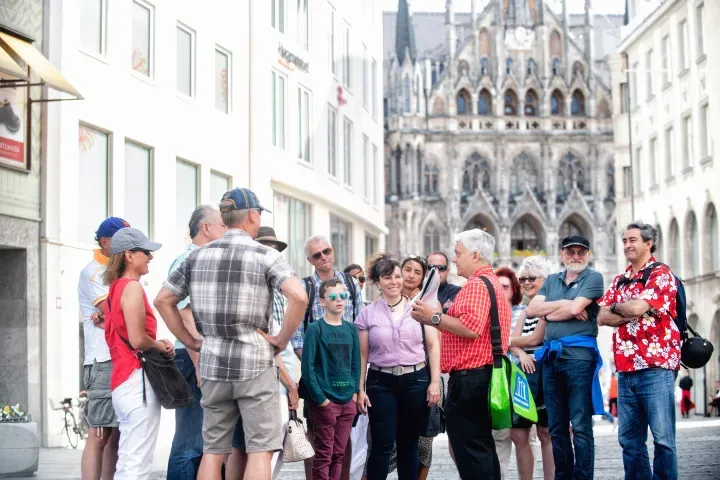
Planning Your Self-Guided Walk Through Munich
A self-guided walking tour of Munich is a genuinely rewarding way to explore the city's historic center at your own pace, stopping as long as you like at the attractions that captivate you most and moving efficiently through areas you have already absorbed. Munich's Altstadt is compact enough that a self-guided walk can cover all of the major highlights in a single day with time remaining for leisurely coffee stops, market browsing, and the spontaneous discoveries that independent exploration always produces. Planning a successful self-guided walk requires knowing which attractions to prioritize, in what sequence to visit them most efficiently, and where to find the details that bring each landmark to life.
Stop One: Marienplatz and the New Town Hall
Begin your self-guided walk at Marienplatz, reachable directly by U-Bahn and S-Bahn from any point in Munich. Spend time in the square absorbing the architecture of the New Town Hall's extraordinary neo-Gothic facade, watching the Glockenspiel performance if your timing aligns with the eleven o'clock or noon chiming, and identifying the Old Town Hall on the opposite side of the square before heading south toward the Viktualienmarkt. The New Town Hall tower elevator provides a worthwhile elevated view of the city center if conditions are clear, and the observation platform is open to visitors during daylight hours.
Stop Two: Viktualienmarkt and St. Peter's Church
A short walk south of Marienplatz leads to the Viktualienmarkt, one of Munich's most atmospheric and authentically local destinations. Walk through the market's permanent stalls sampling local cheeses, Bavarian pretzels, and seasonal produce before climbing the tower of adjacent St. Peter's Church for a panoramic view of the city center that provides an invaluable orientation to the spatial relationship between Munich's major landmarks. The market's beer garden, centered around a colorful maypole, is an appropriate place for a first taste of Bavarian culture even before lunch, as Munich beer garden culture operates on the principle that consumption of regional beer at any daytime hour is entirely respectable.
Stop Three: Asamkirche and the Shopping Quarter
Walking west from Marienplatz along Kaufingerstrasse and then south along Sendlinger Strasse brings you to the Asamkirche, and for an independent Munich Walking Tour this discovery is one of the genuine highlights of the route. The private church of the Asam brothers — architect Egid Quirin Asam and painter Cosmas Damian Asam — was built between 1733 and 1746 as their personal place of worship, and the interior packs an almost overwhelming quantity of baroque decoration into a space that measures just nine meters wide and twenty-two meters long. The gold, marble, frescoes, and sculptural work represent the Asam brothers' combined artistry at its most extravagant and impressive.
Stop Four: Odeonsplatz and the Feldherrnhalle
Walking north from Marienplatz along the pedestrian Weinstrasse leads to Odeonsplatz, one of Munich's grandest squares and a space with significant historical associations spanning from Baroque urban planning through the dramatic events of early twentieth-century German political history. The Feldherrnhalle, modeled after the Loggia dei Lanzi in Florence and completed in 1844 to honor Bavarian military commanders, occupies the southern end of the square and is flanked by two bronze lions that have become fixtures in the square's visual identity. The yellow facade of the Theatinerkirche on the west side of the square represents one of the finest examples of Italian Baroque architecture north of the Alps.
Stop Five: The Residenz Palace Complex
Directly adjacent to Odeonsplatz stands the entrance to the Munich Residenz, the vast palace complex that served as the official residence of the Wittelsbach rulers of Bavaria from the sixteenth century until the end of the monarchy in 1918. Even if time constraints prevent a full interior tour, walking through the palace courtyards accessible from the Residenzstrasse side reveals the extraordinary architectural scale and variety of this complex, which grew through successive building campaigns across four centuries to encompass styles ranging from Renaissance through Baroque to Neoclassical. The Residenz Treasury and Museum are both worth extended visits for visitors with particular interest in decorative arts and royal history.
Stop Six: The Englischer Garten
Completing your self-guided walking tour at the southern entrance to the Englischer Garten — the English Garden — provides a restorative green counterpoint to the architectural intensity of the historic city center. Established in 1789 by Count Rumford, the Englischer Garten at 373 hectares is larger than New York's Central Park and serves as Munich's primary outdoor recreation space in every season. The Japanese Tea House, the Chinese Tower beer garden, and the artificial river rapids where surfers ride standing waves year-round are among the distinctive attractions of this remarkable urban park. Walk north through the park toward the Chinese Tower for a classic Munich beer garden experience that perfectly closes a day of historic sightseeing.