School Management Software with Performance Analytics
By vinay saini
72 Views
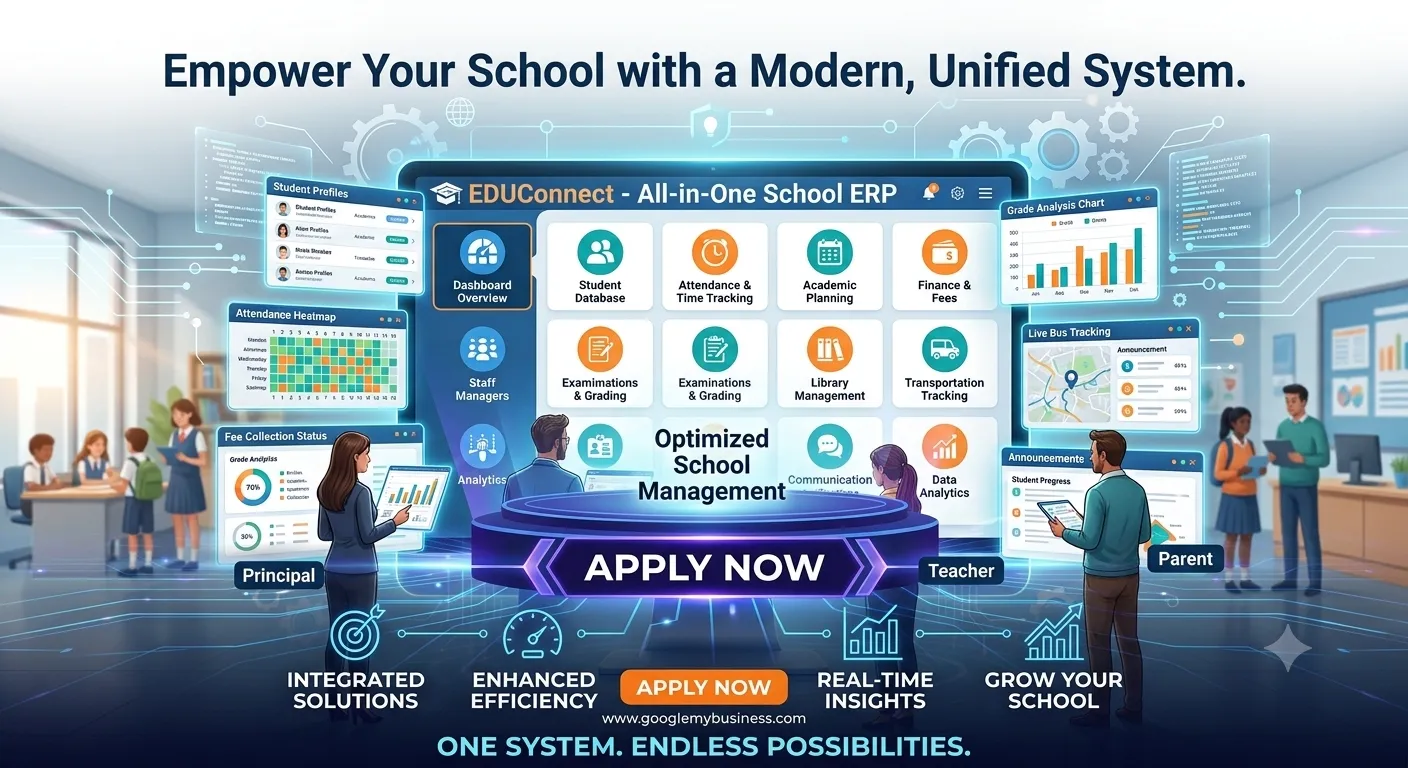
School Management Software with Performance Analytics
Managing a modern school involves much more than maintaining student records and attendance registers. School administrators need accurate information about academic performance, attendance, fees, teacher productivity, student engagement, and overall institutional growth. Managing all these activities manually can consume valuable time and make it difficult for school leaders to identify important trends.
School Management Software with Performance Analytics combines everyday school administration with data-driven insights. It allows schools to centralize information, automate routine processes, monitor performance, and generate meaningful reports that support better decision-making.
For private schools, CBSE schools, residential schools, and growing educational institutions, a comprehensive school management system can provide administrators and management teams with a single platform for managing academic and administrative operations.
What Is School Management Software with Performance Analytics?
School Management Software is a digital platform designed to manage different academic, administrative, financial, and communication activities within an educational institution. When performance analytics is integrated into the software, schools can go beyond simply storing information.
Performance analytics helps convert school data into actionable insights.
For example, instead of simply recording student attendance, the system can help administrators identify students with consistently low attendance. Similarly, academic performance data can be analysed to identify subjects in which students are performing below expectations.
A centralised platform can help schools monitor:
- Student academic performance
- Attendance patterns
- Examination results
- Teacher performance
- Fee collection
- Student enrollment
- Class-wise performance
- Subject-wise results
- Student progress
- Administrative activities
- School-wide KPIs
This makes school management more organized, measurable, and data-driven.
Why Schools Need Performance Analytics
Educational institutions generate a large amount of data every day. Student attendance, marks, examinations, assignments, fees, admissions, and teacher activities all contribute to the school's overall data.
However, simply collecting data is not enough.
School administrators need to understand what the data means and how it can support better decisions.
Performance analytics can help school management answer questions such as:
- Which students need additional academic support?
- Which subjects have lower average scores?
- Which classes are performing better?
- Which students have attendance concerns?
- How has academic performance changed over time?
- Which teachers or departments need additional support?
- What percentage of fees has been collected?
- Which students are at risk of falling behind?
Instead of relying entirely on spreadsheets and manual calculations, school management can access structured reports and dashboards.
Key Features of School Management Software with Performance Analytics
A modern school management solution should combine essential administrative features with powerful reporting and analytics capabilities.
1. Student Performance Tracking
Student performance tracking allows schools to maintain and monitor academic information in one centralized system.
Administrators and teachers can track marks, examination results, assignments, grades, and other academic indicators. Historical data can also help schools compare a student's current performance with previous results.
This makes it easier to identify improvement, decline, or consistent performance patterns.
Benefits include:
- Student-wise performance tracking
- Class-wise academic reports
- Subject-wise analysis
- Examination result management
- Academic progress monitoring
- Performance comparison
2. Attendance Analytics
Attendance is an important indicator of student engagement and academic consistency.
School Management Software can record daily attendance and generate reports based on students, classes, sections, and periods. Analytics can help identify frequent absences and attendance trends.
For example, administrators can identify students whose attendance has consistently declined and take appropriate action.
Attendance analytics can provide:
- Daily attendance reports
- Monthly attendance summaries
- Student-wise attendance
- Class-wise attendance
- Low-attendance identification
- Attendance trends
3. Examination and Result Analysis
Managing examinations manually can make result analysis complicated, particularly for schools with hundreds or thousands of students.
Performance analytics can automatically organize examination data and provide useful insights.
Schools can analyze:
Analysis AreaExample InsightStudent PerformanceIndividual academic progressSubject PerformanceAverage marks by subjectClass PerformanceOverall class resultsGrade AnalysisGrade distributionExamination TrendsImprovement or declineComparative AnalysisPrevious vs current results
These insights can help teachers and administrators understand academic strengths and weaknesses.
4. Teacher Performance Monitoring
School performance is closely connected with teaching quality and classroom effectiveness.
A centralized management system can help administrators organize teacher-related information and evaluate relevant performance indicators.
Depending on the school's requirements, management can monitor:
- Classes assigned to teachers
- Academic results
- Attendance records
- Lesson-related activities
- Student feedback
- Examination performance
- Workload information
Analytics can help management identify areas where teachers may need additional training or support.
5. Real-Time Dashboards and Reports
One of the major advantages of performance analytics is the ability to view important information through dashboards.
Instead of checking multiple spreadsheets and registers, school administrators can access key metrics from a centralized interface.
A dashboard may display information such as:
- Total students
- Attendance percentage
- Examination performance
- Fee collection status
- Class-wise performance
- Student progress
- Pending activities
- Academic trends
These dashboards can save administrative time and make important information easier to understand.
6. Fee Management Analytics
Financial management is another important part of school administration.
School Management Software can help schools maintain student fee records and monitor collection status.
Management can generate reports showing:
- Total fees collected
- Pending fees
- Class-wise collection
- Student-wise dues
- Payment history
- Monthly collection
- Outstanding amounts
This provides administrators with better visibility into the school's financial operations.
7. Student Risk Identification
Performance analytics can help schools identify students who may require additional attention.
For example, a combination of declining marks, low attendance, and incomplete assignments may indicate that a student is facing academic difficulties.
By identifying such patterns early, teachers and administrators can take proactive steps.
Possible interventions include:
- Additional academic support
- Parent communication
- Remedial classes
- Teacher counseling
- Attendance monitoring
- Individual learning plans
The goal is not simply to report poor performance but to help schools respond to it.
How Performance Analytics Improves School Management
Performance analytics can transform the way school administrators make decisions.
Traditional Approach
Schools may depend on:
- Paper registers
- Separate spreadsheets
- Manual calculations
- Individual teacher reports
- Multiple databases
- Delayed reporting
Analytics-Based Approach
A centralized system can provide:
- Automated reports
- Real-time information
- Centralized records
- Performance dashboards
- Data-based decisions
- Faster identification of problems
This difference becomes particularly important as the number of students, teachers, and departments increases.
Benefits of School Management Software with Analytics
Better Decision-Making
School leaders can use real data rather than assumptions when making academic and administrative decisions.
Saves Administrative Time
Automating repetitive tasks reduces the amount of time staff spend preparing reports and maintaining records.
Improved Student Monitoring
Teachers can track individual student progress and identify students who need additional support.
Centralized Information
Important school data can be managed through one centralized platform rather than multiple disconnected files.
Improved Parent Communication
Schools can share relevant academic, attendance, examination, and fee information with parents through appropriate communication channels.
Data-Driven Academic Planning
Performance trends can help schools plan remedial classes, teacher training, and academic improvement programs.
School Management Software vs Traditional School Management
FeatureTraditional ManagementSoftware-Based ManagementStudent RecordsManualCentralizedAttendanceRegisters/SpreadsheetsDigitalPerformance AnalysisManualAutomatedReportsTime-consumingFasterFee TrackingManual calculationsAutomated reportsData AccessLimitedCentralizedDecision-MakingOften reactiveData-drivenPerformance TrendsDifficult to identifyEasier to monitorScalabilityLimitedHighly scalable
For growing educational institutions, digital management can provide greater efficiency and visibility.
Who Can Benefit from School Performance Analytics?
Performance analytics is useful for different types of educational institutions.
Private Schools
Private schools can use analytics to monitor academic outcomes, attendance, fees, and overall institutional performance.
CBSE Schools
CBSE schools managing multiple classes, subjects, assessments, and activities can use centralized analytics to simplify performance monitoring.
Residential Schools
Residential schools can benefit from centralized student records, attendance monitoring, academic tracking, and administrative reporting.
Large Schools
Schools with 1,000+ students can particularly benefit from automation because manually managing large amounts of information becomes increasingly difficult.
How to Choose the Best School Management Software
Schools should evaluate software carefully before implementation. The right solution should match the institution's size, processes, and long-term requirements.
Consider the following factors:
1. Performance Analytics
Check whether the software provides meaningful student, class, subject, and institutional performance reports.
2. Ease of Use
Teachers and administrative staff should be able to use the system without unnecessary complexity.
3. Scalability
The platform should support the school's growth in students, teachers, departments, and campuses.
4. Mobile Accessibility
Mobile-friendly access can make it easier for teachers, administrators, students, and parents to access relevant information.
5. Data Security
School systems handle sensitive academic and administrative information. Strong security and access controls are important.
6. Customization
Different schools follow different processes. Customizable features can help institutions adapt the software to their requirements.
7. Reporting
Look for detailed and easy-to-understand reports that management can use for decision-making.
Role of Analytics in Future-Ready Schools
The education sector is becoming increasingly data-driven. Schools are no longer using technology only for attendance or fee management. They are increasingly looking for systems that can help them understand performance and improve institutional outcomes.
Performance analytics can become an important part of this transformation.
By combining student information, attendance, examination results, and administrative data, schools can develop a more complete view of their operations.
This can support continuous improvement rather than relying only on annual assessments.
Conclusion
School Management Software with Performance Analytics provides schools with more than digital record management. It creates a centralized environment where academic and administrative data can be collected, organized, analyzed, and converted into useful insights.
From student performance and attendance to examination results, teacher activities, and fee management, analytics can give school leaders better visibility into their institution.
For schools looking to reduce manual work, improve academic monitoring, and make data-driven decisions, implementing a comprehensive school management system can be a valuable step toward modern school administration.
The right platform should combine easy-to-use school management features, reliable performance analytics, centralized data, automated reporting, and scalable technology to support the school's long-term growth.
Improve student outcomes with data-driven school management. Book your free demo today.