Sandwich Panels UAE: Building Smarter Solutions for Modern Construction
By postservices
31 Views
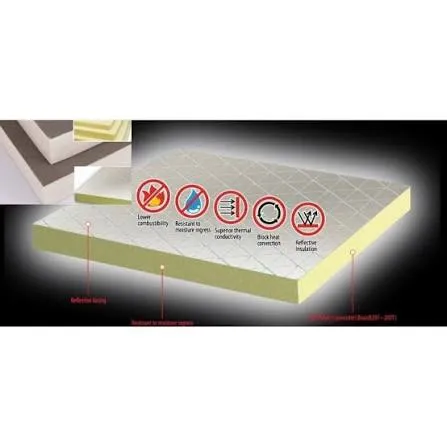
Sandwich panels are pre-fabricated, lightweight composite building elements designed to provide thermal insulation, weather resistance, and structural integrity in modern construction. In the United Arab Emirates (UAE), these panels have become an essential building material for industrial facilities, cold storage warehouses, commercial structures, and residential developments. By integrating two protective outer sheets around an insulating core, sandwich panels simplify installation while significantly cutting energy consumption—a vital requirement in the Gulf region's extreme climate.
Understanding how to choose, specify, and install these composite materials ensures long-term structural efficiency, regulatory compliance, and thermal performance for projects across Dubai, Abu Dhabi, and the Northern Emirates.
What Are Sandwich Panels and How Do They Work in the Gulf Climate?
A sandwich panel is a three-layer structural component consisting of a low-density insulating core bonded between two rigid outer facings. The outer skins—typically made of pre-painted galvanized steel, aluminum, stainless steel, or aluzinc—handle mechanical loads, wind stress, and weather exposure. The central core provides thermal resistance, acoustic dampening, and fire protection.
+-------------------------------------------------------+
|              Top Facing Sheet (Steel/Aluminum)        |
+-------------------------------------------------------+
|                                                       |
|       Insulating Core (PIR / PUR / Mineral Wool)      |
|                                                       |
+-------------------------------------------------------+
|             Bottom Facing Sheet (Steel/Aluminum)      |
+-------------------------------------------------------+
In the Middle East, outdoor ambient temperatures frequently exceed 45°C (113°F) during summer months, with direct solar radiation driving surface temperatures higher. Uninsulated or poorly insulated structures allow high rates of heat transfer, forcing HVAC systems to operate continuously at peak loads. Sandwich panels act as thermal barriers, drastically reducing heat ingress and keeping interior conditions controlled.
Core Materials and Their Primary Characteristics
Selecting the correct core material depends directly on the project's thermal, fire safety, and environmental requirements:
- Polyisocyanurate (PIR): A modified polyurethane foam featuring superior fire resistance and lower smoke emissions. It provides outstanding thermal insulation ($k$-value around $0.022 \text{ W/m}\cdot\text{K}$) and is widely used for roof and wall cladding.
- Polyurethane (PUR): Offers excellent thermal insulation and structural stiffness at a economical cost point, though it has lower fire resistance compared to PIR. Suitable for non-critical thermal enclosures and standard cold rooms.
- Mineral Wool / Rockwool: Made from natural basalt rock fibers, this inorganic core is completely non-combustible. It provides supreme fire protection (up to 2 to 4 hours fire rating) and superior acoustic insulation, making it ideal for fire-rated boundary walls, high-risk industrial sites, and acoustic enclosures.
- Expanded Polystyrene (EPS): A cost-effective, lightweight core suitable for temporary structures, site offices, and internal partitions where strict fire ratings are not required.
Key Performance Benefits for UAE Construction Projects
Modern construction demands materials that combine speed of execution with long-term cost efficiency. Sandwich panels address several practical challenges specific to regional projects:
1. High Thermal Efficiency and Energy Savings
By maintaining continuous thermal insulation without air gaps or thermal bridges, sandwich panels help reduce building cooling loads by up to 30% to 40%. This directly lowers operational electricity costs and aligns with regional sustainability initiatives like the Dubai Green Building Regulations (Al Sa'fat) and Abu Dhabi's Estidama Pearl Rating System.
2. Rapid Installation Speed
Unlike conventional blockwork, plastering, and field-applied insulation, pre-engineered sandwich panels are manufactured off-site to exact lengths. They arrive ready to assemble using interlocking tongue-and-groove joints, reducing field labor requirements and cutting installation timelines by up to 50%.
3. Structural Durability and Weather Resistance
Coated metallic skins protect against coastal salt-spray corrosion, high humidity, windborne sand abrasion, and intense UV radiation. Properly sealed joints prevent moisture ingress, eliminating the risk of internal mold growth or degradation of the insulating core.
4. Acoustic Comfort
In industrial environments or urban construction sites, rockwool-core sandwich panels reduce airborne noise transmission significantly, providing acoustic attenuation up to $30\text{--}35\text{ dB}$.
Primary Applications Across Key Regional Sectors
The versatile performance profile of sandwich panels makes them suitable for a wide array of building types across the UAE:
Application SectorRecommended CoreKey Design RequirementPrimary BenefitCold Storage & LogisticsHigh-density PIR / PURVapor-tight joints, low thermal conductivityMaintains precise negative/positive temperaturesIndustrial WarehousesPIR / Mineral WoolHigh wind-load capacity, long spansFast enclosure, reduced structural framingCommercial BuildingsArchitectural PIRCustom aesthetic profiles, hidden fastenersModern exterior finish with built-in insulationFire-Rated EnclosuresMineral Wool (Rockwool)Civil Defence compliance (1-3 hr ratings)Prevents flame spread between zonesCleanrooms & LabsSmooth PIR / AluminumFlush joints, smooth non-porous surfacesEasy sanitization, dust-free sealing
Selection Guide: Key Factors Before Specifying Sandwich Panels
Choosing the right panel specification requires balancing engineering requirements, regulatory standards, and budget constraints.
                      SELECTION WORKFLOW
                              │
         ┌────────────────────┴────────────────────┐
         ▼                                         ▼
   Fire Safety?                             Thermal Focus?
   (Civil Defence Compliant)               (Cold Storage / HVAC)
         │                                         │
         ├───────────────┐                         ├───────────────┐
         ▼               ▼                         ▼               ▼
   Mineral Wool         PIR                       PIR             PUR
  (Non-Combustible)  (Fire-Retardant)        (Max Insulation)   (Standard)
1. Fire Safety and Civil Defence Approvals
Fire safety compliance is mandatory in the region. Civil Defence authorities (such as Dubai Civil Defence) require structural cladding materials to meet stringent fire performance criteria (e.g., NFPA 285, BS 476 Part 22, or EN 13501-1). Always verify that the chosen core, facing thickness, and joint seals carry valid local certificates and testing reports from accredited third-party laboratories.
2. Thermal Transmittance (U-Value) Requirements
Calculations must account for the required interior temperature versus ambient conditions. Thicker cores yield lower U-values ($W/m^2K$). For instance:
- Standard Wall Panels (50mm–80mm): Ideal for ambient warehouses and commercial facades.
- Chiller & Freezer Panels (100mm–200mm): Essential for cold storage facilities operating from 0°C down to -30°C.
3. Facing Material and Coating Selection
Select skin materials based on environmental exposure:
- Polyester Coatings (PE): Standard choice for interior panels or non-aggressive outdoor environments.
- Polyurethane (PU) / High-Durable Polyester (HDP): Recommended for outdoor exposure under strong sun.
- Polyvinylidene Fluoride (PVDF): Premium choice offering superior color retention and chemical resistance for harsh industrial or marine conditions.
4. Joint Interlock and Seals
Air leakage degrades thermal performance and introduces moisture into the panel core. High-quality double tongue-and-groove joints with factory-applied gaskets ensure hermetic sealing, preventing condensation build-up inside the building envelope.
Common Installation Challenges and How to Avoid Them
Even premium sandwich panels can fail if installed incorrectly. Below are common project issues and practical solutions:
- Thermal Bridging at Fasteners: Using uninsulated screws or piercing panels improperly creates direct thermal pathways.
- Solution: Use capped, insulated fasteners and thermal breaks between panels and structural steel frames.
- Incorrect Vapor Barrier Sealing: Gaps in sealant application lead to condensation inside freezer room panels, leading to ice formation and core delamination.
- Solution: Apply continuous, non-setting butyl sealant on both the warm and cold sides of the panel joint prior to engagement.
- Scratches and Protective Film Neglect: Leaving protective polyethylene film on panels under direct sunlight causes it to bake onto the metal skin, making removal impossible without ruining the paint finish.
- Solution: Remove protective film immediately during or right after installation.
Sustainability and Long-Term Value
Integrating sandwich panels into modern building envelopes supports sustainable construction goals. Reduced energy requirements for space cooling lower carbon emissions over the building's operational lifecycle. Furthermore, high-quality steel and aluminum facings are recyclable, and pre-engineered fabrication minimizes on-site material waste compared to traditional wet construction methods.
When evaluating supplier options for sandwich panels UAE developments, verify product warranties, core density specifications, structural span tables, and Civil Defence certifications to guarantee long-term performance.
FAQs
What is the difference between PIR and Mineral Wool sandwich panels?
PIR panels use a rigid foam core that delivers maximum thermal insulation per millimeter of thickness, making them ideal for energy efficiency and cold storage. Mineral Wool panels use basalt stone fibers, offering superior fire resistance (non-combustible) and acoustic dampening, making them the preferred choice for fire-rated walls and acoustic enclosures.
Are sandwich panels approved by UAE Civil Defence?
Yes, sandwich panels are widely used across the UAE, provided they hold valid approvals from local Civil Defence authorities (such as DCD). The core materials, panel assemblies, and joint designs must pass strict fire testing standards such as NFPA 285 or EN 13501-1.
What panel thickness is required for a cold room?
Panel thickness depends on the internal operating temperature. Generally, positive-temperature chiller rooms (0°C to +5°C) require 80mm to 100mm thick PIR panels, while negative-temperature freezer rooms (-18°C to -25°C) require 120mm to 150mm or thicker panels to prevent thermal loss.
How long do sandwich panels last in hot, marine climates?
With proper protective coatings (such as PVDF or HDP) and correct installation, high-quality sandwich panels can maintain structural and thermal performance for 25 to 30 years or more, even in challenging coastal environments.
Can sandwich panels be used for roof construction?
Yes. Roof sandwich panels are specifically engineered with deep trapezoidal external profiles to handle rainwater runoff, foot traffic, and structural roof loads, while internal wall/ceiling panels typically feature flat or micro-ribbed profiles.
Technical Implementation & Technical Recommendations
Recommended Structured Data (Schema.org)
To help search engines interpret the page structure correctly, implement Article and FAQPage schema via JSON-LD in the HTML head section:
JSON
{
  "@context": "https://schema.org",
  "@type": "FAQPage",
  "mainEntity": [
    {
      "@type": "Question",
      "name": "What is the difference between PIR and Mineral Wool sandwich panels?",
      "acceptedAnswer": {
        "@type": "Answer",
        "text": "PIR panels use a rigid foam core that delivers maximum thermal insulation per millimeter of thickness. Mineral Wool panels use basalt stone fibers, offering superior non-combustible fire resistance and acoustic dampening."
      }
    },
    {
      "@type": "Question",
      "name": "Are sandwich panels approved by UAE Civil Defence?",
      "acceptedAnswer": {
        "@type": "Answer",
        "text": "Yes, sandwich panels are widely used provided they hold valid approvals from local Civil Defence authorities and pass fire testing standards such as NFPA 285 or EN 13501-1."
      }
    }
  ]
}
Suggested Visual Assets & Alt Text Guidelines
- Exploded Cross-Section Diagram:
- Filename:
sandwich-panel-structure-pir-core.jpg - Alt Text: "Cross-section diagram showing top steel facing, polyisocyanurate PIR core, and bottom steel facing of a sandwich panel."
- Caption: Typical structural breakdown of a thermal insulation sandwich panel.
- Installation/Joint Interlock Detail Image:
- Filename:
sandwich-panel-tongue-groove-joint.jpg - Alt Text: "Close-up of interlocking tongue and groove joint mechanism on wall sandwich panel."
- Caption: Sealed tongue-and-groove joint design prevents thermal bridging and vapor transmission.
Related Reading
Expert Insights: Navigating the Complex World of Home Improvement
Welcome to our in-depth exploration of Home Improvement. In an era defined by ra...
Why Home Improvement is Transforming the Global Industry Landscape
Welcome to our in-depth exploration of Home Improvement. In an era defined by ra...