What Are Rubber Molding Products and How Are They Used?
By Rubber Silicone Molds
24 Views
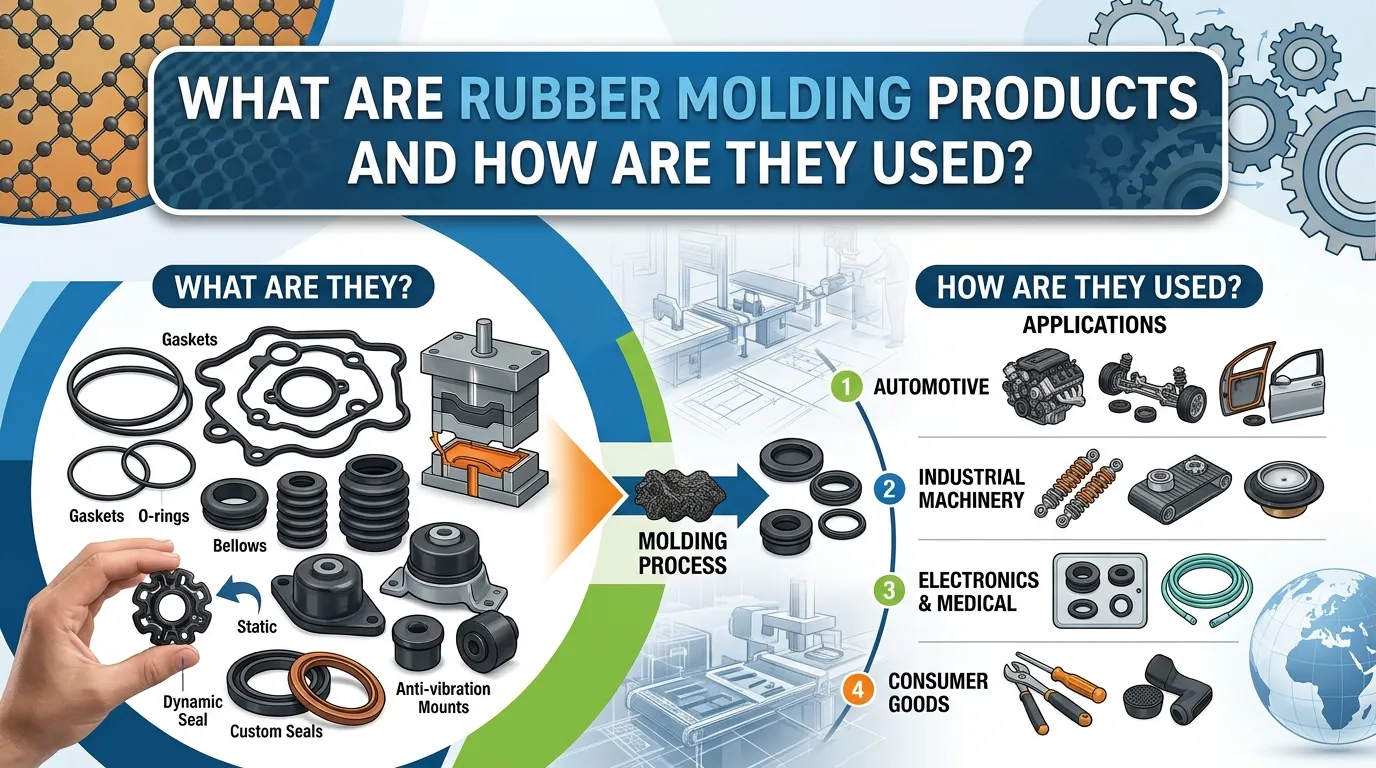
The rubber molding is one of the most widely used manufacturing processes. It shapes soft raw rubber into fixed permanent parts using heat and pressure. It manufactures reliable parts. These parts fill small, critical roles in every device and machine. The rubber moulding products are used across every major industry, from automotive to medical. This is the reason the process is still useful for many different sectors.
What Is Rubber Molding?
The controlled heat and pressure work together to shape soft raw rubber. A precision machined mold defines every feature of the finished part. Once cured, the rubber will hold that exact shape. The manufacturers select different rubber compounds for each specific project.
Every part pulled from the same mold will be functionally identical. The rubber moulding products are used in many devices and applications. The curing process creates a permanent chemical change inside the rubber.
Main Types of Rubber Molding
There are five methods used each suited to different types of part.
Compression Molding
This is the simplest of all the molding methods. Raw rubber is placed inside an open heated steel mold. The mold is closed and even pressure is applied until the rubber cures. This method is the best for low to medium volume production runs.
Injection Molding
The injection molding forces liquid rubber under pressure into a closed mold. This is the fastest method for very high volume production of small parts. It can ensure consistent tolerances even in millions of identical parts. Most silicone extrusion manufacturers also offer this as a standard service.
Transfer Molding
The transfer molding moves rubber from a central pot into separate mold cavities. This method allows for much finer detail than standard compression molding. It is most often used for small parts with multiple delicate features.
Blow Molding
The blow molding uses compressed air to inflate rubber inside a hollow mold. This is the only method used to make hollow flexible rubber parts. Most common flexible hoses are manufactured using this method.
Rotational Molding
The rotational molding spins the mold continuously while heat is applied evenly. This method makes large hollow parts with completely uniform wall thickness.
Common Rubber Molding Products
The process ensures many different standard and custom parts. Here are some of them:
- Seals and Gaskets: Seals and gaskets are the single most common molded rubber parts manufactured. They create a tight barrier between two surfaces to stop liquid and gas leaks. A small defect will make a perfect part completely useless.
- O-Rings: O rings are small round seals used in pressurised systems. They are cheap, reliable and perform in many conditions. There are almost no mechanical systems that do not use at least one.
- Grommets: The grommets protect wires from sharp edges on panels and metal casings. They prevent cuts and abrasions, or else they can cause electrical failure. This is why the high temp silicone grommets are used in extreme operating heat.
- Bumpers and Shock Absorbers: Bumpers and shock absorbers absorb impact and prevent hard surface contact. They also dampen unwanted vibration that would damage other components.
- Hoses and Tubes: Hoses and tubes carry liquids and gases across a wide range of pressures. They can be formulated to handle almost any liquid or gas in common use.
- Mats and Pads: Mats and pads provide non-slip grip and dampen unwanted vibration. They are used in almost every industrial and domestic environment.
- Medical Devices and Tools: The medical industry needs rubber moulding products. These parts must meet some of the strictest standards of any manufactured product.
Key Industries That Use Rubber Molding
Here are the uses of the rubber molding products:
Auto Industry
Every single car on the road contains several hundred molded rubber parts. These include seals, hoses , belt mounts and many other critical components.
Medical Field
The medical field uses these parts for gloves tubes and many implantable devices. These must be consistent and defect-free. The rubber diaphragm suppliers collaborate with the healthcare manufacturers to provide better products with strict quality standards.
Food Industry
The food industry uses food grade molded parts for seals and conveyor belts. The parts must be non-toxic and able to withstand regular high temperature cleaning.
Electronics
Electronics manufacturers use these parts for wire insulation and keypad buttons. They also provide electrical insulation and protection from dust and moisture.
Construction
The construction industry uses them for roofing seals, window gaskets and mats. Most of these parts can last for decades outside in all weather.
Aerospace
The silicone extrusion manufacturers for aerospace require extremely high precision parts for extreme conditions. The parts need to function reliably at temperatures that most other materials would melt.
Benefits Of Rubber Molding Products
The molded rubber parts have unique properties. These parts resist damage from heat, cold, oil and a wide range of chemicals. They remain flexible across huge temperature ranges while still remaining strong.
A part will last for decades with almost no regular maintenance. This process can produce almost any shape, size or level of detail required. Parts also provide excellent natural vibration dampening and non-slip grip. They can be formulated to meet almost any specific performance requirement. The high temp silicone grommets are a perfect example of this combination of traits.
The lead times for new parts and production runs are short. Many rubber diaphragm suppliers maintain consistency for the most common applications.
Conclusion
This process of rubber moulding products balances low cost, consistency and durability. The manufacturers continue to refine small details, but the core principle is the same. There is a demand for these parts in every sector.
It will also continue to grow more in the future. There are very few manufacturing processes that can ensure quality and standard to meet the exact specifications. It will remain one of the foundation processes of global manufacturing for decades to come.
Related Reading
Top 10 Hidden Secrets About Business & Finance You Need to Know
Welcome to our in-depth exploration of Business & Finance. In an era defined...
Why Business & Finance is Transforming the Global Industry Landscape
Welcome to our in-depth exploration of Business & Finance. In an era defined...