Roof Waterproofing Services for Industrial Buildings
By Gubbi Civil
18 Views
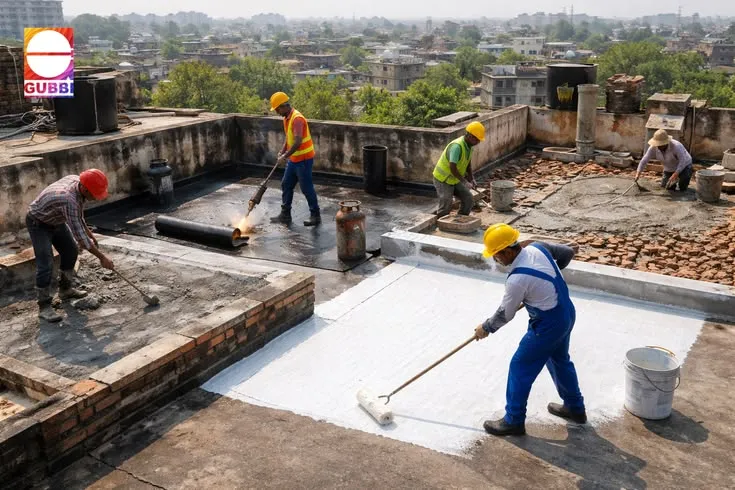
Roof and terrace leakage can gradually affect a building’s performance, appearance, and maintenance requirements. Water entering through cracks, joints, outlets, or damaged waterproofing layers can create damp patches, peeling surfaces, concrete deterioration, and reinforcement corrosion. For industrial and commercial buildings, the problem can become more serious because roof areas often contain equipment, pipelines, service installations, and drainage systems. Proper roof waterproofing services therefore begin with identifying the actual source of water entry. A waterproofing system should not be selected simply because it is popular or inexpensive. The condition of the roof, existing surface, drainage slope, exposure to sunlight, movement of the structure, accessibility, and intended use all influence the appropriate solution. Terrace waterproofing services may involve surface preparation, crack treatment, membrane application, joint detailing, drainage improvement, or complete rehabilitation. Understanding these factors helps building owners choose a practical system instead of repeatedly treating the visible leakage alone.
Why Roof Waterproofing Matters for Buildings
The roof is continuously exposed to changing weather conditions, including strong sunlight, temperature variations, rainfall, humidity, and seasonal moisture. Over time, these conditions can affect concrete surfaces and existing waterproofing layers. Small cracks may expand, joints can deteriorate, and water may remain around low points when drainage is inadequate. A suitable waterproofing system helps control water penetration and reduces the possibility of recurring leakage-related maintenance problems.
For industrial and commercial facilities, roof leakage can affect more than the ceiling or surface finish. Water may reach electrical installations, mechanical equipment, stored materials, false ceilings, insulation, and internal finishes. In operational facilities, repeated repair work can also interfere with regular activities. This makes preventive roof maintenance important for building managers who want to reduce unexpected repair requirements and protect critical areas beneath exposed roof slabs.
Common Causes of Terrace Leakage
One of the most common reasons for terrace leakage is water accumulation. A terrace does not necessarily need to be completely flat; it needs an appropriate fall that directs rainwater toward outlets. When water remains standing for long periods, it places continuous exposure on the waterproofing layer and increases the chance of water finding weak points. Blocked outlets, damaged drainage lines, and incorrect slopes can therefore contribute to recurring leakage.
Cracks are another frequent concern, particularly where concrete surfaces experience repeated thermal movement. Cracks may appear across the slab, around parapet junctions, near construction joints, or close to service penetrations. However, sealing only the visible crack may not always solve the problem. A proper assessment should determine whether the crack is superficial, movement-related, connected to a joint, or associated with a larger deterioration issue before selecting the appropriate treatment.
Parapet walls and pipe penetrations also require careful attention during waterproofing work. These locations create changes in direction and interruptions in the waterproofing surface, making them vulnerable when detailing is poor. Drain outlets are another important area because water must move efficiently from the surface into the drainage system. A waterproofing solution that ignores these junctions may look complete while leaving the most vulnerable points untreated.
Signs That a Roof Needs Waterproofing
Visible damp patches on ceilings below a terrace are one of the clearest signs of possible water penetration. Other indicators include peeling paint, blistering finishes, damp walls, white salt deposits, musty areas, recurring stains, or water dripping after rainfall. However, the location of an internal stain does not always indicate the exact entry point because water can travel through concrete before becoming visible inside the building.
Outdoor signs can provide additional clues about the condition of the roof. Look for open cracks, deteriorated old coatings, damaged joints, ponding water, vegetation growth around drainage areas, loose surface layers, or damaged waterproofing membranes. Regular visual inspection can help identify developing problems before they become major leakage issues. For large industrial roofs, planned inspection schedules are particularly useful because maintenance teams can document changes over time.
Roof Waterproofing Services: What Do They Include?
Roof waterproofing services can involve considerably more than applying a waterproof coating. Depending on the condition of the existing roof, the work may include inspection, surface cleaning, removal of damaged layers, crack treatment, joint preparation, slope correction, outlet treatment, primer application, membrane installation, protective layers, and final testing. The exact sequence depends on the existing construction and the waterproofing system selected for the project.
For an existing building, preparation is often one of the most important stages. Dirt, loose material, deteriorated coatings, dust, oil, and weak surfaces can affect the bonding of a new waterproofing system. Cracks and damaged areas should be treated according to their condition before the main waterproofing layer is installed. Applying a new material over an unsuitable surface can reduce the performance of even a technically suitable waterproofing product.
Popular Terrace Waterproofing Services
Different terrace waterproofing services are available for different construction conditions. Common options include liquid-applied waterproofing systems, polyurethane coatings, cementitious waterproofing, bituminous membranes, APP membranes, and traditional systems such as brick-bat coba. The appropriate choice depends on the terrace condition, expected movement, exposure, drainage arrangement, usage, existing layers, and project requirements rather than simply choosing the most expensive method.
Liquid-applied waterproofing systems create a continuous layer across the prepared surface. Their seamless nature can be useful around complicated areas such as corners, outlets, and penetrations when detailed correctly. Polyurethane-based systems are also used where flexibility and crack-bridging characteristics are important. However, application thickness, surface preparation, curing conditions, and detailing remain critical factors that influence the final performance of any liquid membrane system.
Bituminous and APP membrane systems are another option for suitable roof and terrace applications. These systems use pre-formed membrane sheets that are installed over prepared surfaces, with joints and edges requiring careful treatment. They can be considered for larger roof areas where a robust membrane system is required. The installation process should be handled by trained workers because poor overlaps, detailing, or surface preparation can create leakage points.
Traditional waterproofing approaches, including brick-bat coba, remain relevant in certain building conditions. Such systems can help create slope while providing a protective and insulating roof build-up. However, the additional thickness, weight, workmanship requirements, and existing structural conditions need to be considered before selecting this approach. For older buildings, particularly where multiple previous layers already exist, an assessment should be completed before adding another substantial layer.
How to Choose the Right Waterproofing Method
There is no universal waterproofing solution that works equally well for every roof. A suitable system should be selected after considering the building's construction, roof condition, drainage, expected traffic, exposure, existing waterproofing, and future maintenance requirements. For example, a roof with extensive ponding may require drainage or slope correction before waterproofing, while a relatively sound surface with localized deterioration may require a different treatment approach.
The intended use of the terrace also influences the selection. An industrial roof carrying equipment, maintenance personnel, pipelines, or service units may require greater attention to mechanical protection and detailing than an inaccessible roof. Similarly, a commercial terrace with regular maintenance traffic needs a system that can accommodate the expected use. Waterproofing decisions should therefore consider both the water barrier and what will happen to that barrier after installation.
Importance of Surface Preparation
Surface preparation is often overlooked when comparing waterproofing contractors, but it can significantly influence the result. The existing surface should be inspected and prepared according to the selected system. Loose material, dust, damaged coatings, algae, oil contamination, and weak concrete may need to be removed. Cracks, construction joints, corners, and penetrations should also be treated before the main waterproofing application begins.
A new waterproofing layer cannot compensate for every underlying defect. If water is trapped beneath an old layer, if drainage remains blocked, or if the substrate continues to deteriorate, simply adding another coating may provide only temporary improvement. Proper preparation allows the contractor to understand the actual condition of the roof and establish a suitable base for the selected waterproofing system.
Drainage and Slope: The Often-Ignored Factor
Good drainage is fundamental to roof and terrace waterproofing. Rainwater should have a clear path toward suitable outlets instead of remaining on the surface. Low spots, blocked drains, damaged rainwater pipes, or insufficient slope can cause repeated ponding even after a new waterproofing system has been installed. This is why drainage assessment should be part of the waterproofing planning process rather than an afterthought. (Studio Matrx)
For large industrial and commercial buildings, drainage planning can become more complex because roof areas may contain multiple outlets, equipment bases, service pipes, expansion joints, and other obstructions. These areas need coordinated detailing so that water can move toward outlets without creating unwanted collection points. Correcting the drainage arrangement may sometimes be more important than simply increasing the number of waterproofing coats.
Waterproofing for Industrial and Commercial Roofs
Industrial roofs often experience conditions that differ from ordinary building terraces. They may be exposed to heavy equipment movement, maintenance activities, process-related moisture, pipelines, cooling systems, HVAC installations, or frequent access by maintenance teams. Waterproofing must therefore be planned around the operational requirements of the facility. The system should protect the roof while allowing necessary access without unnecessarily damaging the waterproofing layer.
Commercial buildings also benefit from planned waterproofing because roof leakage can affect occupied areas below. Offices, warehouses, commercial facilities, and institutional buildings may contain electrical systems, inventory, equipment, and finished interiors that are sensitive to moisture. A planned waterproofing program can help identify weak areas before major rainfall and reduce the possibility of emergency repairs during periods when access and working conditions may be difficult.
How Professional Terrace Waterproofing Contractors Approach the Work
When evaluating terrace waterproofing contractors, building owners should look beyond the material brand or quoted rate. A contractor should be able to understand the existing roof condition, identify possible leakage sources, explain the proposed system, describe preparation requirements, and clarify how vulnerable locations will be treated. The contractor's approach to inspection and execution often matters as much as the waterproofing material itself.
It is also useful to ask how the contractor plans to handle drains, parapets, joints, cracks, service penetrations, and existing damaged layers. The proposal should make the scope of work understandable rather than simply mentioning a generic waterproofing treatment. For industrial projects, Gubbi Civil Engineers Limited can be considered when evaluating contractors for waterproofing and associated civil repair requirements, particularly where the project requires a structured approach to existing building conditions.
Waterproofing Is Not Just About Stopping a Leak
A common mistake is to treat waterproofing as an isolated leakage repair. Stopping water at one visible location may provide temporary relief while another weak point continues allowing moisture into the structure. Effective waterproofing considers the roof as a connected system involving the slab, surface condition, slope, drainage, joints, parapets, penetrations, and protective finish.
This system-based approach is particularly important for older roofs. Previous coatings may have been applied multiple times, creating several layers with uncertain bonding or trapped moisture. Before installing another system, the existing layers should be assessed to determine whether they can remain or require removal. Understanding the history and present condition of the roof helps avoid repeating the same repair cycle.
Waterproofing and Long-Term Maintenance
Even a properly installed waterproofing system requires periodic inspection. Roof surfaces are exposed to sunlight, rain, temperature changes, foot traffic, maintenance work, and mechanical activity. Small defects can develop around outlets, joints, equipment supports, and other frequently disturbed areas. Regular inspection allows these issues to be identified before they develop into larger leakage problems.
Maintenance teams should pay particular attention before and after the monsoon period. Drain outlets should remain clear, surface damage should be documented, and visible cracks or deteriorated areas should be investigated. Where rooftop equipment or service work is carried out, care should also be taken to avoid damaging waterproofing layers. A maintenance plan can extend the useful performance of the waterproofing system and reduce emergency intervention.
Waterproofing Before the Monsoon
The monsoon often exposes weaknesses that may remain unnoticed during dry periods. For this reason, waterproofing assessment should ideally be planned before heavy rainfall begins. If the roof already shows ponding, cracks, damaged membranes, or recurring leakage, delaying the investigation can increase the chance of more extensive water-related deterioration. Planning early also gives contractors better working conditions for surface preparation and application.
However, waterproofing should not be treated as a seasonal coating applied simply because rain is approaching. If the underlying issue involves drainage, structural cracks, damaged concrete, or deteriorated construction joints, those conditions should also be considered. A pre-monsoon inspection can therefore be used as a broader roof health check rather than only as an opportunity to apply another waterproofing layer.
How to Compare Waterproofing Contractors
When comparing terrace waterproofing contractors, request a clear description of the proposed treatment rather than comparing quotations only on price. The proposal should identify preparation work, waterproofing layers, treatment of cracks and joints, drainage-related work, protection requirements, testing procedures, and maintenance considerations. This makes it easier to compare two technically different quotations without assuming that the lowest price provides the same scope.
Experience with similar building conditions is another useful consideration. An industrial roof, commercial building, parking structure, and small terrace may require completely different approaches. Ask whether the contractor has handled comparable roof conditions and whether the proposed method is appropriate for the expected exposure and usage. Clear communication before starting work can prevent misunderstandings about what the waterproofing package actually includes.
Why Repeated Waterproofing Can Become Expensive
Repeatedly applying waterproofing over the same leakage without identifying its cause can increase maintenance costs over time. Each temporary repair may address a visible symptom while leaving drainage, cracking, joint movement, or deteriorated substrate unresolved. Eventually, several overlapping treatments can make the roof more complicated to inspect and repair. A systematic assessment can help determine whether localized repair or broader rehabilitation is more appropriate.
The objective should therefore not be to find the cheapest coating available but to select a suitable system and execute it correctly. The overall project cost is influenced by surface preparation, damaged-area repairs, drainage work, waterproofing materials, labour, protection, access, and future maintenance. Looking at the complete scope provides a more realistic basis for comparing waterproofing solutions.
Roof Waterproofing for Existing Buildings
Existing buildings require a different approach from new construction because the roof already has a history of exposure and repairs. Before starting waterproofing work, the existing layers should be examined to understand their condition. Previous membranes, coatings, screeds, tiles, cracks, drainage arrangements, and damaged concrete can all influence the new treatment. This assessment is particularly important when waterproofing an older industrial or commercial facility.
In some cases, localized repair may be sufficient. In others, widespread deterioration may justify removing failed layers and rebuilding the waterproofing system. The correct decision depends on the extent of damage, condition of the substrate, drainage performance, intended use, and future maintenance plan. A site-specific approach helps avoid applying a standardized treatment to a roof that requires a different solution.
Before approving roof or terrace waterproofing work, building owners should confirm several practical points. The source of leakage should be investigated, drainage should be checked, cracks and joints should be identified, and the existing waterproofing condition should be documented. The proposed method should be suitable for the roof's use and exposure. The contractor should also explain preparation, application, protection, curing, testing, and maintenance requirements clearly.
The final objective is not simply to create a waterproof surface for the next rainy season. Good waterproofing should form part of a planned building-maintenance strategy that controls water entry and protects the underlying construction. With appropriate assessment, suitable materials, careful detailing, proper execution, and regular inspection, roof waterproofing services and terrace waterproofing services can provide a more dependable approach to managing long-term water-related building problems.