Roll-Off Dumpster Rental CRM: Streamline Rentals, Dispatching, and Customer Management
By Wingmate
29 Views
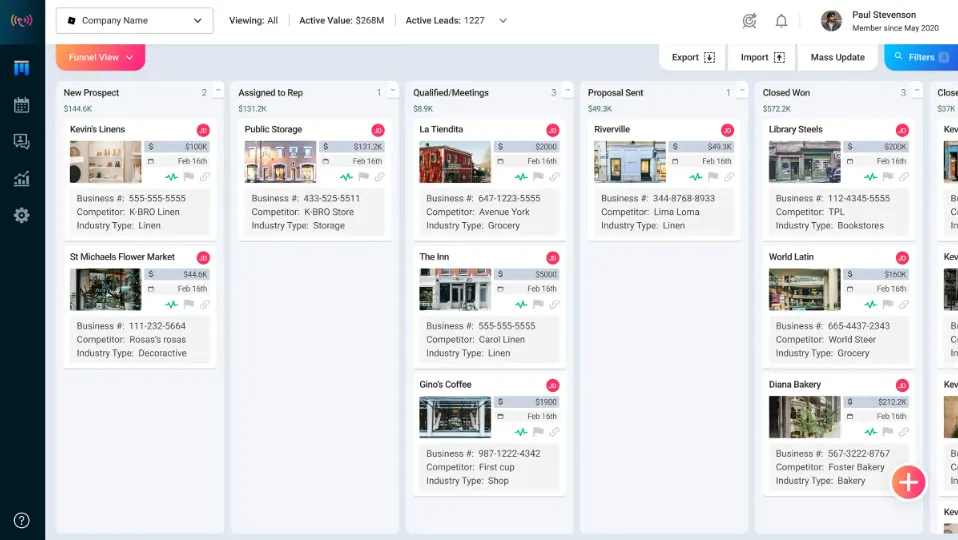
Roll-off dumpster rental businesses manage multiple moving parts, including customer inquiries, rental quotes, container availability, delivery schedules, pickups, billing, and fleet coordination. When these activities rely on spreadsheets, paper notes, or disconnected applications, operational delays and missed opportunities can become difficult to avoid.
A roll-off dumpster rental CRM helps centralize customer information and organize rental operations in one system. Depending on its capabilities, the software can help businesses track leads, manage orders, schedule deliveries, monitor containers, and improve communication with customers.
Choosing the right platform can help a rental company improve efficiency, deliver more consistent service, and support sustainable growth.
What Is a Roll-Off Dumpster Rental CRM?
Understanding CRM Software for Dumpster Rentals
A roll-off dumpster rental CRM is a customer relationship management system designed to help dumpster rental companies manage customer interactions and rental-related workflows. Unlike a basic contact management tool, a specialized system may connect customer records with quotes, orders, container assignments, dispatching, invoicing, and payment tracking.
The primary purpose is to provide a clear view of each customer and rental from the first inquiry through final pickup and payment.
A well-suited CRM connects customer management with the daily activities required to operate a dumpster rental business.
How It Works
The process generally begins when a prospective customer requests a quote or schedules a rental. The business records the customer's details, rental requirements, delivery location, dumpster size, and requested dates.
The system can then help employees move the request through each stage of the rental process.
Typical stages include:
-
Lead capture and customer qualification
-
Quote creation and approval
-
Rental order confirmation
-
Container assignment and delivery scheduling
-
Pickup and exchange coordination
-
Invoice generation and payment follow-up
-
Customer communication and repeat-rental management
The exact workflow depends on the software selected and the company's operating procedures.
Why Dumpster Rental Businesses Need CRM Software
Managing More Customer Inquiries
As a dumpster rental business grows, inquiries may arrive through phone calls, website forms, email, referrals, and other channels. Tracking every request manually can make it harder to respond promptly and identify promising opportunities.
A CRM provides a central location for customer information and lead status. Employees can review open inquiries, follow up on pending quotes, and identify requests that need attention.
Centralized lead management reduces the risk of losing potential customers because a request was overlooked.
Coordinating Deliveries and Pickups
Dumpster rentals depend on accurate scheduling. A missed delivery or delayed pickup can disrupt the customer's project and affect other jobs planned for the same day.
Rental-focused software can help teams organize delivery dates, pickup requests, container assignments, and driver schedules. When dispatching tools are available, employees can coordinate jobs with greater visibility into daily operations.
Improving Billing and Administrative Work
Manual processes often require employees to enter the same information into several systems. This creates unnecessary work and increases the chance of errors.
A connected CRM may link approved quotes, rental orders, additional rental periods, disposal charges, and invoices. Automated reminders and payment tracking can also help employees manage outstanding balances.
Essential Features of a Roll-Off Dumpster Rental CRM
The most valuable system is one that supports the company's actual workflow. The following features are worth evaluating before selecting a platform.
Lead and Customer Management
Customer management tools store contact details, service addresses, rental history, preferences, and communication records.
Useful capabilities include:
-
Centralized customer profiles
-
Lead assignment and status tracking
-
Follow-up reminders
-
Quote history and customer notes
-
Repeat-customer identification
-
Sales pipeline reporting
These features help sales and customer service employees understand the status of each relationship without searching through disconnected records.
Quoting and Order Management
Creating accurate quotes is essential for profitability and customer satisfaction. A rental quote may depend on dumpster size, rental duration, delivery distance, disposal limits, material type, and additional service fees.
A CRM with quoting tools can standardize pricing and make it easier to convert approved quotes into confirmed orders.
The business should check whether the platform supports customized rates, taxes, extra rental days, disposal overages, and other charges relevant to its pricing model.
Scheduling and Dispatch Management
Scheduling and dispatch features help employees coordinate deliveries, pickups, exchanges, and driver assignments.
Depending on the system, dispatch tools may include calendar views, job status updates, driver assignments, and route planning.
|
Feature |
How it helps |
|
Delivery calendar |
Organizes upcoming drop-offs |
|
Pickup scheduling |
Tracks completed and pending removals |
|
Driver assignments |
Clarifies responsibility for each job |
|
Route planning |
Helps coordinate stops and reduce unnecessary travel |
|
Job status tracking |
Makes operational progress easier to monitor |
Scheduling tools are most effective when office staff and field teams work from the same current information.
Container and Inventory Tracking
Dumpster rental companies need to know which containers are available, assigned, in transit, awaiting pickup, or undergoing maintenance.
Container tracking features can help prevent double-booking and improve asset utilization. Some platforms support container identifiers, location updates, availability calendars, and maintenance records.
Businesses should confirm whether tracking is updated manually, through driver workflows, or through integrations with location-tracking technology.
Invoicing and Payment Tracking
Billing features may support invoice creation, payment recording, recurring charges, overdue reminders, and accounting integrations.
For rental businesses, it is particularly important to understand how the software handles extended rental periods, weight-based disposal charges, contamination fees, and other variable costs.
A clear billing workflow can reduce administrative effort and help employees resolve discrepancies more quickly.
Reporting and Business Analytics
Reporting helps managers understand whether the company is operating efficiently and generating healthy returns.
Useful metrics may include:
-
Number of new leads and quote conversion rate
-
Revenue by rental order or customer
-
Container utilization rate
-
On-time delivery and pickup performance
-
Outstanding invoices and average collection time
-
Revenue by dumpster size or service area
These measurements allow managers to identify operational bottlenecks and make decisions based on actual business performance.
Benefits of Using a Dumpster Rental CRM
Greater Operational Efficiency
When customer records, rental orders, scheduling, and billing are connected, employees spend less time transferring information between systems.
Standardized workflows can reduce duplicate data entry and make responsibilities clearer. Automation may also help teams handle routine reminders and administrative tasks.
Better Customer Experience
Customers generally want clear pricing, reliable delivery windows, timely updates, and straightforward billing.
A CRM helps employees access accurate rental information when answering questions or handling changes. Communication tools can support booking confirmations, delivery notifications, pickup reminders, and invoice updates.
Consistent communication helps build trust and encourages customers to return when they need another rental.
Improved Container Utilization
Containers are valuable operating assets. A container that remains unused longer than necessary may represent lost revenue, while an incorrectly assigned container can disrupt the schedule.
Availability tracking helps businesses understand which assets are in use and which can be assigned to new orders. Managers can use this information to improve planning and identify recurring capacity issues.
Stronger Financial Visibility
Connected quotes, orders, invoices, and payment records make it easier to review revenue and identify unpaid balances.
Reporting can also help managers evaluate pricing, compare service areas, and understand which rental types contribute most to profitability. The quality of these insights depends on accurate data and appropriate accounting practices.
How to Choose the Right Roll-Off Dumpster Rental CRM
Identify the Business's Operational Needs
Before comparing software, the company should document its current process and identify the biggest challenges.
A small operator may primarily need customer management, quoting, scheduling, and invoicing. A larger business may need multi-location dispatching, advanced reporting, accounting integrations, and more extensive fleet controls.
The right platform should address existing problems without adding unnecessary complexity.
Evaluate Ease of Use
A system can offer extensive functionality but still underperform if employees find it difficult to use.
During a demonstration, the company should test common tasks such as creating a quote, confirming an order, assigning a container, scheduling a pickup, and generating an invoice.
It is also important to evaluate mobile usability for drivers and field staff who need access to job details away from the office.
Compare Integrations and Automation
Businesses should determine whether the CRM connects with their existing accounting software, payment processor, website forms, mapping tools, and communication systems.
Integration availability varies by provider and subscription plan. Before purchasing, the company should confirm which connections are native, which require third-party services, and whether additional charges apply.
Review Pricing and Support
Software costs may include monthly subscriptions, user fees, implementation charges, data migration, training, and optional modules.
A practical comparison should consider the total cost of ownership rather than the advertised subscription alone.
|
Evaluation area |
Questions to ask |
|
Pricing |
Are setup, user, or transaction fees charged separately? |
|
Features |
Are dispatching, container tracking, and reporting included? |
|
Integrations |
Does the system connect with existing business tools? |
|
Support |
What support channels and service hours are available? |
|
Security |
What access controls, backups, and data protections are provided? |
|
Scalability |
Can the software support more containers, users, and locations? |
Specialized Dumpster Rental CRM vs. General CRM
Advantages of Specialized Software
A specialized dumpster rental CRM is designed around industry-specific workflows. Depending on the platform, it may offer container availability, rental duration tracking, delivery and pickup scheduling, dispatch management, and disposal-related billing.
These features can reduce the need to adapt a general-purpose system to specialized operations.
When a General CRM May Be Suitable
A general CRM may be appropriate for a business that mainly needs lead tracking, customer records, and sales follow-up. It can also be useful when a company already has separate, reliable tools for dispatching, inventory, and billing.
However, the business should calculate the cost of any additional applications, integrations, and manual work needed to complete the rental workflow.
The best choice is the system that covers the company's most important processes reliably, not necessarily the one with the longest feature list.
Best Practices for Implementing a Roll-Off Dumpster Rental CRM
Prepare and Organize Existing Data
Before migrating information, the company should review customer records, container identifiers, pricing rules, open orders, and outstanding invoices.
Duplicate entries and outdated details should be corrected where practical. Clean data improves reporting and reduces confusion after the new system is introduced.
Train Employees by Role
Sales employees, dispatchers, drivers, billing staff, and managers may use different parts of the platform.
Role-based training should focus on the tasks each group performs daily. Written procedures and short reference guides can help employees adopt consistent practices.
Launch in Stages
A staged rollout can reduce disruption. The business may begin with customer management and quoting, then introduce scheduling, dispatching, and reporting once the initial workflow is stable.
A small pilot group can identify problems before the system is adopted across the entire organization.
Measure Results
Before implementation, managers should establish baseline measurements such as quote response time, missed pickups, container utilization, billing delays, and administrative workload.
After implementation, these metrics can be reviewed regularly to determine whether the CRM is delivering measurable improvements.
Common Mistakes to Avoid
Choosing Software Based Only on Price
The lowest-cost option may lack essential scheduling, tracking, or billing capabilities. Businesses should compare total cost against the time saved, errors reduced, and operational needs addressed.
Ignoring Field-Team Requirements
Office staff may find a system useful while drivers struggle with its mobile interface. Including field employees in demonstrations and testing helps ensure that job updates are practical.
Overlooking Data Quality
Incorrect container records, duplicate customer profiles, and outdated pricing can undermine the value of a new CRM. Data preparation should be treated as a core implementation task.
Automating Inefficient Processes
Automation will not automatically fix an unclear workflow. Companies should first standardize their rental procedures and then automate repetitive steps where appropriate.
Frequently Asked Questions
What is the main purpose of a roll-off dumpster rental CRM?
Its main purpose is to organize customer relationships and connect them with rental workflows, which may include quotes, orders, delivery scheduling, pickup coordination, container tracking, and billing.
Can a dumpster rental CRM manage dispatching?
Some specialized platforms include dispatching tools, driver assignments, scheduling calendars, and route-planning features. Capabilities vary, so businesses should confirm that the selected platform supports their delivery and pickup requirements.
Does a CRM track dumpster inventory?
Many rental-focused systems can track container availability and assignment status. More advanced location tracking may require mobile updates, GPS technology, or a separate integration.
Is a specialized CRM better than a general CRM?
A specialized CRM may be a better fit when container tracking, rental scheduling, dispatching, and industry-specific billing are central to daily operations. A general CRM may work for businesses with simpler needs or established systems for other tasks.
How long does CRM implementation take?
Implementation time depends on the number of users, volume and quality of existing data, complexity of pricing rules, required integrations, and employee training needs. A simple setup may take less time than a multi-location deployment with extensive operational requirements.
What should a dumpster rental company look for first?
The company should begin with its most significant operational problems. For many operators, priorities include reliable scheduling, accurate container availability, faster quote management, clear billing, and better customer communication.
Conclusion
A roll-off dumpster rental CRM can help rental businesses bring customer management and operational workflows into a more coordinated system. Features such as quoting, dispatching, container tracking, invoicing, and reporting can reduce manual work and improve visibility across daily operations.
The selection process should focus on usability, industry-specific functionality, integration options, support, security, and total cost. A structured implementation plan and ongoing performance measurement are equally important.
The most effective CRM is one that fits the company's workflow, supports its employees, and provides measurable improvements in customer service and operational control.