RF vs Ultrasound vs Laser: Which Non Surgical Skin Tightening Treatment Is Right for You?
68 Views
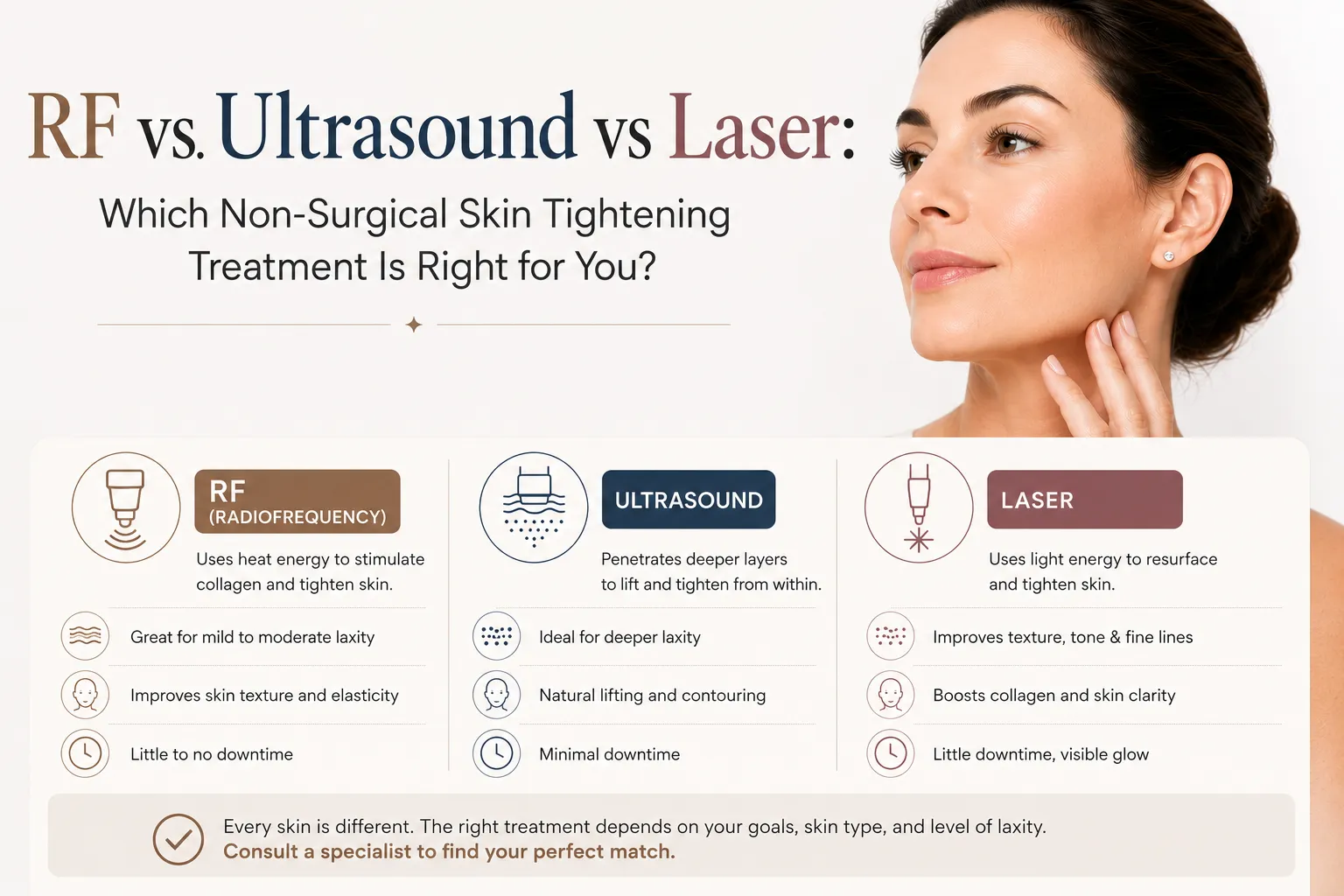
Walk into any skin clinic today and you will hear three letters thrown around constantly: RF, HIFU, and laser. All three promise firmer, tighter skin without surgery. All three actually work, at least to some degree. But they are not interchangeable, and picking the wrong one for your skin can mean underwhelming results or paying for a treatment that was never suited to your concern in the first place.
This guide breaks down how each technology works, what it is best at, and how to figure out which one fits your skin.
The Basic Idea Behind All Three
Before comparing them, it helps to understand what they have in common. Radiofrequency, ultrasound, and laser treatments all rely on controlled heat to stimulate collagen production. Collagen is the protein scaffolding that keeps skin firm, and it naturally declines with age, sun damage, and lifestyle factors.
Each technology delivers heat to the skin in a slightly different way and to a different depth. That difference in depth and delivery is really what separates them, and it is why one might suit your neck while another suits your jawline.
A widely used example on the radiofrequency side is Non surgical skin tightening treatment, which delivers even, controlled heat across the treatment area to encourage gradual collagen remodelling.
Radiofrequency: The Gentle All Rounder
Radiofrequency, or RF, uses electromagnetic energy to heat the dermis, the middle layer of skin where collagen fibres sit. The heat is delivered fairly evenly and at a moderate depth, making RF one of the gentlest options on this list.
Sessions tend to feel warm, almost like a hot stone massage, with little to no discomfort. There is typically no downtime, so you can go straight back to your day afterward.
RF suits people with early signs of laxity such as mild jowls, softening along the jawline, or loose skin on the neck and décolletage. It is also a solid choice for those who want a low commitment entry point into skin tightening before considering anything more intensive.
The tradeoff is depth. Because RF heats a shallower layer than ultrasound, results tend to be subtle and gradual rather than dramatic. Most people need a course of sessions, often four to six, followed by maintenance treatments to sustain the effect.
Ultrasound: Reaching the Deeper Layers
Ultrasound based treatments, often referred to by the acronym HIFU, work differently. Instead of heating the surface layers, focused ultrasound energy is directed at a specific depth beneath the skin, often reaching the same structural layer a surgeon would address during a facelift.
This deeper reach is why ultrasound tends to produce more noticeable lifting, particularly around the jawline, brow, and under the chin. The treatment bypasses the top layers almost entirely and delivers energy precisely where it is needed.
Because it reaches deeper tissue, ultrasound can feel more intense during treatment, with brief moments of discomfort as the energy is delivered. Redness or mild swelling afterward is common but usually settles within a day or two.
Ultrasound is often the better choice for moderate skin laxity where RF alone might not be enough, but where surgery still feels premature. Results build over two to three months as new collagen forms, and a single session can sometimes deliver noticeable change, though many practitioners recommend annual maintenance.
Laser: Tightening Plus Texture
Laser treatments take a different approach again. Rather than focusing purely on tightening, lasers are often used to address skin quality at the same time, including tone, texture, fine lines, and pigmentation.
Some laser devices work by heating the deeper skin layers similarly to RF, while others resurface the top layer to encourage renewal. This dual action makes laser treatments appealing if your main concern is not just sagging but also sun damage, uneven tone, or a generally tired looking complexion.
Downtime varies significantly depending on the type of laser and its intensity. Gentler laser treatments may involve little more than mild redness, while more aggressive resurfacing lasers can require several days of visible peeling or downtime.
Laser is worth considering if tightening is only part of what you want to fix. If sagging is your primary concern with otherwise healthy looking skin, RF or ultrasound may give you more targeted results for less cost.
Comparing Downtime, Discomfort, and Cost
If minimal downtime and comfort are your priority, radiofrequency is usually the easiest option, and often the most affordable per session.
If you want a more noticeable lift and do not mind a bit more discomfort during treatment, ultrasound is worth the investment, particularly for jawline and neck concerns.
If skin quality issues sit alongside sagging, laser may offer the best overall value since it addresses two concerns in one treatment plan, though cost per session can run higher depending on the device used.
When One Treatment Isn't Enough
Many clinics now combine technologies rather than relying on just one. RF might be used to maintain results between deeper ultrasound sessions, or laser might be layered in to address tone once tightening has progressed.
For patients wanting a more dramatic outcome without surgery, FaceTite Non surgical Facelift offers a step up from surface treatments. It uses radiofrequency assisted lipolysis delivered through a small probe beneath the skin, combining fat reduction with tightening in a way that often produces results closer to a mini facelift.
So Which One Should You Choose?
There is no single correct answer here. It depends on your skin, your goals, and how much time and comfort you are willing to trade for results.
If you are in your thirties or early forties with mild sagging, RF is a sensible starting point. If you are noticing more visible jowls or neck laxity in your forties or fifties, ultrasound may deliver the lift you are after. If uneven tone or texture bothers you as much as firmness, laser could be the better fit.
The honest answer often comes from a proper skin assessment rather than guesswork. A trained practitioner can examine your skin's elasticity, thickness, and areas of concern, then recommend the technology, or combination of technologies, most likely to get you the result you want.
Getting a Professional Opinion
Because results depend so heavily on technique, device quality, and an accurate read of your skin, it is worth choosing a provider with real experience across multiple technologies rather than one that only offers a single treatment type. Cavendish Clinic provides a range of non surgical skin tightening options, allowing practitioners to match the right technology to your specific skin concerns instead of fitting you into a one size fits all approach.
Final Thoughts
RF, ultrasound, and laser all work toward the same goal, firmer, more youthful looking skin, but they get there in different ways and suit different situations. Understanding the difference means you can walk into a consultation with realistic expectations and ask the right questions, rather than choosing based on whichever treatment happens to be trending that month.
Please do not post adverts in this section, to avoid being banned.