Revolutionizing Healthcare Finances: A Deep Dive into Revenue Cycle Management
56 Views
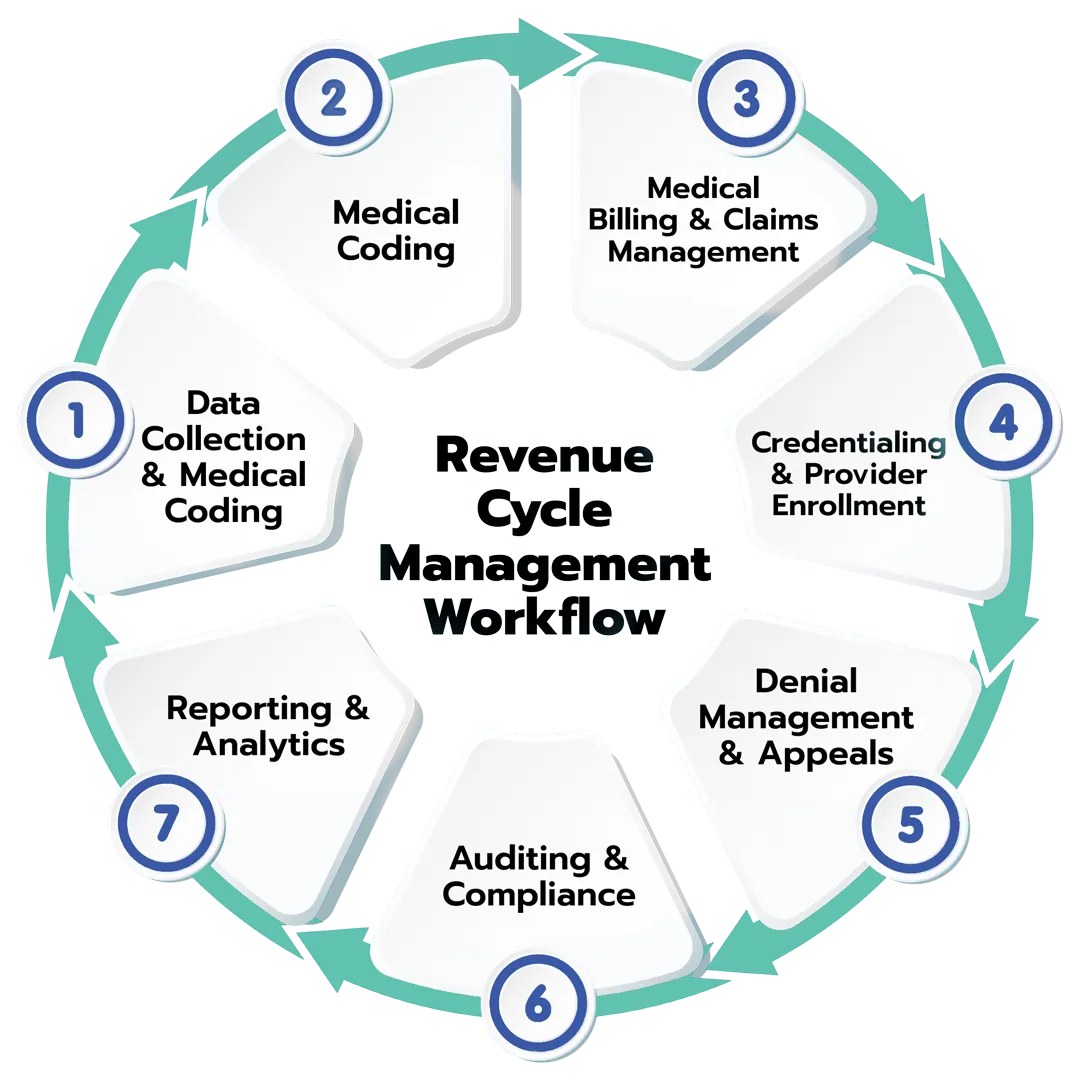
In the fast-paced world of healthcare, medical facilities such as hospitals, clinics, and large healthcare systems are renowned for one thing: treating and saving lives. However, behind the scenes of every successful healthcare organization lies a complex financial ecosystem that must operate with precision and efficiency. This is where Revenue Cycle Management (RCM) comes into play—the financial backbone that ensures healthcare providers remain financially healthy while continuing to deliver exceptional patient care.
What is Revenue Cycle Management in Healthcare?
Revenue Cycle Management refers to the comprehensive financial process that healthcare organizations use to manage bills and collect revenue for medical services. It encompasses the entire lifecycle of a patient's financial interaction with a healthcare provider—from the moment a patient schedules an appointment to the final payment of a balance. This intricate process involves using medical billing software to track patient care episodes, ensuring proper identification, collection, and management of revenues from patient services.
At its core, RCM is the method that a healthcare organization uses to manage every aspect of revenue production. It starts when a patient requests medical services and concludes when the organization has received all payments from the patient and/or their insurance provider. This requires a thorough grasp of the revenue cycle and its many components.
The Critical Stages of Revenue Cycle Management
Understanding the stages of RCM is essential for any healthcare provider looking to optimize their financial performance. Each stage plays a vital role in ensuring timely and accurate reimbursement:
1. Patient Scheduling and Registration
The revenue cycle begins the moment a patient makes an appointment. Accurate patient registration is essential, as it involves gathering and confirming personal data, insurance information, and medical history. This foundational step lowers the likelihood of claim denials and guarantees seamless billing procedures.
2. Insurance Verification and Authorization
Verifying a patient's insurance coverage is a crucial next step. Insurance verification confirms a patient's eligibility for services covered by their policy. Furthermore, prior authorization from the insurer may be necessary for certain procedures; this must be obtained to prevent claim rejections.
3. Service Documentation and Charge Capture
Healthcare professionals record the services they deliver throughout a patient's visit. Precise and comprehensive service records are necessary for correct charge capture—the process of documenting the services rendered, which forms the foundation for billing the patient and the insurance provider.
4. Medical Coding
Medical coding is the process of translating healthcare services into standardized codes for billing. After reviewing service records, medical coders assign the proper codes for diagnosis, procedures, and treatments. These codes are necessary for submitting claims and receiving reimbursement. As experts note, without accurate medical coding, healthcare providers cannot submit clean claims, and insurance companies cannot process reimbursements correctly.
5. Claim Submission
The filing of claims is the next critical step. Reimbursement claims are requested from the patient's insurance provider. This step requires meticulous attention to detail to guarantee that all information is accurate and complete. Erroneous claim submissions may cause delays or denials.
6. Payment Posting and Reconciliation
When the claim is processed, patient and insurance company payments are posted to the healthcare provider's accounts. The payment posting process involves reconciling collected payments with invoiced amounts. Any differences need to be resolved immediately.
7. Denial Management and Appeals
Denials of payment are a frequent hurdle encountered in RCM. Denial management involves pinpointing the reasons behind these rejections, rectifying errors, and resubmitting claims. Providers can appeal to secure rightful compensation if the denial appears unfounded.
8. Patient Billing and Collection
Any amount due is invoiced to the patient once insurance payments are received. Patient billing must be precise and easy to understand to promote timely payment. If patients fail to pay their bills on schedule, the healthcare provider may need to take further action.
9. Reporting and Analysis
Continuous analytics and reporting are essential for effective RCM. By identifying patterns, monitoring performance, and analyzing data from various stages of the revenue cycle, healthcare providers may make well-informed decisions to enhance financial outcomes.
Challenges in Revenue Cycle Management
Despite its importance, Revenue Cycle Management presents numerous challenges that healthcare organizations must navigate:
Complexity of Insurance Plans: Insurance plans can be confusing, with many different plans each having its own set of rules. Keeping up with all the changes can feel overwhelming.
Regulatory Changes: The healthcare sector frequently changes its rules, such as new laws for billing patients. Staying updated is essential to avoid problems.
Denials and Underpayments: Insurance companies sometimes refuse to pay a bill or pay less than expected. Figuring out why and fixing it helps recover the money owed to the practice.
Technological Integration: Technology can be a great helper but also tricky to set up. Investing in RCM software designed explicitly for managing healthcare finances can make things faster and more accurate in the long run.
The Benefits of Effective Revenue Cycle Management
Effective Revenue Cycle Management is essential for hospitals and healthcare providers. An RCM system acts as the backbone, handling patient billing data and ensuring smooth revenue collection. It interacts seamlessly with other healthcare IT systems, speeding up payments and automating tasks like appointment reminders and claim follow-ups. RCM systems also provide valuable insights into why claims are denied, minimizing future issues and securing proper reimbursement. Advanced features like data analytics and automation further optimize the process, allowing healthcare providers to focus on patient care while maintaining financial stability.
Revenue Cycle Management in Ballwin, Missouri
For healthcare providers in the St. Louis metropolitan area, Revenue Cycle Management, Ballwin, Missouri has become increasingly important. Ballwin and the surrounding communities host a growing number of healthcare facilities that require sophisticated financial management solutions. According to the Better Business Bureau, several RCM providers serve this region, with Beeline Medical, LLC standing out as a notable player in the area.
Beeline Medical delivers medical billing and revenue cycle management services to healthcare providers in the St. Louis area. The company is recognized for its innovative approach and provision of fully integrated RCM services. As a premier healthcare revenue cycle management services provider Ballwin, MO residents and businesses can rely on, Beeline Medical offers customized solutions from intake to follow-up. This includes patient registration, insurance verification, claims management, scheduling, denial management, and many other aspects of the healthcare revenue cycle.
What sets Beeline Medical apart is its adoption of innovative methods, including artificial intelligence, to analyze and manage billing processes and outcomes. The company handles the entire billing cycle—from charge entry to denial management and payment posting—so healthcare providers can focus on saving lives while professionals focus on collecting every dollar earned.
As one of the leading Revenue Cycle Management Ballwin, Missouri, Beeline Medical has earned a reputation for delivering personalized service solutions that reverse cash flow issues and diminish paperwork burdens. The company's BBB rating reflects its commitment to quality service in the Ballwin area.
The Future of Revenue Cycle Management
As healthcare continues to evolve, so too does the field of Revenue Cycle Management. The integration of artificial intelligence, machine learning, and predictive analytics is transforming how healthcare providers manage their finances. These technologies enable more accurate claim submissions, faster payment processing, and better identification of revenue leaks.
Healthcare providers who partner with professional RCM companies can relieve themselves of financial intricacies and instead concentrate on delivering quality care services. This partnership approach is particularly valuable for smaller practices that may not have the resources to maintain an in-house billing department.
Conclusion
Revenue Cycle Management is a vital component of healthcare administration that protects providers' finances while ensuring patients receive high-quality treatment. Healthcare organizations may increase patient satisfaction, stay in compliance with regulations, and perform better financially by understanding and optimizing each stage of the revenue cycle.
Overcoming obstacles and achieving efficient RCM requires implementing best practices and leveraging technology. For healthcare providers in Ballwin, Missouri, and the surrounding St. Louis area, partnering with experienced RCM professionals like Beeline Medical can make the difference between financial struggle and sustainable success. By handling the complexities of medical billing and revenue collection, these experts allow healthcare professionals to do what they do best: provide exceptional patient care.
Related Reading
Top 10 Hidden Secrets About Business & Finance You Need to Know
Welcome to our in-depth exploration of Business & Finance. In an era defined...
Why Business & Finance is Transforming the Global Industry Landscape
Welcome to our in-depth exploration of Business & Finance. In an era defined...