Red Carpet Facial vs. Traditional Facial: What’s the Difference?
By Jenny Walker
35 Views
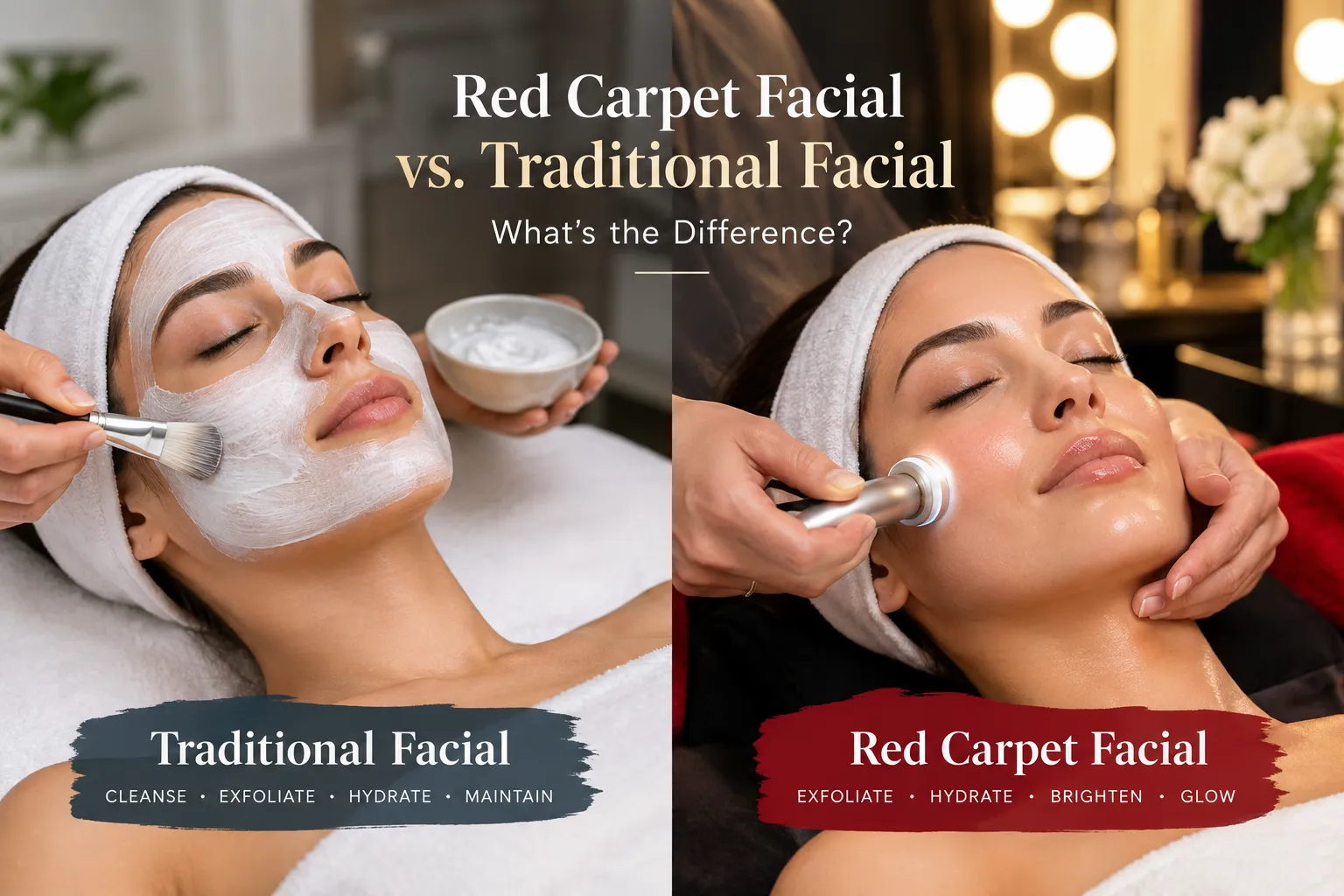
A facial can mean very different things depending on what you want from the treatment. A traditional facial generally focuses on cleansing, exfoliation, extraction, hydration, and basic skin maintenance. A Red Carpet Facial takes a more targeted approach, often combining professional exfoliation, hydration, massage, and skin-enhancing techniques designed to leave the complexion looking noticeably smoother, brighter, and more polished.
For someone preparing for a wedding, photoshoot, special event, or simply wanting a more refined complexion, the difference comes down to treatment goals, intensity, customization, and immediate appearance. Understanding those differences can help you choose the right facial without assuming that one treatment is automatically better than the other.
What Is a Traditional Facial?
A traditional facial is primarily a maintenance treatment. It typically begins with cleansing and skin analysis, followed by exfoliation to remove dead surface cells. Depending on the skin and the provider, the service may also include steam, extractions, a facial massage, mask, and moisturizer.
The goal is straightforward: keep the skin clean, hydrated, comfortable, and well cared for.
Traditional facials can be useful for people dealing with ordinary concerns such as dryness, surface congestion, dullness, or uneven texture. They're also commonly used as part of a regular skincare routine rather than as a one-time treatment before an important occasion.
What Does a Traditional Facial Usually Include?
The exact procedure varies between spas, but a typical session may involve:
- Professional cleansing
- Gentle exfoliation
- Steam or another method of softening surface buildup
- Extractions when appropriate
- Facial massage
- Treatment mask
- Moisturizer and sunscreen
Because traditional facials can be adjusted for different skin types, they're often suitable for routine maintenance. However, the visible results may be relatively subtle, particularly if the main goal is to create a more immediately refreshed appearance.
What Is a Red Carpet Facial?
A Red Carpet Facial is generally designed around the appearance of the skin as much as its long-term care. The treatment aims to create a smoother, hydrated, luminous complexion without necessarily requiring aggressive procedures or significant downtime.
The name comes from the treatment's association with getting skin ready for photographs, events, and occasions where complexion appearance matters. A professional Red Carpet Facial may incorporate several techniques into one session, depending on the spa's specific protocol and the client's skin condition.
Rather than treating every client with the exact same sequence, a professional provider may adjust exfoliation, hydration, masks, massage, and other components according to the skin's needs.
Red Carpet Facial vs. Traditional Facial
The clearest difference is the intended outcome. A traditional facial is often about ongoing skin maintenance, while a Red Carpet Facial tends to place greater emphasis on a visibly refreshed and polished appearance.
FeatureTraditional FacialRed Carpet FacialMain purposeRoutine skin maintenanceEvent-ready, refreshed appearanceExfoliationUsually includedOften more targetedHydrationCommonTypically a major focusExtractionsMay be includedDepends on treatment protocolSkin glowSecondary benefitOften a primary objectiveCustomizationVaries by providerUsually tailored to current skin needsDowntimeGenerally minimalUsually designed to minimize downtimeBest timingRegular skincare appointmentsBefore events or special occasionsOverall approachMaintenance-focusedAppearance and skin-conditioning focused
These aren't strict medical definitions. "Red Carpet Facial" isn't a standardized treatment category, so the actual techniques can differ considerably from one spa to another. It's worth asking exactly what's included before booking.
Why Do People Choose a Red Carpet Facial Before an Event?
Timing is one of the biggest reasons people choose this type of facial.
When you're preparing for an event, you may not be looking for a months-long improvement in a particular skin concern. You may simply want your skin to look hydrated, smooth, rested, and radiant on the day.
A professional treatment can help improve the appearance of surface dryness and dullness through exfoliation and hydration. Skin can also temporarily appear smoother when properly moisturized and conditioned.
That's particularly relevant for occasions involving professional photography. Camera lighting can emphasize dry patches, uneven texture, and dehydration that may not seem obvious in a bathroom mirror.
Is a Red Carpet Facial Good for Sensitive Skin?
It can be, but the answer depends on the specific treatment and the condition of your skin.
Sensitive skin doesn't automatically mean that every facial is unsuitable. The important consideration is which products and techniques are being used and whether they're appropriate for your individual skin.
If your skin is irritated, sunburned, experiencing an active flare-up, or unusually reactive, aggressive exfoliation may not be appropriate. A qualified skincare professional should assess the skin before deciding how intensive the treatment should be.
How Long Before an Event Should You Get a Facial?
There's no universal schedule because different facials use different products and techniques. For a gentle, hydration-focused facial, some people may schedule treatment relatively close to an event.
If the treatment includes stronger exfoliation, extractions, or techniques that could temporarily cause redness, giving the skin additional recovery time may be sensible.
For an important occasion such as a wedding, it's also smart to avoid experimenting with a completely unfamiliar treatment immediately beforehand. Trying the service earlier gives you an opportunity to see how your skin responds.
Which Facial Is Right for Your Skin?
Your choice should depend less on the name of the treatment and more on what your skin needs.
Choose a Traditional Facial for Regular Maintenance
A traditional facial may make more sense if you're looking for routine cleansing, hydration, exfoliation, and general skin care. It's particularly practical when you want to maintain your skin rather than prepare for a specific event.
Regular professional facials can also give a skincare professional an opportunity to observe how your skin changes over time and adjust treatments accordingly.
Consider a Red Carpet Facial for a Special Occasion
A Red Carpet Facial may be appropriate when your priority is a visibly refreshed complexion before an event. It can be especially appealing when hydration, surface smoothness, and radiance are the main concerns.
Still, don't assume that stronger treatment automatically means better results. Skin that has been over-exfoliated or irritated before an event may look worse rather than better. A good treatment should match the skin rather than overwhelm it.
What Should You Ask Before Booking?
Before scheduling either treatment, ask the spa what the service actually includes. The same name can describe different procedures at different locations.
Useful questions include:
- What products and techniques are used?
- Is the treatment customized for my skin type?
- Are extractions included?
- Will there be any redness or peeling afterward?
- How far in advance should I schedule it before an event?
- Is the treatment suitable if my skin is currently sensitive or irritated?
These questions can tell you much more than the treatment name alone.
Red Carpet Facial Results: What Can You Realistically Expect?
A facial can improve the appearance and feel of the skin, but expectations should remain realistic.
You may notice that your complexion looks more hydrated, feels softer, and appears fresher immediately after treatment. Exfoliation can also temporarily make the skin surface look smoother by removing accumulated dead skin cells.
A facial isn't a substitute for treatment of persistent dermatological conditions. Acne, rosacea, significant pigmentation, or other ongoing concerns may require evaluation and treatment from an appropriate medical professional.
That distinction matters. A facial is primarily a skincare service, not a cure for every skin problem.
FAQs
Is a Red Carpet Facial better than a traditional facial?
Neither is universally better. A traditional facial is generally suited to routine maintenance, while a Red Carpet Facial is often designed around hydration, radiance, and a more polished appearance for an upcoming occasion.
How often can you get a Red Carpet Facial?
Frequency depends on the techniques used, your skin's tolerance, and the provider's recommendations. A gentle treatment may fit into a regular skincare routine, while more intensive exfoliation may require more time between appointments.
Can I get a Red Carpet Facial before a wedding?
Yes, but timing matters. If you've never had the treatment before, consider trying it well before the wedding rather than scheduling your first session immediately before the event. That allows you to see how your skin responds.
Does a Red Carpet Facial hurt?
A properly selected facial should generally be comfortable. Some exfoliation or extraction techniques may cause temporary sensitivity or mild discomfort, but the experience depends on the products, techniques, and individual skin condition.
How long do the results last?
The immediate hydrated and refreshed appearance is temporary. How long the visible effect lasts depends on factors such as skincare habits, hydration, environmental exposure, and the treatment performed.
The Bottom Line
The difference between a Red Carpet Facial and a traditional facial isn't simply about which treatment is more powerful. It's about what you're trying to accomplish.
A traditional facial is a practical choice for regular cleansing, exfoliation, hydration, and skin maintenance. A professional Red Carpet Facial is generally more focused on creating a fresh, smooth, hydrated-looking complexion when appearance is especially important.
If you're preparing for a special event, discuss your timeline, skin history, and expectations with your skincare professional before booking. The right treatment is the one that fits your skin's current condition rather than simply the one with the most impressive name.