Rangoli Designs: 25+ Beautiful Ideas for Festivals, Weddings & Everyday Décor
24 Views
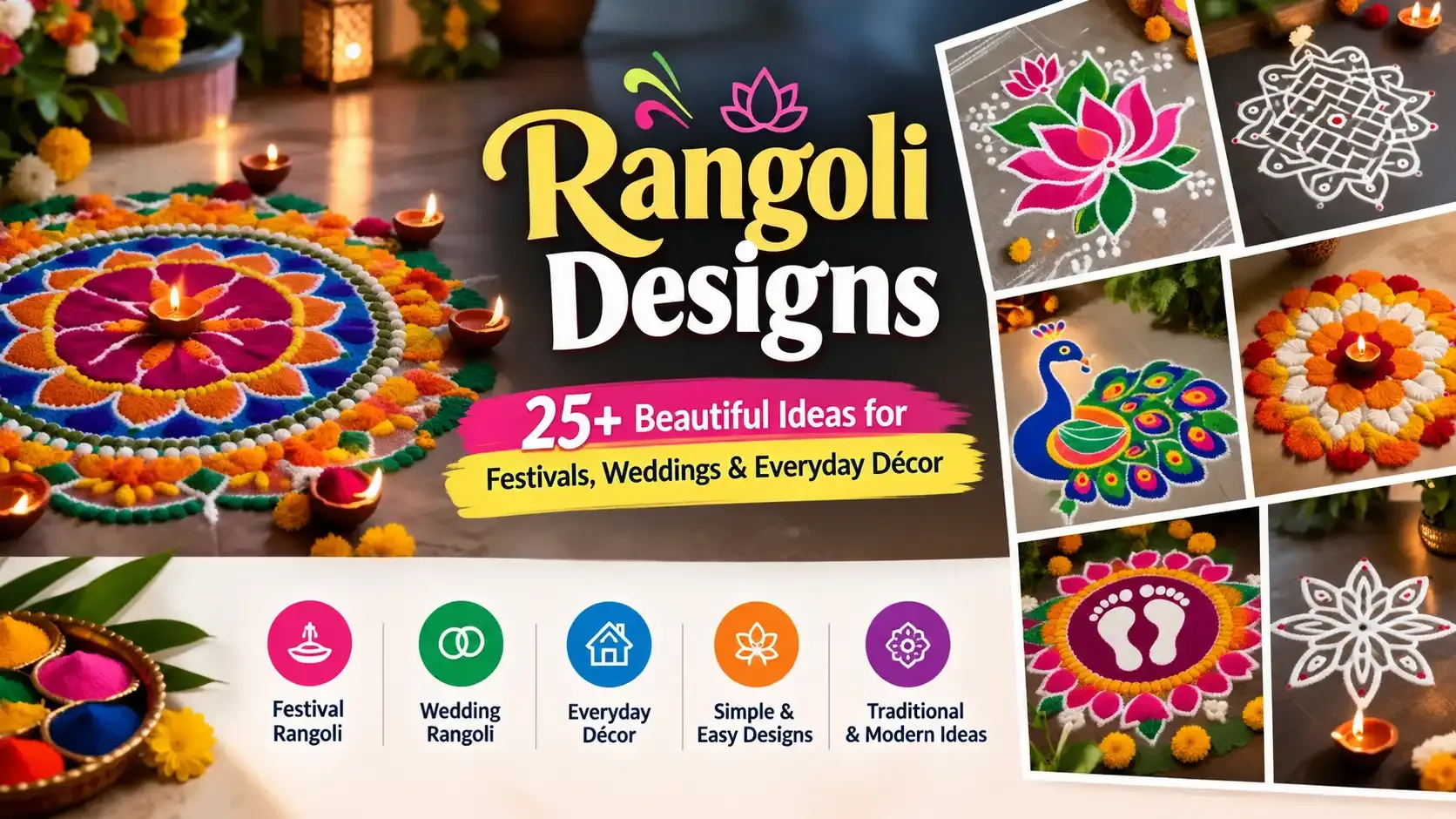
Rangoli is one of India's most loved traditional art forms, and it's popular across Bangladesh and Nepal too, where similar floor art is known as alpona or mandana. Made with colored powder, rice flour, flower petals, or even pulses, rangoli designs welcome guests, invite prosperity, and add color to any celebration.
Whether you're preparing for Diwali, Durga Puja, Pongal, or a family wedding, this guide covers the best rangoli designs, from quick beginner patterns to detailed showpieces, plus practical tips to help you get them right.
What Is Rangoli and Why Is It Important?
Rangoli (from the Sanskrit rangavalli, "rows of color") is decorative art created on the floor, usually at entrances and courtyards. Traditionally, it's believed to welcome the goddess Lakshmi and bring good fortune into the home. Beyond the spiritual meaning, it's simply a joyful way to express creativity and make your space feel festive.
Types of Rangoli Designs
1. Freehand Rangoli
Drawn directly with fingers, without dots or stencils. These are flowing, organic designs featuring vines, peacocks, paisleys, and lotus flowers. Best for people with some practice.
2. Dot (Sanskar Bharti) Rangoli
Made by placing a grid of dots first, then connecting them with lines or curves. Symmetry is easy to achieve, which makes this style ideal for beginners.
3. Flower Rangoli
Uses fresh marigold, rose, and jasmine petals. It's eco-friendly, fragrant, and especially popular during Onam (where it's called pookalam) and Diwali.
4. Alpona (Bengali Rangoli)
Painted with a paste of rice flour and water using fingertips. Motifs include lotus flowers, conch shells, fish, and footprints of the goddess Lakshmi. Alpona is central to Bengali festivals and weddings.
5. Floating Rangoli
Petals, diyas, and flower designs arranged on a bowl of water (urli). A gorgeous option when floor space is limited.
Best Rangoli Design Ideas by Occasion
Diwali Rangoli Designs
- Diya rangoli: Circular patterns with lamp shapes in gold, orange, and red.
- Lotus rangoli: Layered petals in pink and white, symbolizing purity and prosperity.
- Peacock rangoli: Bold and colorful, with a fanned tail in blue, green, and gold.
- Swastik and Om rangoli: Traditional auspicious symbols, often placed at the center of the entrance.
Durga Puja & Navratri Rangoli
- Trishul and Durga motifs in red and yellow.
- Garba-inspired circular rangoli with dancing figures and dandiya sticks.
- Alpona with Lakshmi's footprints leading into the house.
Pongal & Sankranti Rangoli (Kolam)
- Rice-flour dot patterns with sugarcane, pots, and sun motifs.
- Large, symmetrical kolams drawn at dawn.
Wedding Rangoli Designs
- Kalash and coconut rangoli at the entrance.
- Names or initials of the couple surrounded by flowers.
- Mandala-style rangoli in pastel or gold tones for the mandap.
Simple Rangoli Designs for Daily Use
- Small flower or star shapes at the doorstep.
- Straight-line geometric patterns using a stencil.
- Minimal rice-flour designs that take under 10 minutes.
Easy Rangoli Designs for Beginners
If you're just starting out, try these:
- Basic flower: Draw a circle, divide it into 6 or 8 petals, and fill each with a different color.
- Diya border: Draw a row of small lamps along the edge of a doorway.
- Dot grid star: Use a 5×5 dot grid and connect diagonally to form a star.
- Half-circle fan: Draw a semicircle and fill it with concentric bands of color.
Step-by-Step: How to Make a Rangoli
- Clean the surface. Sweep and wipe the floor so colors stick well.
- Sketch the outline. Use chalk or white powder to draw the basic shape.
- Start from the center. Working outward keeps the design symmetrical.
- Fill in colors. Pinch the powder between your thumb and forefinger and release slowly for clean lines.
- Add details. Outline shapes in white or a contrasting shade to make them pop.
- Finish with diyas or petals for a glowing final touch.
Popular Color Combinations
MoodColorsTraditionalRed, yellow, orange, greenElegantWhite, gold, maroonModernTeal, pink, purple, whitePastelPeach, mint, lavender, cream
Materials You Can Use
- Rangoli powder (the classic choice)
- Rice flour (mild and traditional, great for alpona)
- Flower petals (natural and fragrant)
- Colored sand or salt (affordable and vibrant)
- Pulses and grains (textured and eco-friendly)
- Stencils and rangoli rollers (fast, precise patterns)
Tips for a Stunning Rangoli
- Use a stencil or dot grid when you need perfect symmetry.
- Keep colors contrasting so patterns stand out against the floor.
- Add lighting. Diyas, fairy lights, or LED tealights make rangoli glow at night.
- Protect it outdoors by lightly sprinkling water around the edges, or use a wind-shielded corner.
- Go eco-friendly with natural colors from turmeric, beetroot, and spinach paste.
- Practice on paper first if you're trying a complex design.
Trending Rangoli Styles Right Now
- Mandala rangoli with intricate, circular geometry
- Minimalist rangoli with clean lines and 2 or 3 colors
- 3D rangoli using shading and depth effects
- Theme-based rangoli such as Swachh Bharat, women's empowerment, or nature
- Sustainable rangoli made from petals, leaves, and kitchen ingredients
Frequently Asked Questions
What is the easiest rangoli design for beginners?
A simple flower or a dot-grid star pattern. Both need only a few colors and basic shapes.
Which material is best for rangoli?
It depends on the occasion. Colored powder gives vivid results, rice flour suits traditional alpona, and flower petals are best for eco-friendly festive décor.
How do I make rangoli last longer?
Draw it on a clean, dry surface, use a fixative spray for powder designs, and keep it away from wind and foot traffic.
Can rangoli be made without colors?
Yes. Rice flour, flower petals, lentils, and salt all create beautiful designs without artificial colors.
What is the difference between rangoli and alpona?
Rangoli usually uses dry colored powder, while alpona is made with a wet rice-flour paste painted by hand. Both serve a similar decorative and auspicious purpose.
Final Thoughts
Rangoli is more than decoration; it's a tradition that connects families, festivals, and creativity. Start with a simple design, experiment with colors and materials, and gradually try more detailed patterns. With a little practice, you'll create rangoli designs that make every doorstep feel welcoming.
Related Reading
Expert Insights: Navigating the Complex World of Home Improvement
Welcome to our in-depth exploration of Home Improvement. In an era defined by ra...
Why Home Improvement is Transforming the Global Industry Landscape
Welcome to our in-depth exploration of Home Improvement. In an era defined by ra...