Quran Classes A Practical Guide to Reading, Memorizing, and Understanding the Quran
By arsh ali
29 Views
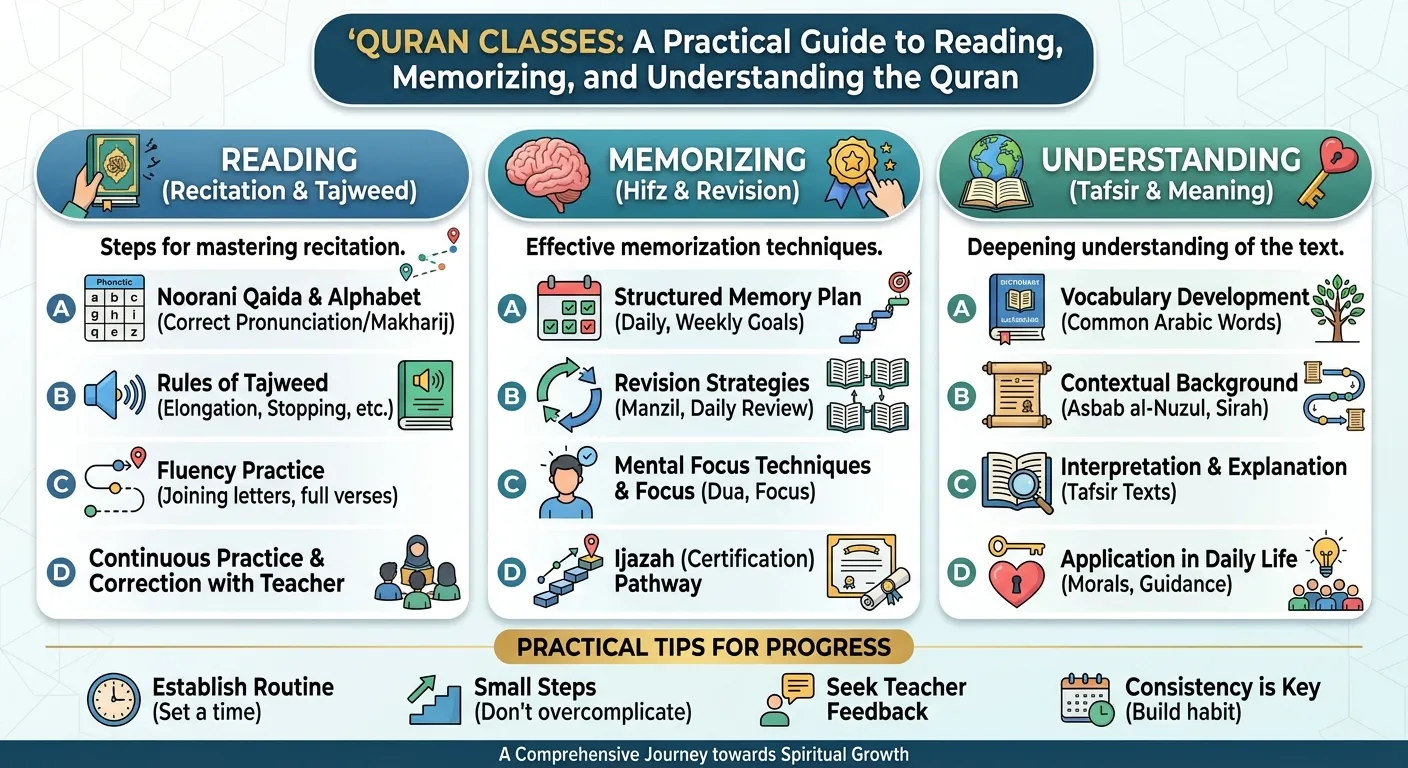
Every Muslim hopes to build a strong bond with the Quran, whether through fluent reading, memorization, or understanding its meaning. Yet many learners are unsure where to start, how long each stage takes, or how to keep going without losing motivation. This guide explains the full journey in simple steps, so you can choose a path that fits your goals and your schedule.
1. What Are Quran Classes?
Quran classes are structured lessons in which a qualified teacher helps students read, recite, memorize, and understand the Holy Quran. A typical course begins with Arabic letters and sounds, then moves to reading words and verses, applying Tajweed rules, and later memorization or translation. Lessons can be one-on-one or in small groups, and they suit children, adults, and new Muslims at any level.
2. Why Is Memorization (Hifz) So Valued?
Memorizing the Quran is one of the oldest traditions in Islam. Memorizers carry the words of Allah in their hearts and recite them in prayer with confidence. Hifz also trains focus, discipline, and long-term commitment. However, it works best when built on a strong base: fluent reading and correct Tajweed. Students who memorize with pronunciation mistakes often find those errors difficult to remove later.
3. What Is the Step-by-Step Learning Path?
- Noorani Qaida: Arabic letters, vowels, and basic reading rules.
- Nazra: fluent reading from the Mushaf.
- Tajweed: rules such as Madd, Ghunna, Idgham, and Qalqalah.
- Hifz: memorizing short surahs first, then longer portions.
- Revision (Muraja'ah): daily review to keep memorized portions secure.
- Translation and Tafseer: understanding meaning and context.
Following this order gives stronger and longer-lasting results.
4. How Do You Find a Good Memorization Program?
A good Hifz program needs a patient teacher, a clear daily plan, and strict revision. Many families begin by searching for quran memorization near me to compare teachers, timings, and levels. Before enrolling, ask for a trial lesson and check three things: whether the teacher corrects pronunciation precisely, whether there is a written plan for new lessons and revision, and whether progress is reported regularly.
5. Online vs. In-Person Learning
- Online: flexible timings, no travel, and access to qualified teachers anywhere.
- In-person: a community setting and direct presence, but limited by location and fixed schedules.
What matters most is live, one-on-one attention. The teacher must hear every recitation and correct it immediately, whatever the format.
6. What Makes a Good Hifz Teacher?
- Credentials: Ijazah or formal Tajweed training.
- Experience: a record of guiding students through memorization.
- Structured plan: daily targets for new lessons and revision.
- Patience: essential for children and busy adults.
- Regular testing: frequent listening to previous portions.
- Encouragement: motivation keeps students consistent.
7. Who Can Start?
- Children: many begin Hifz around age 6 to 8, once they read fluently.
- Teenagers: can memorize alongside school with a balanced schedule.
- Adults: can memorize at any age with consistent daily effort.
- New Muslims: can start with reading first, then move to short surahs.
There is no age limit for connecting with the Quran.
8. How Long Does Each Stage Take?
- Noorani Qaida: 2 to 4 months.
- Fluent reading: 6 to 12 months after Qaida.
- Tajweed basics: 3 to 6 months.
- Complete Hifz: around 2 to 4 years with daily revision.
These are general estimates. Daily practice matters more than speed.
9. Tips for Strong Memorization
- Memorize at the same time each day, ideally after Fajr when the mind is fresh.
- Read each new portion many times before memorizing.
- Revise old lessons daily, not weekly.
- Listen to a skilled reciter repeatedly.
- Recite memorized portions in prayer.
- Keep new lessons small and manageable.
- Avoid distractions during study time.
10. Common Mistakes to Avoid
- Starting Hifz before reading fluently, which locks in errors.
- Skipping revision, which causes forgetting.
- Memorizing too fast, leading to weak retention.
- Learning only from apps or videos without live correction.
- Irregular attendance, which breaks momentum.
Frequently Asked Questions
What is the best age to start memorizing the Quran?
Many children start between 6 and 8 years old, after learning to read fluently, but adults can begin at any age.
How long does it take to memorize the whole Quran?
Usually 2 to 4 years with daily lessons and revision, depending on the student.
Do I need Tajweed before Hifz?
Yes, at least the basics. Correct pronunciation should be learned before memorizing.
How much time should I give daily?
Around one to two hours for new lessons and revision is common for serious Hifz students.
Can I memorize the Quran online?
Yes, with live one-on-one sessions where the teacher listens and corrects you in real time.
How do I avoid forgetting what I memorized?
Revise daily, recite in prayer, and follow a fixed revision schedule.
Conclusion
The journey with the Quran grows stronger with the right guidance, steady practice, and patience. Start with fluent reading, learn Tajweed, memorize gradually, and revise every day. With a qualified teacher and consistent effort, anyone can build a lasting relationship with the Quran.
Related Reading
Expert Insights: Navigating the Complex World of Education & Learning
Welcome to our in-depth exploration of Education & Learning. In an era defin...
Why Education & Learning is Transforming the Global Industry Landscape
Welcome to our in-depth exploration of Education & Learning. In an era defin...